
Home » Wastewater Treatment Systems & Septic Tanks Ireland | Tricel
Wastewater treatment systems and septic tanks, manufactured and certified for Irish sites.
From a single septic tank on a one-off rural site to a commercial system for a hotel or housing development, every system on this page is manufactured in Ireland and certified to EN 12566 and NSAI’s S.R. 66:2015. Start with a free site assessment, or go straight to the system, sector or county page you need.
498,283
Registered domestic wastewater systems nationally, 2024
CSO, Domestic Waste Water Treatment Systems 2024
56%
Of inspected septic tanks failed in 2024, rising to 59% in 2025
EPA National Inspection Plan
+8.6%
Growth in new system registrations, 2024 vs 2023
CSO, 2024
QUICK RESPONSE
Before you choose a system
Straight answers to the questions we’re asked most, drawn from the EPA Code of Practice and the Building Regulations. For a specific site, the product ranges below cover primary, secondary, tertiary and commercial treatment in full.
What is wastewater treatment?
Wastewater treatment is the process of removing solids, organic matter and pathogens from used water before it is returned to the ground or a watercourse. It happens in stages — primary settlement, secondary treatment and, on sensitive sites, tertiary polishing — and this page covers the Tricel product for every stage, from a single house to a full commercial development.
What is the difference between a septic tank and a wastewater treatment plant?
A septic tank provides primary treatment only and relies on a percolation area to finish treating the effluent in the ground; it is certified to EN 12566-1. A wastewater treatment plant actively treats the effluent to a higher standard before discharge and is certified to EN 12566-3. Wastewater treatment plants are required where site or percolation conditions will not support a standard septic tank.
Do I need planning permission for a wastewater treatment system?
Yes. A qualified site assessor must complete a Site Characterisation Form confirming the site is suitable under the EPA 2021 Code of Practice, and the system must be registered with the local authority once installed. Tricel can advise on which product fits the assessor’s recommendation before you apply.
What size system do I need?
For a septic tank, minimum capacity is set by the formula C = 150 × P + 2,000 litres, where P is the design population, with a minimum design population of four persons under the Building Regulations and EPA Code of Practice. Treatment plants are sized by PE, or Population Equivalent. Above 50 PE, commercial systems are sized individually to the project.
What happens if my septic tank fails an EPA inspection?
The EPA may issue an advisory notice specifying the remediation required. Depending on the scheme and eligibility, grants may be available for qualifying repairs, upgrades or replacement. Most failures can be reduced by correct system use, regular desludging and a suitable maintenance plan.
Which Tricel system is right for my site?
As a rule of thumb: suitable percolation and enough space may favour a septic tank; restricted ground conditions or a sensitive site may require a wastewater treatment plant with secondary or tertiary treatment; anything above 50 PE moves into the commercial range; and any site where gravity flow is not possible may need a pumping station.
Mains sewage system vs off-mains wastewater treatment system
A mains sewage system is used where a property is connected to the public sewer network. Wastewater from the home flows through the property drains into the public sewer, then travels to a central municipal wastewater treatment works. The treatment takes place away from the property, so no onsite wastewater treatment unit is normally required.
An off-mains wastewater treatment system is used where no public sewer connection is available. This is common for rural homes, one-off houses, remote sites and some commercial properties. Wastewater is collected and treated on the property using a septic tank, wastewater treatment plant, secondary treatment system, tertiary treatment system or polishing filter, depending on the site conditions and approval requirements.
Key difference
The main difference is where the wastewater is treated.
- Mains sewer: wastewater leaves the property and is treated centrally.
- Off-mains system: wastewater is treated onsite before being discharged through an approved route.

How it works
From site assessment to a system that's signed off
Product category isn’t chosen upfront — it’s determined by your site’s percolation result at step one. A site with good percolation may only need a septic tank; poor percolation or a high water table moves the recommendation to a treatment plant with tertiary polishing, or further still into the commercial range above 50 PE.
Site assessment
A qualified site assessor completes a Site Characterisation Form under the EPA's 2021 Code of Practice — testing percolation (T-value), water table depth, soil type, and proximity to wells, boundaries and watercourses.
Typically 1–2 hours on site; report in a few working days What the assessor checksSystem & quote
The percolation result determines the product category — septic tank, treatment plant, or treatment plant plus tertiary polishing — and Tricel provides a site-specific quotation sized to the assessor's design population (PE).
Quote includes tank, risers & any polishing filter required Compare the product rangesRegistration
The system is registered with the local authority on the Domestic Waste Water Treatment Systems (DWWTS) register. This is a legal requirement and the record checked at inspection or at sale.
Current registration fee: €50 Septic tank regulations in IrelandInstallation
Installed by an approved installer, with groundworks and the percolation or polishing area completed to the assessor's specification and the manufacturer's installation manual.
Keep the as-built drawings from this stage for the next step Book a site visitCommissioning & sign-off
The installer commissions the system, confirms it operates to specification, and issues a completion certificate — the document requested at inspection and needed to activate the warranty.
Produces the completion certificate & warranty record Warranty & documentationServicing
An annual service check confirms sludge level and system performance. Desludging is generally required at least once a year for septic tanks and treatment plants, once the primary chamber is roughly half full.
Recommended cycle: at least annually Desludging processPE explained
What does PE mean in wastewater treatment?
PE stands for Population Equivalent. It is a standard way of sizing a wastewater treatment system based on the amount of wastewater and organic load the system is expected to receive.
In simple terms, 1 PE represents the average wastewater load produced by one person per day. This helps site assessors, engineers, installers and manufacturers select a system that is large enough for the property or project.
For domestic homes, PE is usually linked to the number of bedrooms and expected occupancy. For commercial sites, PE depends on the building use, number of users, wastewater volume and organic load. Choosing the correct PE rating is essential because an undersized system may become overloaded, while an oversized system may not operate as intended.
Tricel can help identify the correct wastewater system once the site assessment, project type, PE, discharge route and treatment requirements are known.
Why PE matters
The PE rating determines the required capacity of the wastewater treatment system. If the system is too small, it may become overloaded, which can lead to poor treatment performance, odours, maintenance issues, failed inspections or discharge problems.
A correctly sized system helps ensure that the wastewater has enough time and treatment capacity to pass through the relevant stages of treatment before discharge.
Example for domestic properties
A small rural home may require a lower PE system than a large house with several bedrooms.
Note: These PE figures are indicative examples only. Final wastewater treatment system sizing should be confirmed by a site assessor, engineer or wastewater designer using the actual project use, flow, BOD load, peak occupancy, discharge route and local approval requirements.
| Sector / application | Assumption used | Typical PE estimate | Notes |
|---|---|---|---|
| 4-bedroom house | Minimum 5 PE for up to 3 bedrooms, plus 1 PE for each extra bedroom | 6 PE | Common domestic sizing rule for a single dwelling. Final sizing depends on site assessment and applicable guidance. |
| 5-bedroom house | 5 PE plus 2 additional bedrooms | 7 PE | Typical larger domestic home. Confirm against the site assessment and system design requirements. |
| 6-bedroom house | 5 PE plus 3 additional bedrooms | 8 PE | Usually still within the domestic sizing range, subject to property use and local requirements. |
| 30-room hotel | Assume 2 guests per room, giving 60 guests | Approx. 94 PE | Excludes staff, restaurant guests, bars, functions, spa, laundry and other additional wastewater loads. |
| 30-room prestige hotel | Assume 2 guests per room, giving 60 guests with higher guest loading | Approx. 105 PE | Extra facilities can increase PE further. Project-specific design is required. |
| 10-room guesthouse | Assume 2 guests per room, giving 20 guests | Approx. 17 PE | Breakfast, laundry, restaurant or bar use should be added where applicable. |
| Office without canteen | 50 staff, part-day occupancy | Approx. 21 PE | Lower loading than residential use because occupancy is normally part-day. |
| Office with canteen | 50 staff with onsite canteen use | Approx. 32 PE | Canteen use increases the biological load. Grease management may also be required. |
| School without canteen | 100 pupils and staff, non-residential day use | Approx. 42 PE | Day-use loading only. Not equivalent to residential occupancy. |
| School with canteen | 100 pupils and staff with onsite canteen cooking | Approx. 63 PE | Kitchen and canteen loading must be included in the design. |
| Boarding school | 50 resident pupils | Approx. 50 PE | Day staff, kitchen, laundry and other facility loads should be added separately. |
| Nursing home / residential care | 30 residents | Approx. 55 PE | Staff, laundry and kitchen loads may increase the required system size. |
| Small hospital | 20 beds | Approx. 47 PE | Healthcare projects require careful project-specific wastewater assessment. |
| Restaurant | 100 full meals per day | Approx. 63 PE | Depends on catering type, washing-up, grease management and peak trading days. |
| Snack bar / bar meals | 100 snack or bar meals per day | Approx. 32 PE | Lower than full-meal catering, but still requires grease and peak-load review. |
| Caravan park | 20 fully serviced static pitches, assuming 4 users per pitch | Approx. 80 PE | Touring, static and fully serviced pitches can have different loadings. |
| Campsite | 50 tent users | Approx. 37 PE | Shower blocks, toilets, wash areas and seasonal peaks must be checked. |
| Sports club | 100 users | Approx. 42 PE | Add spectators, bar use, catering, staff and event-day peaks separately. |
| Conference centre | 100 non-residential delegates | Approx. 42 PE | Catering, accommodation, staff and event use should be added where relevant. |
The exact PE should not be guessed. It should be confirmed through site assessment, design guidance and the relevant regulatory requirements.
PE and Tricel wastewater systems
Tricel wastewater systems are selected based on the required PE and the type of treatment needed. A domestic project may require a smaller treatment plant such as a Tricel Novo model, while larger commercial or collective applications may require a commercial system such as Tricel Maxus.
The correct product depends on:
- Population Equivalent
- Site location: Ireland or Northern Ireland
- Domestic or commercial use
- Ground conditions
- Discharge route
- Gravity or pumped outlet
- Primary, secondary or tertiary treatment requirement
System types
Choose the right system for your site
Product category is set by your site’s percolation result, not by preference — start with a free assessment if you’re unsure which of these applies.
Residential
- Private homes
- Self-build projects
- Rural dwellings
- Holiday homes
- Small residential developments
- Multi-house developments not connected to mains drainage
Hospitality & tourism
- Hotels
- Guesthouses
- B&Bs
- Holiday parks
- Caravan parks
- Camping sites
- Glamping sites
- Lodges and cabins
- Visitor centres
Commercial
- Pubs
- Restaurants
- Cafés
- Offices in rural or off-mains areas
- Small retail premises
- Business parks without mains drainage
- Workshops and light commercial premises
Public & community
- Schools
- Crèches
- Community halls
- Sports clubs
- GAA clubs
- Churches and parish facilities
- Public toilets
- Amenity sites
- Parks and recreation areas
Healthcare & care facilities
- Nursing homes
- Care homes
- Clinics
- Small private healthcare facilities
- Assisted living developments
Agricultural & rural business
- Farmhouses
- Farm offices
- Rural enterprise sites
- Equestrian centres
- Agri-tourism sites
Sectors
Choose the right system for your site
Product choice depends on population equivalent (PE) and site conditions rather than project type alone, but these starting points cover most enquiries.
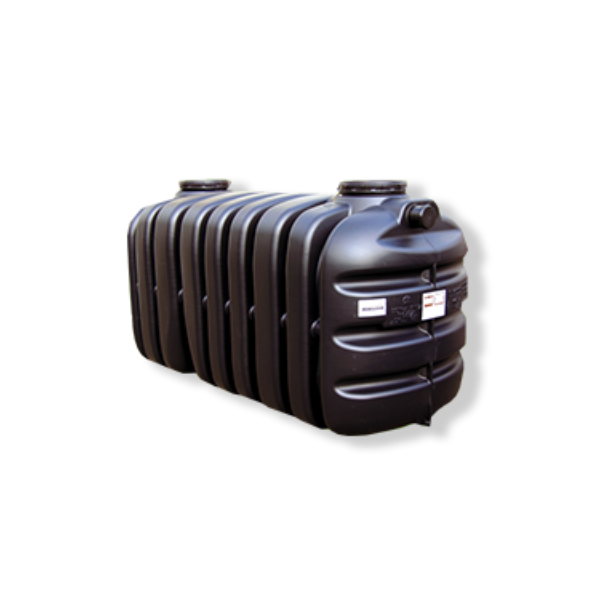
Septic tanks
Primary treatment for sites with favourable percolation results, from single-house to multi-unit capacity.
From 6 to 20 person equivalent
Septic tanks overview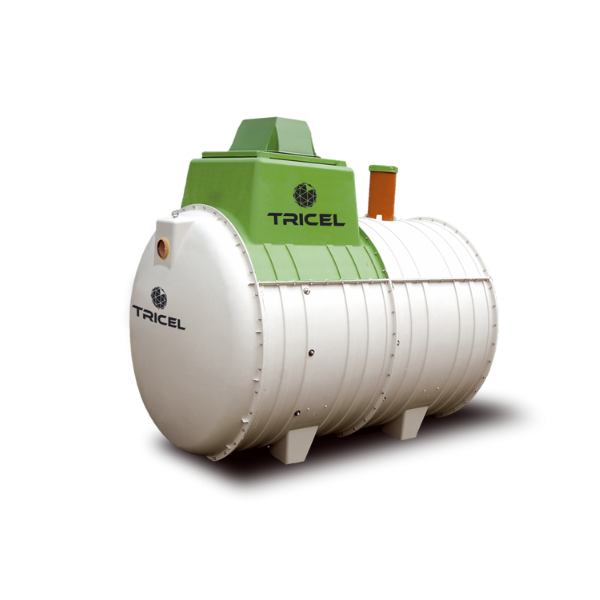
Wastewater treatment plants
Secondary treatment plants for sites where a standard septic tank and percolation area is not permitted.
Domestic & light commercial
Treatment plants overview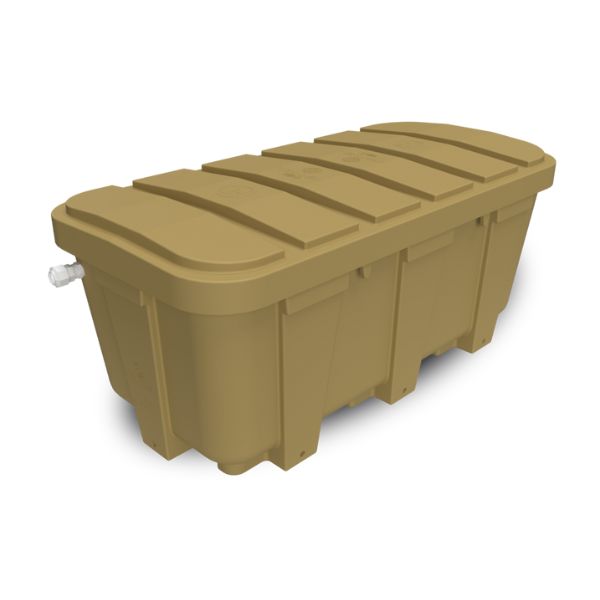
Tertiary & polishing systems
Added protection for sensitive sites, high water tables and nutrient-sensitive catchments, fitted alongside an existing tank or plant.
No-desludge polishing modules
Tertiary systems overview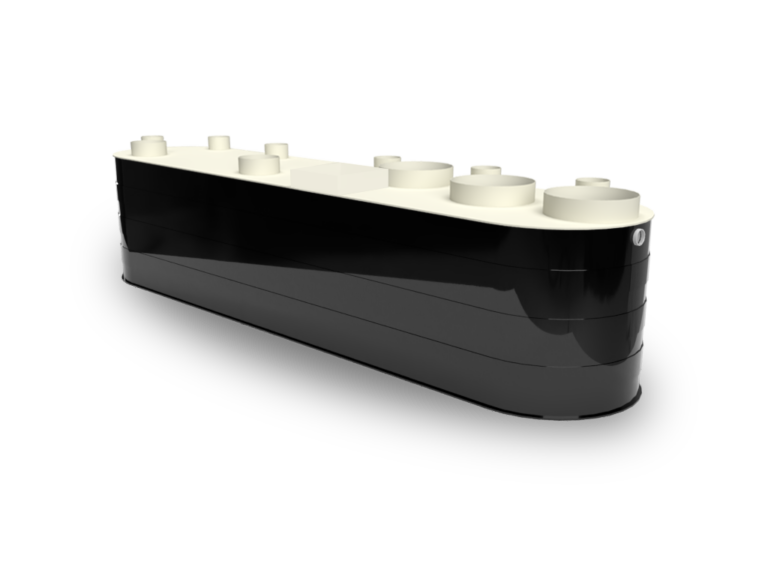
Commercial systems
Packaged and bespoke systems for hotels, schools, campsites and rural commercial premises above the domestic threshold.
Quoted to site specification
Commercial systems overview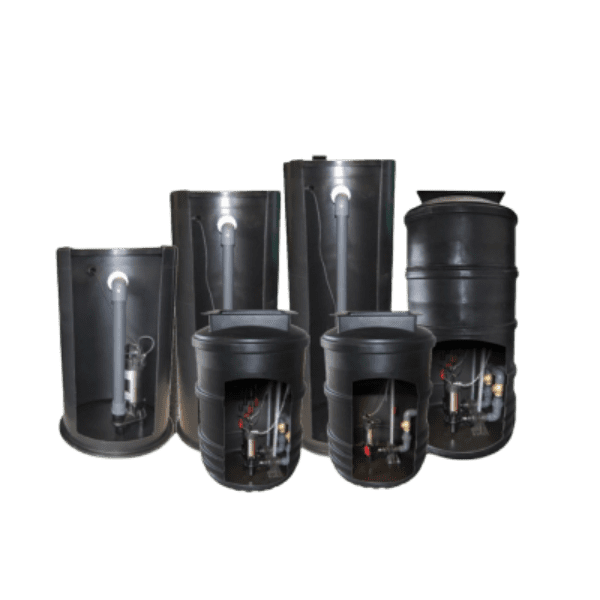
Pumping stations
Specified wherever gravity discharge to the treatment system or sewer connection point is not achievable on site.
Domestic & commercial
Pumping stations overview
Servicing & desludging
Structured service agreements and desludging, recommended annually under the EPA Code of Practice and a legal responsibility of the owner.
Product & service, not enquiry-only
Desludging processGet the right system for your site — and a written quote
Every site is different. Book a free, no-obligation visit and a Tricel engineer will assess your site, recommend a suitable certified system, and provide a written quote.
Regulatory compliance
What Irish regulations require
Every system on this page is specified and installed under the same compliance framework.
EPA Code of Practice 2021
Governs site suitability assessment, design and maintenance for systems up to 10 population equivalent, applying to installations from 7 June 2021 onward.
Read the compliance guideDWWTS registration
Statutory registration of the system with the local authority, €50 fee. Non-registration is an offence carrying a fine of up to €5,000.
How to register your systemNational Inspection Plan 2022–2026
At least 1,200 inspections per year, risk-weighted by local authority. 56% of systems inspected in 2024 failed, rising to 59% in 2025.
Grants for failed inspectionsS.R. 66:2015 / NSAI
Sets minimum performance requirements for products tested to EN 12566 Parts 1, 3, 4 and 6 for the Irish market.
Certification & standardsWhere demand is highest
Strongest county-level demand
Seven counties have accounted for more than half of all registered systems nationally for five consecutive years.
Share of installed systems (2024) · Source: CSO, Domestic Waste Water Treatment Systems 2024
Find your nearest Tricel distributor · Northern Ireland distributor
Indicative pricing
What a system typically costs
All figures are indicative and inclusive of typical market ranges published by Irish suppliers and installers. Final costs are always determined by a site suitability assessment (soil percolation, water table, bedrock, access, and system size in population equivalent, PE). Obtain written, like-for-like quotations before budgeting.
| Item | Indicative cost | Notes |
|---|---|---|
| Septic tank unit only | From approx. €950 | Primary treatment only; EN 12566-1 certified. |
| Septic tank, fully installed including percolation area | €4,000 – €12,000+ | Range reflects ground conditions, excavation, percolation design and site access. |
| Packaged wastewater treatment plant unit only, domestic approx. 6 PE | Approx. €2,000 – €5,500 | Secondary treatment; EN 12566-3 certified. |
| Treatment plant, fully installed | Typically €7,000 – €15,000+; quoted to site | May include tank, electrics, percolation or polishing filter, groundworks and commissioning. |
| Commercial systems, 50 PE and above | Quoted to site | Bespoke design. Commercial unit cost depends on PE, loading, discharge route and project specification. |
| Desludging, standard domestic tank | €230 – €450 per visit | Frequency depends on system type, tank size, occupancy and usage. |
| Annual service for treatment plants | From approx. €195 | Recommended annually. It may also be required for warranty or system performance requirements. |
| System registration, once off | €50 | Mandatory registration for domestic wastewater treatment systems. |
| A grant of up to 85% of eligible cost, to a maximum of €12,000, may be available for qualifying remediation following an EPA inspection. All figures are indicative only. Final costs depend on the site assessment, selected system, access, ground conditions, discharge route and installation requirements. | ||
Septic Tanks
A septic tank provides primary treatment (settlement) only, with secondary treatment occurring in a percolation area. The tank itself is the smallest part of the cost: units are advertised from approximately €950, while installed costs vary widely with groundworks. Published estimates for supply and installation range from €3,000–€5,000 for a straightforward site, €4,000–€6,000 as a general estimate including the percolation area, and €5,000–€12,000 where contractor rates and site conditions are less favourable. Replacing a failed percolation (drain) field alone can cost €5,000–€10,000, and up to €15,000 on difficult ground.
Packaged Wastewater Treatment Plants
Where a septic tank is unsuitable (poor percolation, high water table, restricted space), a packaged secondary treatment plant is required. Unit-only prices for domestic systems (typically 6 PE) start at roughly €2,500–€3,500 for non-electric biofilter units and from approximately €4,400–€5,600 ex-works for mechanical plants. Fully installed costs are quoted to site; older market commentary places complete installations at roughly €4,000–€9,000, and total project costs commonly exceed this once a polishing filter or pumped discharge is needed. There is no single published national figure: manufacturers consistently state that installation is priced only after a site assessment.
Commercial Systems (50 PE and Above)
Systems above 50 PE (for example, submerged aerated filter plants for businesses, parks, or multi-dwelling schemes) are individually designed and quoted. As a reference point, commercial biofilter units alone are listed at €2,500–€20,000 depending on capacity, before civil works and installation. A written gap: no reputable published range exists for fully installed commercial costs in Ireland; budget only from a site-specific quotation.
Ongoing Costs
Desludging a standard domestic tank cost €230–€380 in 2025 quotations, with other published ranges of €250–€450 depending on tank size and location. Most suppliers recommend desludging every 12–18 months for septic tanks; some treatment plants require it only every 3–5 years. Treatment plants also require an annual mechanical service, typically priced from around €195 depending on the supplier and travel distance.
Grants
A grant of 85% of eligible costs, up to a maximum of €12,000, is available to repair, upgrade, or replace a domestic wastewater treatment system. The main route is remediation following an inspection under the EPA’s National Inspection Plan; two further schemes apply in designated High-Status Objective Catchment Areas and Priority Areas for Action. The cap increased from €5,000 to €12,000 on 1 January 2024, and the previous 2013 registration deadline no longer disqualifies applicants. Routine maintenance and desludging are not grant-eligible. All systems must be registered with the local authority for a €50 fee; non-registration carries a fine of up to €5,000 on conviction.
Key Points
- Budget for the full installed cost, not the tank price: groundworks and the percolation area typically account for most of the spend.
- The site suitability assessment determines the system type and is the single largest driver of cost.
- Secondary treatment plants carry higher capital and running costs than septic tanks but are mandatory on many sites.
- The €12,000 grant applies only to qualifying remediation, not to new builds or routine maintenance.
Table of Contents
Why choose Tricel?
Irish manufacturing. Nationwide support. Guaranteed compliance.
Tricel has manufactured wastewater treatment systems in Ireland since 1973, from its facility in Killarney, Co. Kerry. The Vento septic tank range and Novo treatment plant range are certified to EN 12566 for installations from single homes up to 50+ population equivalent.
A nationwide network of approved distributors and installers, backed by Tricel's own technical sales team, covers supply, installation, commissioning and servicing across every county.
Quality
Manufactured in Killarney, Co. Kerry. The Novo tank is built from compression-moulded SMC — a composite material proven over 50 years in harsh operating conditions.
- EN 12566-1 (septic tanks) and EN 12566-3 (treatment plants) certified
- Independently tested by PIA GmbH, Aachen, Germany
Efficiency
The Tricel Novo treats wastewater across three independent zones, reaching an average 95.9% BOD removal — a higher standard of treatment than a septic tank alone.
- No moving parts or pumps inside the tank
- Ceramic diffuser lasts twice as long as standard rubber equivalents
Support
A nationwide network of approved distributors and installers, with a dedicated technical sales team on hand for sizing, site queries and project support.
- County-based distributor network across Ireland
- Direct technical support from Tricel's own team
Maintenance
Servicing and technical advice available directly from Tricel's environmental team, for the lifetime of your system.
- 10-year warranty on the Vento septic tank
- Call 064 663 2421 for servicing or technical advice
Frequesntly asked questions
Choosing a wastewater treatment system depends on your site, location, property type, ground conditions and discharge requirements. These FAQs explain the main differences between septic tanks, treatment plants, polishing filters and pumping stations, and help you understand what information is needed before selecting a Tricel system.
What type of wastewater system is appropriate for the site?
The appropriate wastewater system depends on the site assessment, ground conditions, property use, population equivalent, discharge route and whether the project is in Ireland or Northern Ireland.
If the site has suitable soil, enough space and acceptable percolation results, a septic tank with a percolation area may be suitable. If the ground conditions are restricted, the water table is high, the site is sensitive, or a higher treatment level is required, a wastewater treatment plant may be more appropriate.
Some sites may also need additional treatment after the main system. This could include a secondary treatment system, tertiary treatment unit, sand polishing filter or pumped outlet, depending on the site levels and discharge requirements.
In simple terms:
- Good percolation and enough space: septic tank may be suitable.
- Restricted ground or higher treatment requirement: wastewater treatment plant may be required.
- Sensitive site or extra polishing needed: tertiary treatment or polishing filter may be needed.
- No gravity fall available: pumping station may be required.
- Commercial or larger project: system should be sized by PE and project loading.
The final system should always be selected from the site characterisation report and local approval requirements, not by product type alone.
What is the difference between a septic tank and a wastewater treatment plant?
A septic tank provides primary treatment. It separates solids from wastewater inside the tank, but the liquid effluent still needs further treatment in a suitable percolation area or disposal system in the ground.
A wastewater treatment plant provides a higher level of treatment. It uses a mechanical or biological treatment process to treat wastewater before discharge. This type of system is often used where a standard septic tank and percolation area is not suitable or where the site assessment requires secondary treatment.
In simple terms, a septic tank mainly settles and separates wastewater, while a wastewater treatment plant actively treats wastewater before it leaves the system. The correct choice depends on the site assessment, ground conditions, available space, discharge route and local authority requirements.
What does a soil sample entail?
For an off-mains wastewater treatment system, a soil sample is usually part of the wider site assessment and percolation testing process. It helps determine whether the ground can safely receive and further treat wastewater effluent after it leaves the septic tank, treatment plant or polishing filter.
A qualified site assessor will normally examine the soil and subsoil through a trial hole, record the soil type, texture, structure, depth, drainage characteristics, water table level and any limiting factors such as bedrock or compact clay. The assessor may also carry out T-tests or P-tests to measure how quickly water moves through the soil. The EPA notes that these tests form part of a wider assessment, including trial pitting, and should be carried out by a suitably qualified person.
In simple terms, the soil sample helps answer three questions:
- Can the site absorb treated effluent safely?
- Is the soil suitable for a percolation area or polishing filter?
- What type of wastewater system is appropriate for the site?
The outcome can affect whether a standard septic tank is suitable, whether a wastewater treatment plant is required, or whether additional secondary or tertiary treatment is needed. The EPA’s 2021 Code of Practice covers site characterisation, design, operation and maintenance for domestic wastewater treatment systems up to 10 PE in Ireland.
Can the site absorb treated effluent safely?
A site can only absorb treated effluent safely if the soil and subsoil have enough depth, drainage capacity and filtering ability to receive the discharge without causing ponding, pollution, odour or contamination risk.
This is checked during the site assessment. A qualified site assessor will examine the soil profile, groundwater level, bedrock depth, slope, drainage conditions and percolation test results. The assessment determines whether the site can support a percolation area, polishing filter or other approved discharge route.
If the ground drains too slowly, treated effluent may not disperse properly. If it drains too quickly, it may pass through the soil without enough treatment. In either case, a standard septic tank system may not be suitable, and a wastewater treatment plant with secondary or tertiary treatment may be required.
The final decision should be based on the site characterisation report and the relevant local authority or approval requirements.
How often does a septic tank need to be desludged?
The Code of Practice ties desludging frequency to tank size and occupancy — as a guide, a 3.5m³ tank serving a three-person household is typically desludged roughly every three to four years. Smaller or more heavily used tanks need more frequent attention.
Is a grant available if my septic tank fails inspection?
Yes. Grants of up to 85% of eligible cost, to a maximum of €12,000, are available for qualifying remediation, repair, upgrade or replacement following a National Inspection Plan inspection, or for properties in designated High Status or Prioritised catchment areas.
What standard do wastewater treatment products need to meet in Ireland?
Products must be tested to the EN 12566 series and certified under NSAI’s S.R. 66:2015 for the Irish market. Certification is a market-access requirement for any manufacturer selling a packaged treatment plant here.
Do I need planning permission to install or replace a septic tank?
A site assessor must confirm suitability under the EPA Code of Practice via a Site Characterisation Form, and local authority development plan policy applies to DWWTS installations in rural housing. The system must then be registered once installed.
What's the difference between a domestic and a commercial system?
Domestic systems are designed up to 10 population equivalent under the Code of Practice. Commercial systems, for premises such as hotels, schools or campsites above roughly 50 population equivalent, are specified and quoted individually to the site.
Related resources
Everything else you might need
Grants & funding
Eligibility, the 85% / €12,000 grant, and how to apply after a failed inspection.
Grants guide →Cost & pricing guide
A fuller breakdown of product, installation and groundworks costs by system type.
Read the cost guide →Find an installer
Regional installer and distributor network across the seven highest-demand counties.
Find an installer →Service & desludging plans
One to ten-year service agreements, from €195, covering travel and servicing labour.
View service plans →Site assessment
Use the free Tricel Site Assessor tool to check which wastewater treatment system category your site may fall under, based on the EPA Code of Practice
Start assessment →Case studies
Recent domestic and commercial installations, by county and sector.
Browse case studies →Get in touch