
Updated June 2026
Selling a House
listing a house with a septic tank
selling-a-property
Home » selling a property with a septic tank
Regulations & compliance · Jurisdiction: Republic of Ireland
Selling a House with a Septic Tank in Ireland
What to confirm, register and gather before a rural property with a septic tank or domestic wastewater treatment system goes on the market — and what your solicitor will ask for.
In brief
You can sell a property that uses a septic tank or domestic wastewater treatment plant. Before progressing the sale, the seller should normally:
- Confirm that the system is registered with Protect Our Water .
- Obtain or locate the Certificate of Registration.
- Identify the tank, treatment unit, percolation area, or polishing filter.
- Gather planning, installation, servicing, maintenance, and desludging records.
- Tell the solicitor about any official inspection, Certificate of Compliance, or Advisory Notice.
- Clarify access rights where any part of the system is shared or located outside the property boundary.
- Address signs of leakage, ponding, odour, alarm faults, or poor operation.
- Provide private-well information and recent water test results where relevant.
- Ensure that the new owner updates the ownership details on the register after the sale.
Important: this page provides general wastewater guidance. Your solicitor, engineer, surveyor, local authority, or other suitably qualified professional should advise on the legal and technical circumstances of an individual property.
Selling a house with a septic tank or another domestic wastewater treatment system is common in rural Ireland. A septic tank does not prevent a property from being sold, but missing registration records, uncertain system locations, unresolved planning matters, poor maintenance, or an outstanding Advisory Notice can delay the conveyancing process.
The seller should identify the complete wastewater system, confirm that it is registered, gather the relevant documents, and provide clear information to the solicitor and prospective buyer. It is also sensible to address visible operational problems before the property is placed on the market. This guide applies to houses in the Republic of Ireland. Northern Ireland has a different regulatory system based on NIEA consent to discharge.
The Law Society of Ireland includes evidence of septic tank or other domestic wastewater system registration among the documents that may be needed for a property sale, and advises sellers to gather planning and property records early because missing documentation can delay the issue of contracts.
Can you sell a house with a septic tank?
Yes. A house can be sold with a septic tank, packaged wastewater treatment plant, polishing filter, or another private domestic wastewater system. The presence of a private wastewater system is not, in itself, a defect. The important questions are whether:
- The system is registered.
- Its location and discharge route are known.
- It is operating without creating a risk to health or the environment.
- It has been maintained and desludged appropriately.
- Relevant planning and installation documents are available.
- Any inspection findings or Advisory Notices have been dealt with.
- The owner has the legal rights needed to access, use, maintain, and replace the system.
The EPA’s buying-and-selling checklist advises both parties to establish where the system is located, whether it lies within the property boundary, whether it is fit for purpose, whether it is maintained, and whether records are available.
Does the septic tank have to be registered before the sale?
Domestic wastewater treatment systems in the Republic of Ireland must be registered. This includes septic tanks and other systems serving homes that are not connected to the public foul sewer. The registration fee is currently €50. The former five-year renewal requirement has been removed, so an existing registration does not need to be renewed solely because five years have passed.
A Certificate of Registration is required when a property is being sold or ownership is transferred. Protect Our Water states that the new owner is responsible for updating the ownership details on the register.
For complete registration instructions, see Septic Tank Registration in Ireland.
Who is this guidance for?
This page is intended for site assessors preparing domestic wastewater reports; engineers designing drainage and wastewater arrangements; architects coordinating planning drawings; planning consultants assembling applications; self-builders and homeowners who need to understand the process; developers working on rural or unsewered sites; and installers reviewing the approved design before construction.
Homeowners should appoint a suitably qualified professional to complete the site assessment. The EPA describes an appropriately trained and qualified assessor as a person with relevant training, such as QQI, former FETAC or equivalent qualifications, which can be demonstrated to the local authority. The EPA notes that the underlying site-suitability training course is delivered through the Water Services Training Group, part of the Local Authority Services National Training Group.
What if the system has never been registered?
The owner should register the system through Protect Our Water as early as possible, rather than waiting for the buyer’s solicitor to request the certificate.
Registration records the property and domestic wastewater system on the official register. It does not confirm:
- That the system has passed an inspection.
- That the system has planning permission.
- That its installation complies with every current technical standard.
- That it is free from faults.
- That the percolation area is functioning correctly.
Registration and technical condition are separate matters. The EPA’s checklist asks about registration, condition, maintenance, planning requirements, inspection history, and the location of the system as distinct questions.
Do you need an EPA septic tank inspection before selling?
You are not normally required to arrange an EPA or local-authority inspection simply because you are selling the property. Official inspections under the National Inspection Plan are carried out by trained City or County Council inspectors appointed by the EPA, allocated through the national programme, with at least ten working days’ notice normally given to the homeowner.
A seller should therefore not claim that a system has “passed EPA inspection” unless an official inspection has actually taken place and the relevant documentation is available. A buyer, seller, engineer, or surveyor may still recommend an independent wastewater assessment as part of the transaction — this is separate from a National Inspection Plan inspection and does not result in an official EPA Certificate of Compliance.
An independent assessment may be particularly useful where:
- The age or type of the system is unknown.
- No drawings or installation records are available.
- The system’s location is uncertain.
- Part of the system may be outside the legal property boundary.
- The percolation area is wet or shows signs of ponding.
- The property has been extended or its occupancy has increased.
- The system is shared with another property.
- The system is close to a private well.
- Alarms or pumps are not operating correctly.
- The buyer’s surveyor or solicitor has raised questions.
The Law Society’s seller checklist notes that evidence relating to the wastewater system may take longer to obtain where a survey is required to confirm its location. Tricel’s own site assessment tool can help establish the current condition of a system ahead of a sale.
For the official inspection process, see EPA Septic Tank Inspections in Ireland.
Certificate of Registration, Certificate of Compliance and Advisory Notice
These documents have different meanings and should not be confused.
Certificate of Registration
Confirms that the domestic wastewater treatment system has been entered on the official register. It does not certify the condition, planning status, treatment performance, or suitability of the system.
Certificate of Compliance
May be issued where an official inspection has established that the system complies with the relevant Water Services requirements. Many properties will never have been selected for an official inspection, so the absence of a certificate does not automatically mean that a system has failed or is unlawful.
Advisory Notice
May be issued following an official inspection where work is required to satisfy Water Services legislation. It identifies the matters to be remedied and the date by which the work must be completed.
If an Advisory Notice exists, give it to your solicitor immediately. The seller should obtain technical advice on the required works and clarify whether they will be completed before closing or otherwise addressed within the sale arrangements. Do not describe a system as compliant while an unresolved Advisory Notice remains in place.
Documents to gather before putting the house on the market
Providing a clear wastewater information file can reduce avoidable questions later in the transaction. Gather the following where available:
| Document or information | Why it matters |
|---|---|
| Certificate of Registration | Confirms that the system is registered. |
| Site plan or drainage drawing | Shows the tank, treatment unit, pipework, and disposal area. |
| Original planning permission | Helps establish what wastewater arrangement was approved. |
| Planning conditions | May specify the system type, location, or treatment standard. |
| Engineer’s or architect’s compliance documents | May provide evidence relating to the completed development. |
| Installation and commissioning records | Identify the system, model, capacity, and installation date. |
| Manufacturer’s manual | Explains operation, servicing, and desludging requirements. |
| Service reports | Show that mechanical components have been maintained. |
| Desludging receipts | Provide evidence that sludge was removed by an authorised contractor. |
| Repair or upgrade records | Explain significant work completed on the system. |
| Official inspection report | Records the outcome of an inspection under the National Inspection Plan. |
| Certificate of Compliance | Confirms the outcome of an official compliant inspection. |
| Advisory Notice | Identifies outstanding or completed remedial requirements. |
| Grant correspondence | Relevant where grant-assisted remedial work has been completed. |
| Private-well test results | Help establish the condition of the drinking-water supply. |
| Shared-system agreement | Explains access, maintenance, and cost responsibilities. |
The EPA advises that records showing desludging by an authorised contractor should be retained for five years. It also recommends that the seller provide information on the type, size, location, maintenance, and percolation area.
Check the planning history
Registration of a septic tank does not replace a planning review. Your solicitor or appointed property professional may need to establish:
- What wastewater system was shown in the original planning application.
- Whether the installed system corresponds with the planning permission.
- Whether the tank and percolation area are located as approved.
- Whether later extensions or additional accommodation changed the loading on the system.
- Whether an upgrade or replacement obtained the necessary approval or exemption.
- Whether all relevant planning conditions were satisfied.
The Law Society advises sellers to gather planning permissions, evidence of compliance, and details of known planning issues before contracts are prepared, and specifically includes wastewater registration evidence within its planning and building compliance checklist.
Where the paperwork is incomplete or the installed arrangement differs from the available plans, consult the solicitor and an appropriately qualified engineer, architect, building surveyor, or planning professional.
Do not assume that an old installation must meet every requirement of the EPA 2021 Code of Practice. The Code primarily applies to qualifying site assessments and installations from 7 June 2021, while earlier developments may have been assessed under earlier requirements. The planning history, installation date, condition, and any proposed works need to be considered together.
Locate the complete wastewater system
Before viewings or a technical assessment, identify more than the tank cover. The complete installation may include: the septic tank or packaged treatment plant; inlet and outlet pipework; inspection chambers; distribution boxes; a percolation area; a polishing filter; a raised bed or other disposal area; pumps; control panels; alarms; vents; and access points for servicing and desludging.
Prepare a simple plan showing the approximate location of each component, including the location of any private well, stream, drain, road, boundary, neighbouring property, or structure that may be relevant.
Do not open, enter, or lean into a wastewater tank. Tanks can contain toxic gases and present serious risks of falls, drowning, and exposure to untreated wastewater. Internal inspection should only be carried out by suitably trained personnel.
Check whether the system is within the property boundary
Establish whether the tank, percolation area, polishing filter, pipework, access route, or discharge point is wholly contained within the property being sold. Where any part is on a neighbour’s or third party’s land, the solicitor will need to examine:
- The legal right to use the system.
- Rights of access for inspection, desludging, repair, and replacement.
- Responsibility for maintenance and associated costs.
- Rights to run wastewater pipes through adjoining land.
- Restrictions affecting access by servicing or desludging vehicles.
- Whether the arrangement is accurately reflected in the property title and property map.
The EPA specifically advises buyers and sellers to determine whether the system lies within the site boundary or on third-party land because this affects access and maintenance. A verbal arrangement with a neighbour may not provide sufficient certainty for a property transaction — refer the matter to the solicitor as early as possible.
Selling a property with a shared septic tank
A shared wastewater system requires additional documentation. Confirm: which properties are connected; who owns the tank and disposal area; where each component is located; who can access the system; how maintenance and desludging are arranged; how costs are divided; what happens if a connected owner does not pay; who is responsible for repairs or replacement; and whether the system has enough capacity for all connected properties.
Provide the buyer’s solicitor with any deed, easement, wayleave, management agreement, maintenance agreement, invoices, and correspondence relating to the shared system. Where no written agreement exists, seek legal advice before the property is placed on the market — a shared arrangement without clear access and maintenance rights can create uncertainty for the buyer.
Inspect the visible condition of the site
A seller should not attempt to certify technical compliance without the necessary expertise. However, obvious warning signs should not be ignored. Arrange professional advice where there is:
- Wastewater or sewage visible on the ground.
- Persistent wetness or ponding around the tank or percolation area.
- Strong or recurring odours.
- Unusually lush strips of vegetation over disposal pipes.
- Toilets or drains emptying slowly.
- Sewage backing up into the house.
- Damaged or insecure access covers.
- Cracks or visible movement around the installation.
- An alarm that remains active.
- A pump or blower that is not operating.
- Rainwater entering the foul wastewater system.
- Evidence of discharge to a ditch, stream, or surface drain.
- Concern that a nearby private well may be affected.
Official inspections check for leakage, surface ponding, direct discharge to surface water, rainwater entering the system, appropriate maintenance, desludging, and risks to human health or the environment. Do not conceal wet areas, odours, alarms, inspection findings, or known faults from the buyer or appointed professionals.
Should the septic tank be emptied before selling?
Rural houses with private wastewater systems may also rely on a private well. The EPA’s property-sale checklist recommends confirming the type and construction of the well, where it is located, whether treatment is installed, whether the supply is potable, and whether recent water-quality test results are available.
Provide the buyer with available laboratory results, treatment-system information, filter replacement records, and details of any historical contamination. Where there are concerns about the proximity or relationship between the well and wastewater system, obtain professional advice and arrange appropriate laboratory testing.
What happens if the system failed an official inspection?
Where an official inspection identifies non-compliance, the local authority may issue an Advisory Notice requiring specified remedial work by a stated date. The required response depends on the problem identified and may involve maintenance or desludging, repairing damaged covers or pipework, preventing rainwater from entering the system, correcting a direct discharge, repairing or replacing mechanical components, improving the disposal area, upgrading part of the treatment process, or replacing the complete system.
The appropriate work depends on the risk identified, site size, geology, hydrology, and the existing installation. Give the inspection report and Advisory Notice to your solicitor — do not wait for the buyer’s legal enquiries to reveal the issue.
Sites that require additional consideration
A standard domestic report may not be sufficient for every project. Additional assessment or consultation may be necessary where the site is close to a drinking-water source; groundwater vulnerability is high or extreme; the development is close to a protected habitat; the site is within or near a floodplain; karst limestone or swallow holes are present; bedrock or the water table is close to the surface; the site has very fast or very slow percolation; several neighbouring wastewater systems create cumulative loading; site improvement works are proposed; a discharge to surface water is being considered; the development exceeds 10 PE; the wastewater is commercial or contains trade effluent; or several dwellings will share one treatment system.
The EPA domestic Code of Practice applies to single houses or equivalent developments with a population equivalent of no more than 10. Larger developments require a project-specific design and may fall under other technical standards, planning requirements or discharge-authorisation procedures.
Can you sell before remedial work is completed?
An unresolved wastewater issue does not necessarily make a sale impossible, but it can affect the buyer’s willingness to proceed, the agreed sale price, the buyer’s survey, legal enquiries, lender requirements, insurance, the proposed closing date, and responsibility for completing the work.
The legal and contractual treatment of outstanding work must be agreed through the parties’ solicitors. Possible arrangements may include completing the work before closing or formally addressing responsibility and cost within the sale agreement. Tricel does not provide legal advice on which arrangement is appropriate — the seller should obtain a technical scope and realistic cost information, then discuss the available options with the solicitor.
Are septic tank grants available when selling a property?
Grant support may be available for qualifying remediation, repair, upgrading, or replacement of a domestic wastewater treatment system under three government grant schemes.
National Inspection Plan
Applies where required work arises directly from an official inspection and the local authority has issued an Advisory Notice.
Prioritised Areas for Action
Applies to eligible systems in designated areas where the homeowner has received a letter confirming eligibility from the Local Authority Waters Programme Office.
High Status Objective Catchment Areas
Applies to eligible systems in designated catchment areas where the local authority has confirmed that the homeowner may apply.
- Routine servicing, maintenance, and desludging costs do not qualify.
- Eligibility must be confirmed under one of the three approved grant routes.
- Applications and grant payments are administered by the relevant City or County Council.
- The local authority should be contacted before work begins to confirm eligibility, the required application process, and the approved scope of work.
- Grant payment is normally made after the approved work has been satisfactorily completed.
Do not postpone essential repairs while awaiting a grant decision. Contact the Rural Water Section of the relevant local authority before commencing work.
See our guide to septic tank grants in Ireland for further details, or review the official government grant guidance .
Practical seller timeline
The following is a practical sequence rather than a statutory timetable.
As soon as you decide to sell
- Appoint a solicitor.
- Request the title deeds where they are held by a lender.
- Confirm whether the wastewater system is registered.
- Locate the Certificate of Registration.
- Gather the available planning and wastewater records.
- Tell the solicitor about shared systems, third-party land, previous inspections, or official notices.
Before marketing or accepting an offer
- Identify the complete wastewater system and disposal area.
- Check visible covers, alarms, controls, and access points.
- Arrange any overdue servicing or desludging.
- Investigate visible faults or signs of poor operation.
- Consider an independent assessment where the system type, condition, or location is uncertain.
- Compile private-well records where applicable.
Before contracts are issued
Give the solicitor the registration certificate, planning and compliance documents, maintenance and desludging records, inspection documents, Advisory Notices, system drawings, shared-system agreements, and details of any known faults or remedial work.
At or after completion
The purchaser becomes responsible for the property and should update the ownership information on the official register. Protect Our Water states that ownership changes must be submitted and that the new owner is responsible for ensuring that the registered details are current.
The Law Society recommends appointing a solicitor and gathering documentation early because title, planning, and property records can take several weeks to obtain.
Seller's septic tank checklist
Use this checklist before issuing the property-sale documents:
- The system is registered.
- The Certificate of Registration is available.
- The tank or treatment plant has been located.
- The percolation area, polishing filter, or discharge area has been located.
- All components are within the property boundary, or the necessary legal rights have been identified.
- Shared-system agreements are available.
- The system shown in the planning records has been checked against the installed system.
- Installation and commissioning documents have been gathered.
- Service and maintenance reports are available.
- Desludging receipts for the previous five years have been gathered where available.
- Any official inspection report has been provided.
- Any Certificate of Compliance has been provided.
- Any Advisory Notice has been disclosed.
- Visible leakage, ponding, odours, alarms, or drainage problems have been investigated.
- Private-well information and water-test results are available where applicable.
- The solicitor has been informed of all known wastewater issues.
Need help before you list the property?
Tricel can provide information on domestic wastewater treatment options, replacement systems, and the technical requirements that may apply to an individual site. Planning, legal, boundary, and conveyancing questions should be referred to the appropriate qualified professional.
Information for buyers
A buyer considering a rural house should not rely only on the fact that the system is registered. Ask for: the registration certificate; a plan showing the complete system; the system type and approximate age; planning and installation records; servicing and desludging evidence; official inspection documents; details of repairs or upgrades; information about shared ownership or third-party access; the location of any private well; and recent drinking-water test results where relevant.
Consider an independent wastewater assessment where documentation is incomplete or the condition, capacity, location, or disposal route is uncertain. The EPA’s official buying-and-selling checklist covers these matters because an unsuitable or poorly maintained system may add to the buyer’s future costs.
Table of Contents
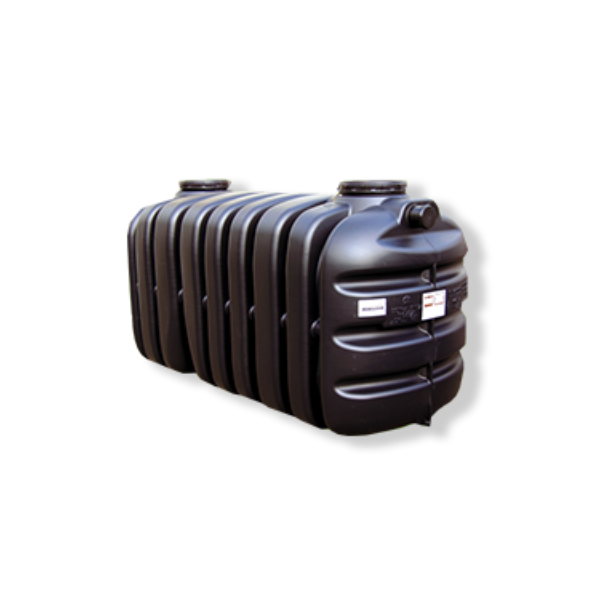
Septic tanks
Primary treatment for sites with favourable percolation results, from single-house to multi-unit capacity.
From 6 to 20 person equivalent
Septic tanks overview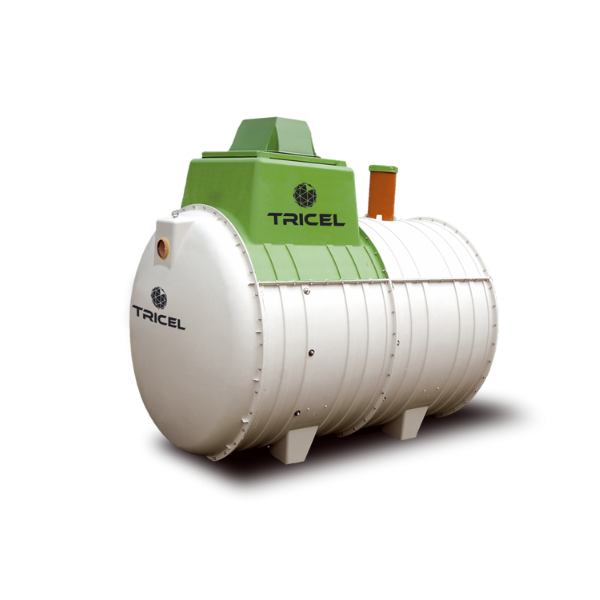
Wastewater treatment plants
Secondary treatment plants for sites where a standard septic tank and percolation area is not permitted.
Domestic & light commercial
Treatment plants overview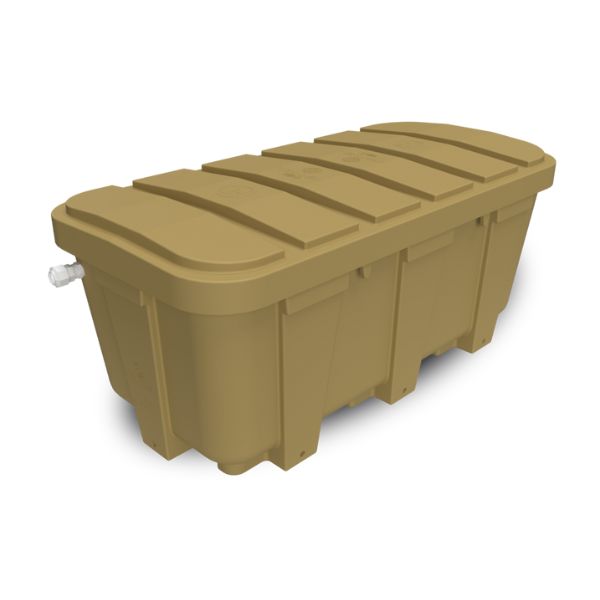
Tertiary & polishing systems
Added protection for sensitive sites, high water tables and nutrient-sensitive catchments, fitted alongside an existing tank or plant.
No-desludge polishing modules
Tertiary systems overview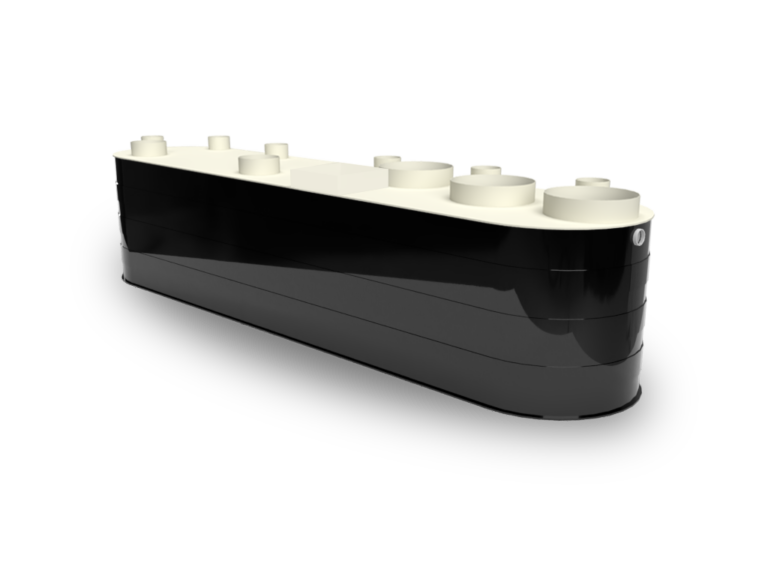
Commercial systems
Packaged and bespoke systems for hotels, schools, campsites and rural commercial premises above the domestic threshold.
Quoted to site specification
Commercial systems overview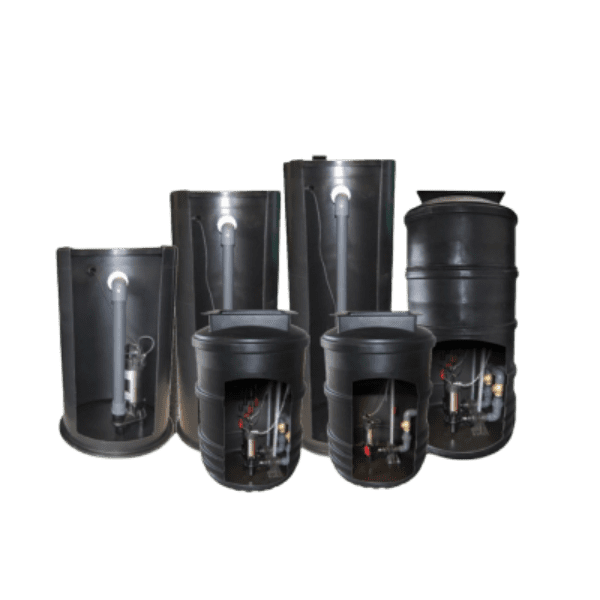
Pumping stations
Specified wherever gravity discharge to the treatment system or sewer connection point is not achievable on site.
Domestic & commercial
Pumping stations overview
Servicing & desludging
Structured service agreements and desludging, recommended annually under the EPA Code of Practice and a legal responsibility of the owner.
Product & service, not enquiry-only
Desludging processFrequently asked questions about selling a house with a septic tank
Answers to common questions about registration, inspections, documentation, maintenance, shared systems, Advisory Notices, and grants when selling a property with a private wastewater system.
Can I sell a house with an unregistered septic tank?
The owner is legally required to ensure that the domestic wastewater treatment system is registered. A Certificate of Registration is required when selling or transferring ownership of a property served by one of these systems.
The owner should register through Protect Our Water as early as possible rather than waiting for the buyer’s solicitor to request the certificate. The current registration fee is €50.
Does a septic tank have to pass an EPA inspection before a house is sold?
No general requirement states that every septic tank must undergo an official inspection before a property can be sold. Official inspections are allocated to City and County Councils under the EPA’s National Inspection Plan and are not routinely arranged by the seller as part of every property sale.
A seller or prospective buyer may separately commission an independent wastewater assessment where the condition, capacity, location, planning status, or operation of the system is uncertain. This is not the same as an official National Inspection Plan inspection.
Is a registration certificate proof that the septic tank is compliant?
No. A Certificate of Registration confirms that the property and its domestic wastewater treatment system have been entered on the official register.
It does not certify the system’s planning status, physical condition, treatment performance, capacity, installation standard, or suitability for the property.
What is a septic tank Certificate of Compliance?
A Certificate of Compliance is associated with the outcome of an official inspection where the domestic wastewater treatment system has been found to comply with the relevant Water Services requirements.
It is different from a Certificate of Registration. Many properties will not have a Certificate of Compliance because they have never been selected for an official inspection.
What if I have lost the Certificate of Registration?
Contact the Protect Our Water Support Centre to confirm the registration record and obtain the documentation or account assistance needed for the property sale.
Do I have to renew septic tank registration every five years?
No. The former requirement to re-register every five years has been removed. An existing registration certificate remains valid, and there is no re-registration fee.
The registered information should still be updated when the property changes ownership or when relevant property details change.
Does the septic tank have to be emptied before selling?
Not automatically. The system should be desludged at intervals appropriate to its design, capacity, use, sludge level, and the manufacturer’s instructions.
Where desludging is due, use an authorised contractor and retain the receipt. EPA guidance states that evidence of desludging should be retained for five years.
What if the septic tank is on a neighbour’s land?
Tell the solicitor immediately. The property documents should be checked to establish the legal rights to use, access, inspect, desludge, maintain, repair, and replace the system.
The position of the tank, pipework, and disposal area should also be compared with the title map and any available planning or drainage drawings.
What if the septic tank is shared?
Provide any written shared-system agreement that explains ownership, access rights, maintenance duties, cost allocation, desludging arrangements, repair responsibilities, and replacement obligations.
The solicitor should confirm that the legal rights and obligations are properly reflected in the title documents.
Can I sell with an outstanding Advisory Notice?
An Advisory Notice should be disclosed to the solicitor together with the inspection report, details of the required work, the compliance deadline, and records of any remediation already completed.
The seller and buyer should obtain legal advice on how the outstanding work, responsibility, timing, and associated costs will be addressed in the transaction. An Advisory Notice should not be treated as resolved until the relevant local authority has confirmed compliance.
Can I get a grant to replace the septic tank before selling?
Possibly. The property, wastewater system, and proposed work must satisfy the conditions of one of the three domestic wastewater grant schemes:
the National Inspection Plan scheme, the Prioritised Areas for Action scheme, or the High Status Objective Catchment Areas scheme.
Grants can cover up to 85% of approved eligible costs, subject to a maximum grant of €12,000. Routine maintenance, servicing, and desludging do not qualify.
Under the National Inspection Plan route, the work must arise from an official local-authority inspection and an Advisory Notice. Contact the Rural Water Section of the relevant City or County Council before starting work to confirm eligibility and the application process.
Related guidance
Further guidance on septic tank registration, inspections, planning, legal requirements, maintenance, grants, and wastewater treatment systems in Ireland.
Septic Tank Registration in Ireland
How to register a domestic wastewater treatment system, obtain the registration certificate, update ownership details, and understand what registration does and does not confirm.
Read guideEPA Septic Tank Inspections in Ireland
How National Inspection Plan inspections are arranged, what the local authority inspector checks, and what happens after an Advisory Notice.
Read guideSeptic Tank Regulations in Ireland
The principal legal requirements covering registration, maintenance, inspections, pollution prevention, and the responsibilities of system owners.
Read guideWastewater Planning Applications
Guidance on site assessments, wastewater reports, system recommendations, supporting documents, and planning applications for rural properties.
Read planning guideSeptic Tank and Wastewater System Desludging
When a system may require desludging, how the process works, why an authorised contractor should be used, and which records should be retained.
Read guideSeptic Tank Grants in Ireland
Guidance on the three domestic wastewater grant routes, qualifying remedial work, eligibility requirements, and the local-authority application process.
Read guideEPA Code of Practice 2021
Technical guidance covering site characterisation, percolation testing, system selection, design, installation, operation, and maintenance for domestic sites.
Read guideWastewater Treatment Systems Ireland
Compare septic tanks, domestic wastewater treatment plants, tertiary treatment systems, polishing filters, pumping stations, and commercial wastewater options.
View systemsSeptic Tanks
View septic tank options for sites where the assessment confirms that primary treatment and a suitable downstream disposal arrangement are appropriate.
View septic tanksGet in touch before you list
Whether you need site-specific technical advice, information about a replacement system, or help understanding what a recent inspection means for your sale, Tricel’s team can help.
Get in touch