
Home » Nursing Home & Care Facility Wastewater Treatment | Tricel Ireland
Updated July 2026
RoI & NI coverage
PE-based sizing
Continuous load
Commercial Wastewater systems · Ireland & Northern Ireland
Nursing Home Wastewater Treatment | Tricel Ireland
Off-mains wastewater treatment for nursing homes, care homes and residential care facilities. Sized around a continuous 24-hour residential load, laundry and kitchen use, the discharge route and site conditions — with the reliability a care setting demands.
A nursing home produces wastewater continuously, day and night, at a higher volume per resident than an ordinary household. Assisted bathing, laundry, a commercial kitchen, cleaning for infection control and round-the-clock staffing all add to the load.
For this reason, the system should be sized around the full facility load and the calculated population equivalent (PE), not the number of beds alone. The correct route depends on the property, site location, calculated PE, kitchen and laundry activity, discharge route and ground conditions — and, because a care home cannot tolerate an out-of-service treatment plant, on reliability and servicing arrangements.
Tricel supplies wastewater treatment systems for domestic, light commercial and commercial applications across Ireland and Northern Ireland. Nursing homes typically sit in the commercial range, and the right selection depends on site, location, property type, ground conditions and discharge requirements.
Is this page right for your project?
This page is for off-mains residential care settings, including:
- Nursing homes
- Residential care homes
- Care facilities for older people
- Disability and specialist care residences
- Convalescent and step-down units
- Sheltered or supported living schemes
- Rural care homes in converted country houses
- Care homes being extended or refurbished
- Facilities replacing an older or failing septic tank
If the site is a hospital or larger healthcare campus, the load and discharge requirements may be more demanding and should be reviewed as a dedicated commercial project. If the property is mainly a hotel or guest accommodation, the hotel wastewater treatment page may be a stronger starting point. For general commercial premises, use the commercial wastewater treatment page as the parent reference.
Why nursing home wastewater needs careful design
A nursing home is not like a house, and not like a school or campsite either. A school concentrates its load into school hours and empties overnight; a campsite peaks seasonally. A nursing home runs continuously — residents live on site, so there is a steady base load through the night as well as the day, with peaks around morning routines, mealtimes, bathing schedules and laundry cycles.
Per-resident water use also tends to be higher than in an ordinary home. Assisted washing and bathing, frequent laundering of bedding and clothing, higher cleaning standards for infection control, and catering for every resident and the staff on shift all raise both the volume and, in the case of kitchen and laundry flows, the strength of the wastewater. The system should therefore be reviewed around both flow and wastewater strength, and around the fact that it must perform reliably every day of the year.
Key wastewater factors for care facilities
The main factors that shape a nursing home system are the continuous load, high per-resident volume, laundry and kitchen strength, infection-control cleaning, and the need for dependable, low-disruption operation.
1Continuous 24-hour load
Unlike intermittent sites, a care home never fully empties. The system carries a genuine overnight base load as well as daytime peaks, which suits a treatment process that benefits from steady loading — but the plant must be sized for the peaks, not the average.
2High per-resident water use
Assisted bathing, frequent toileting support and higher hygiene standards mean water use per resident is typically above ordinary domestic figures. Bed count alone understates the load.
3Laundry
On-site laundering of bedding, towels and clothing produces a large, warm, detergent-bearing flow. It can be one of the heaviest single contributors and should be quantified in the design, not treated as incidental.
4Commercial kitchen
Catering for residents and staff adds organic load and fats, oils and grease (FOG). Grease management is usually needed before kitchen wastewater reaches the treatment plant.
5Cleaning chemicals and infection control
Care settings use disinfectants and cleaning products heavily. Excessive or unsuitable chemical use can affect the biological treatment process, so operating guidance and staff awareness matter.
6Reliability and low disruption
A care home cannot be without functioning drainage. Alarms, dependable servicing, accessible maintenance and, on some sites, telemetry or standby arrangements should be considered from the design stage.
How a nursing home wastewater system is sized
Sizing needs a project-specific review. Population equivalent is used to express the non-domestic load in a way comparable to domestic loading, so kitchen, laundry and staff contributions can be brought into a single design figure. The information usually needed includes:
- Site location and jurisdiction (RoI or NI)
- Number of resident beds
- Expected maximum occupancy
- Staff numbers across all shifts
- Day-visitor and family visiting patterns
- Number of assisted bathrooms and en-suites
- On-site laundry scale and equipment
- Commercial kitchen and meals prepared per day
- Grease trap or separator details
- Expected daily flow and calculated PE
- Existing wastewater system, if any
- Proposed discharge route
- Ground conditions and percolation data
- Site layout, levels and access
- Whether pumping is required
- Planned extensions or increased bed numbers
- Any required effluent standard
- Reliability, alarm and servicing expectations
Review flag — PE figures. Any indicative PE ranges used in planning discussions are starting points only, not design outputs. Staff numbers, laundry scale and kitchen catering can move a nursing home’s PE well above a simple per-bed estimate. Confirm the exact PE through site assessment and the product team before publish.
Why bed count alone is not enough
Two homes with the same number of beds can produce very different loads. One may send laundry off site and serve delivered meals; another may run a full on-site laundry and commercial kitchen, with a higher dependency ratio requiring more assisted bathing and more staff on shift. Selection should be based on facility use, PE, wastewater strength, kitchen and laundry activity, and the discharge route — not bed numbers alone.
Republic of Ireland and Northern Ireland requirements differ
The site location must be confirmed before a system is selected, because the authority route, consent process and documentation differ between the two jurisdictions.
In the Republic of Ireland, the EPA’s 2021 Code of Practice for Domestic Waste Water Treatment Systems applies to domestic systems with a population equivalent of 10 or fewer and provides guidance on site characterisation, design, operation and maintenance. A nursing home will almost always exceed this domestic threshold, so it should not be treated as a domestic project; where the calculated PE, shared infrastructure or discharge route moves the site beyond the domestic route, a development-specific commercial wastewater assessment is needed. Where a site is instead connected to a public sewer, kitchen and laundry flows may bring the discharge within Uisce Éireann’s trade effluent regime; Uisce Éireann defines trade effluent as liquid waste discharged from a business premises to public sewers, excluding domestic sewage and sanitary wastewater from domestic-type activities.
In Northern Ireland, DAERA states that private sewage treatment systems, including septic tanks and package treatment plants, require consent from the Northern Ireland Environment Agency. Domestic consents cover single dwellings only; for sites of two or more dwellings or commercial activities — which includes a care facility — applicants should first seek advice from NI Water about connection to the public sewer network before a private treatment route is progressed.
Before selecting a system, confirm the jurisdiction, whether the site is commercial or private sewage infrastructure, the calculated PE, whether a public sewer connection is possible, the discharge route, any planning, consent or licence requirements, and whether additional polishing or tertiary treatment is needed.
Kitchen grease and laundry flows
Two flows deserve particular attention in a care home. The commercial kitchen produces fats, oils and grease, which can cause pipe blockages, odours, pump issues and treatment problems if allowed into the system uncontrolled; a correctly sized, correctly installed and regularly maintained grease trap or separator is usually required before the treatment plant. Good kitchen practice — scraping plates, using sink strainers, collecting waste oil separately and keeping maintenance records — reduces the risk.
The on-site laundry produces a large, warm flow carrying detergents and fine solids. In a nursing home this can be one of the biggest single contributors to both volume and wastewater strength, so it should be measured and included explicitly in the design rather than absorbed into a general per-bed allowance. Where a facility outsources laundry, the load profile changes materially, which is why the sizing questions above ask about laundry scale directly.
Which Tricel system suits a nursing home?
The correct system depends on the calculated PE, facility use and discharge requirements. Most nursing homes fall into the commercial range above 50 PE.
Up to 50 PE
Tricel Novo — smaller care settings
A small residential care setting whose calculated load falls within range may be reviewed against the Novo range (up to IE50), subject to the site assessment. A smaller system should not be chosen simply because the home is small — laundry, kitchen and staff loads still apply, and a home near the threshold is often better assessed as a commercial project.
View Novo rangeAbove 50 PE
Tricel Maxus — most nursing homes
For projects above 50 PE, Maxus is the relevant commercial range and Tricel lists nursing homes among its applications. It uses Submerged Aerated Filter (SAF) technology, and its ability to handle a steady residential base load with daily peaks suits a care setting. Configuration should follow the calculated load, discharge standard, levels and any pumping requirement.
View Maxus rangeTreatment stages in a commercial care-home system
A commercial nursing home system usually includes staged treatment. In a Maxus-type arrangement, the process runs in four stages.
Settlement
Wastewater enters a settlement stage. Heavier solids settle as sludge, while fats, oils and lighter solids rise and are retained.
Buffering
A buffer stage evens out flow changes — useful where morning routines, mealtimes and laundry cycles create daily peaks over the steady base load.
Biological treatment
Wastewater passes through the submerged aerated filter, where aeration supports the bacteria that break down organic matter.
Clarification
Remaining solids settle out before treated effluent leaves through the approved discharge route, subject to the final design and consent.
Additional polishing, pumping or tertiary treatment may be required depending on the site and receiving environment. Sensitive receiving waters or difficult ground conditions can call for a sand or soil polishing filter, or measures targeting ammonia, phosphorus or nitrogen, and the treatment train should be built around that requirement.
Reliability, maintenance and record keeping
Because a care home depends on continuous drainage, planned maintenance is not optional. A maintenance regime should cover the treatment plant, grease management, laundry-related loading, pumps, alarms, filters and the final discharge arrangement. Planning should include routine servicing and desludging, grease trap inspection and emptying, pump and blower checks where fitted, alarm testing, checks for odour or surcharge, and clear written records for the home’s management and any regulatory inspection.
Fully automatic operation and low day-to-day intervention suit sites without specialist wastewater staff, but this does not mean no maintenance. An annual maintenance contract, prompt alarm response and accessible plant location all reduce the risk of disruption to a facility that cannot be taken out of service. On some sites, telemetry or remote alarm monitoring is worth considering so that a fault is flagged before it becomes a failure.
Extensions, refurbishment and replacement
Many care-home wastewater projects arise when an existing home is extended, refurbished or brought up to a higher standard, or where an older septic tank can no longer cope. A review is often needed where a home is adding bed capacity, adding assisted bathrooms or en-suites, installing or enlarging an on-site laundry, upgrading the kitchen, increasing staff numbers, changing the discharge route, or seeking planning permission for expansion. Common signs that an existing system should be reviewed include odour around the tank or discharge area, slow drainage, frequent desludging, a wet or failing percolation area, or poor performance following a change in occupancy or facilities. If the existing system is undersized, failing or difficult to maintain, it should be reviewed before further expansion.
What Tricel needs before advising
To review a nursing home or care facility wastewater project, provide as much of the following as possible:
- Site address and location
- Republic of Ireland or Northern Ireland
- New build, upgrade or replacement
- Number of resident beds and maximum occupancy
- Staff numbers across shifts
- Assisted bathrooms and en-suites
- On-site laundry scale, or whether outsourced
- Commercial kitchen and meals per day
- Grease trap or separator details
- Existing wastewater system details, if any
- Proposed discharge route
- Percolation or site assessment data
- Site layout, levels and access
- Planning, consent or licence conditions
- Whether pumping is expected
- Reliability, alarm and servicing expectations
- Any required effluent standard
- Future expansion plans
The more complete the information, the easier it is to confirm the correct route and avoid under-sizing or later compliance issues.
Speak to Tricel about your care-facility wastewater project
Planning a nursing home, care home or residential care facility on an off-mains site? Send Tricel your site details, bed numbers, staff numbers, laundry and kitchen use, discharge route and any authority correspondence, and the team can review whether Tricel Novo, Tricel Maxus or another commercial wastewater arrangement is the correct starting point.
Table of Contents
Why choose Tricel?
Irish manufacturing. Nationwide support. Guaranteed compliance.
Tricel has manufactured wastewater treatment systems in Ireland since 1973, from its facility in Killarney, Co. Kerry. The Vento septic tank range and Novo treatment plant range are certified to EN 12566 for installations from single homes up to 50+ population equivalent.
A nationwide network of approved distributors and installers, backed by Tricel's own technical sales team, covers supply, installation, commissioning and servicing across every county.
Quality
Manufactured in Killarney, Co. Kerry. The Novo tank is built from compression-moulded SMC — a composite material proven over 50 years in harsh operating conditions.
- EN 12566-1 (septic tanks) and EN 12566-3 (treatment plants) certified
- Independently tested by PIA GmbH, Aachen, Germany
Efficiency
The Tricel Novo treats wastewater across three independent zones, reaching an average 95.9% BOD removal — a higher standard of treatment than a septic tank alone.
- No moving parts or pumps inside the tank
- Ceramic diffuser lasts twice as long as standard rubber equivalents
Support
A nationwide network of approved distributors and installers, with a dedicated technical sales team on hand for sizing, site queries and project support.
- County-based distributor network across Ireland
- Direct technical support from Tricel's own team
Maintenance
Servicing and technical advice available directly from Tricel's environmental team, for the lifetime of your system.
- 10-year warranty on the Vento septic tank
- Call 064 663 2421 for servicing or technical advice
Related pages
Everything else you might need
Tricel Maxus commercial wastewater treatment
Commercial wastewater treatment for larger care homes, nursing homes and shared off-mains sites.
View Maxus range →Tricel Novo wastewater treatment plant
Wastewater treatment plant range for domestic, larger domestic and light commercial applications.
View Novo range →Commercial wastewater treatment
Guidance for businesses, care facilities, hospitality sites and other non-domestic loads.
Read commercial guidance →Hotel and hospitality wastewater treatment
Wastewater treatment guidance for hotels, guesthouses, visitor accommodation and hospitality sites.
View hospitality guidance →Wastewater treatment systems
An overview of Tricel wastewater treatment systems and the main product routes.
Browse systems →Sewage treatment plant sizing guide
Information on population equivalent, sizing and the details needed before system selection.
Read the sizing guide →Brochures and downloads
Product brochures, manuals and wastewater treatment documents for project review.
View downloads →Our range of products
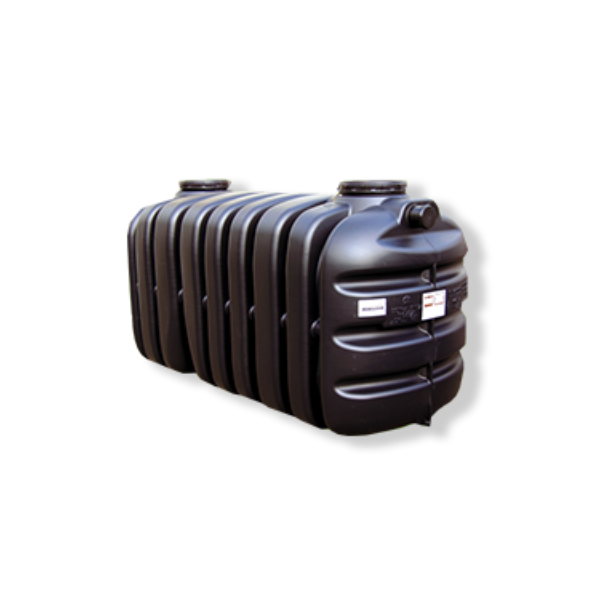
Tricel Vento Septic Tank
Shallow dig tank, strong & robust underground tank, No electrical or moving parts. Ideal for sites with good drainage & plenty of space.
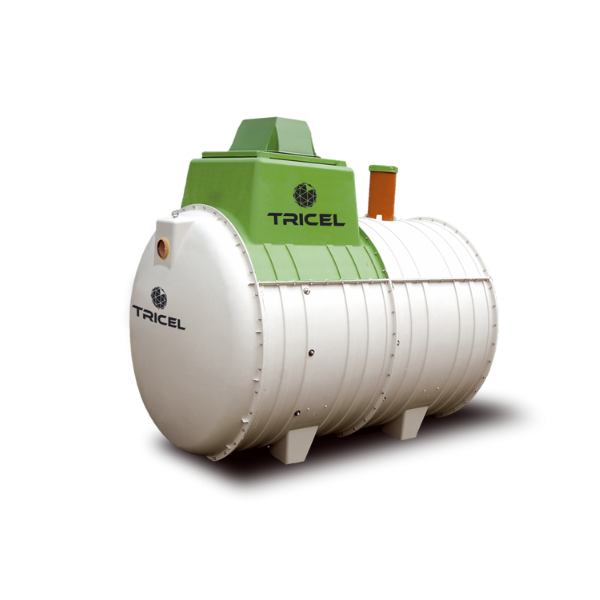
Tricel Novo Sewage Treatment Plant
Durable & long lasting SMC tank, shallow dig tank, easy installation (Plug and Play), long life components.
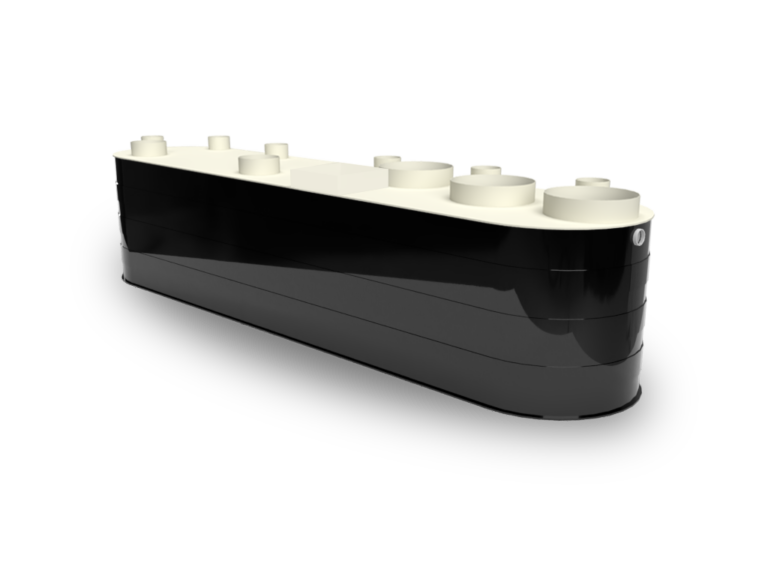
Tricel Maxus Sewage Treatment Plant
Commercial plant. Submerged Aerated Filter (SAF) technology. Ideal for project over 50 PE.
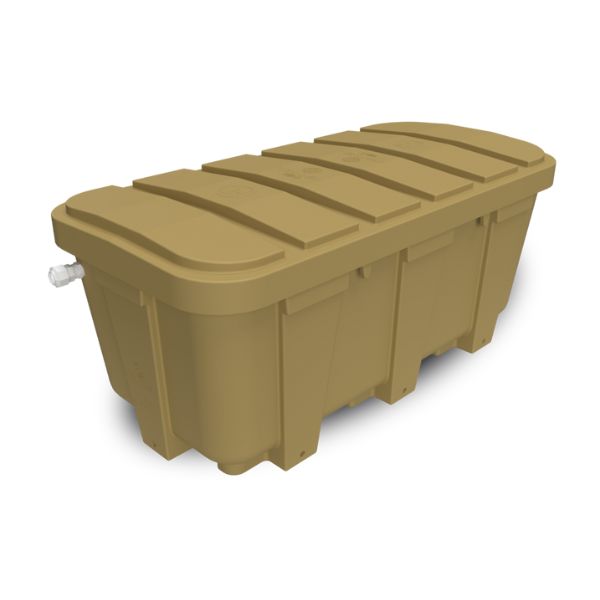
Tricel Tero Tertiary Treatment
An eco-friendly and modular system with proven E.Coli Treatment capabilities in line with the new EPA requirements.
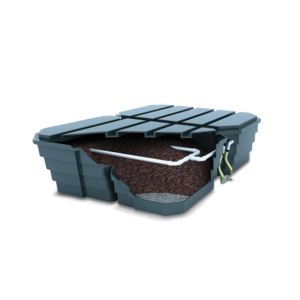
Tricel Puraflo Secondary treatment plant
Ideal for sensitive sites, compliant to Irish Standard, small footprint.
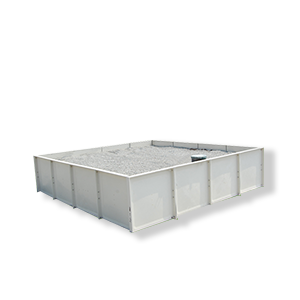
Tricel Sandcel
Sand Polishing Filter
Provides a dual function of polishing the effluent from a wastewater treatment system and disposing it into groundwater.
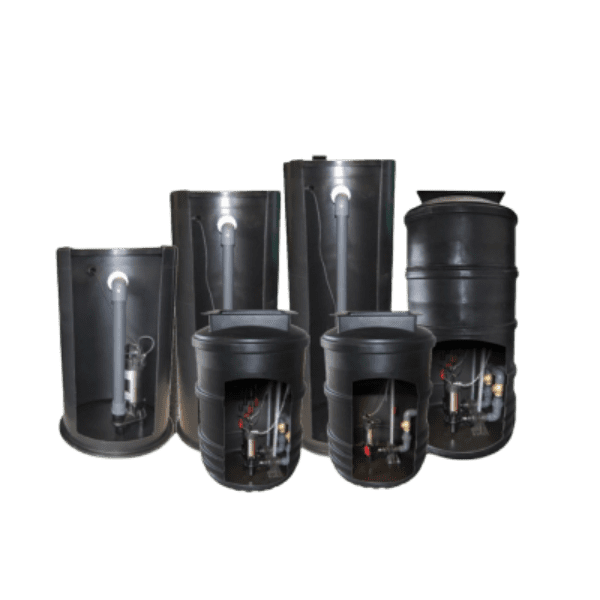
Tricel Pumping Stations
Pump fluids from one place to another where gravity drainage cannot be used, easy and trouble-free installation
Frequently asked questions for nursing home wastewater treatment
What is nursing home wastewater treatment?
It is the collection and treatment of wastewater from a nursing home, care home or residential care facility that is off-mains or requires a dedicated commercial route. It includes flows from resident bathrooms, assisted bathing, laundry, a commercial kitchen, staff facilities and cleaning.
How is a nursing home wastewater treatment plant sized?
Using the calculated PE, resident bed numbers, maximum occupancy, staff across shifts, laundry scale, kitchen catering, daily flow, discharge route and site conditions. Bed count alone is not enough, because laundry, kitchen and staffing add significantly to the load.
Why is nursing home wastewater different from domestic wastewater?
A nursing home produces wastewater continuously, day and night, at a higher volume per resident than an ordinary home, with additional load and strength from laundry, a commercial kitchen and infection-control cleaning. It is assessed as a commercial application rather than a domestic one.
What Tricel system is suitable for a nursing home?
Most nursing homes fall above 50 PE, where Tricel Maxus is the relevant commercial range and nursing homes are listed among its applications. A smaller care setting within range may be reviewed against the Novo range, subject to the site assessment.
Does a nursing home count as domestic or commercial wastewater?
A nursing home will almost always exceed the domestic threshold used by the EPA Code of Practice, PE of 10 or fewer, and has commercial kitchen, laundry and shared infrastructure, so it is normally assessed as a commercial project. The exact route depends on the jurisdiction, PE, planning status and discharge route.
How important is reliability for a care-home system?
Very. A care home cannot be without functioning drainage, so alarms, dependable servicing, accessible maintenance and, on some sites, telemetry or standby arrangements should be considered at the design stage, alongside an annual maintenance contract.
Does laundry affect the wastewater design?
Yes. On-site laundry produces a large, warm, detergent-bearing flow that can be one of the heaviest single contributors to volume and strength. It should be measured and included explicitly, and whether laundry is on site or outsourced changes the design materially.
Do care homes need consent to discharge in Northern Ireland?
Yes. In Northern Ireland, private sewage treatment systems, including septic tanks and package treatment plants, require consent from the Northern Ireland Environment Agency. As a commercial site, a care home should first seek advice from NI Water about public sewer connection before a private treatment route is progressed.
Can an existing care-home septic tank be upgraded?
It should be assessed first. If bed numbers, laundry, kitchen use or staffing have increased, or the discharge route has changed, an older septic tank may no longer suit the load and a replacement or additional treatment may be needed.
What information is needed for a quote?
Usually the site location, bed numbers and occupancy, staff numbers, laundry and kitchen details, grease management, existing system details, discharge route, site layout and levels, and any planning or authority requirements.
Get in touch