
Home » Restaurant, Café & Pub Wastewater Treatment | Tricel Ireland
Updated July 2026
RoI & NI coverage
PE-based sizing
Phased occupancy
Commercial Wastewater systems · Ireland & Northern Ireland
Restaurant, café and pub wastewater treatment
Off-mains wastewater treatment for restaurants, cafés, pubs, commercial kitchens and event venues. Sized around the full site load, kitchen activity, grease, peak service and discharge route — not the number of seats.
Food-service wastewater is different from standard domestic wastewater. A restaurant, café or pub can produce higher-strength wastewater because of food preparation, dishwashing, fats, oils, grease, cleaning activity, customer toilets, staff facilities and concentrated peak service periods.
For this reason, the system should be sized around the full site load, not just the number of seats. The correct treatment route depends on the property type, site location, calculated population equivalent (PE), kitchen activity, peak trading periods, grease management, discharge route and ground conditions.
A small café with limited food preparation has a very different wastewater profile from a pub with a commercial kitchen, a restaurant with high lunchtime and evening demand, or an event venue with large visitor numbers for short periods. Tricel supplies systems for domestic, light commercial and commercial applications across Ireland; the right selection depends on site, location, property type, ground conditions and discharge requirements.
Is this page right for your project?
This page is for off-mains food-service premises, including:
- Restaurants and rural restaurants
- Cafés and visitor-centre cafés
- Pubs and gastropubs
- Roadside food stops
- Farm shops with cafés
- Restaurants on mixed-use rural sites
- Event and wedding venues with catering
- Pubs or restaurants with function rooms
- Sites where the existing system is undersized or failing
If the property is mainly a hotel, guesthouse or B&B, the hotel wastewater treatment page may be the stronger starting point. If the site is a general commercial premises, use the commercial wastewater treatment page as the parent reference.
Why food-service wastewater needs a different approach
A domestic property normally produces wastewater from toilets, showers, sinks, washing machines and everyday household use. A restaurant, café or pub may also produce wastewater from food preparation, dishwashing, pot washing, floor washdown, commercial cleaning, bar sinks, customer toilets, staff facilities, high-volume service periods, grease traps or separators, and occasional events or functions.
This increases the organic load entering the system and creates sharp peaks at certain times of day — lunch service, evening service, closing time or after a function. The system should therefore be reviewed around both flow and wastewater strength. Seat numbers are useful, but not enough on their own.
Key wastewater risks for food-service sites
1Peak service periods
Wastewater arrives in concentrated bursts — a café’s morning and lunchtime peak, a restaurant’s heavy evening demand, a pub’s surge after events or weekend trading. The system must cope with these peaks without overloading the treatment process.
2Higher-strength wastewater
Food preparation, dishwashing and washdown water raise the organic strength of wastewater, which can affect biological treatment if the system is not sized correctly. The site should be reviewed as a commercial application, not a normal domestic property.
3Fats, oils and grease (FOG)
FOG is a major consideration for any catering site. Left uncontrolled, it causes pipe blockages, odours, pump issues and treatment problems. Grease management should be built into the design from the start.
4Food solids
Food waste should not enter the drainage system in large amounts, as solids build up in pipework, grease traps, pumping chambers and treatment systems. Staff training, sink strainers and kitchen waste procedures reduce the risk.
5Cleaning chemicals
Heavy or incorrect chemical use can affect the biological treatment process. Operators should follow the system supplier’s guidance and avoid disposing of unsuitable chemicals into the wastewater system.
6Event-related loading
Functions, weddings and busy seasonal trading can push the load well above normal daily use. The system should be reviewed around both normal operation and peak event demand — peak trading, not seasonality alone, is usually the deciding factor.
Public sewer connection or off-mains treatment?
The first question is whether the site can connect to a public sewer. Where it is connected, kitchen wastewater may still require grease management and, depending on the discharge, trade effluent review. Where it is not connected, the business may require an on-site system sized around its commercial use. For rural food-service venues, an off-mains system may be required where there is no practical sewer connection, and the treatment route should be reviewed before the site is built, extended, reopened or converted to a higher-use business.
Republic of Ireland and Northern Ireland requirements differ
In the Republic of Ireland, requirements may involve site assessment, planning conditions, discharge route review, local authority requirements, EPA guidance and Uisce Éireann requirements where a public sewer discharge is involved. Uisce Éireann states that a trade effluent discharge to public sewer licence is required where a business discharges trade effluent to a public sewer, and defines trade effluent as liquid waste discharged from a business premises to public sewers, excluding domestic sewage and sanitary wastewater from domestic-type activities.
In Northern Ireland, DAERA states that private sewage treatment systems, including septic tanks and package treatment plants, require consent from the Northern Ireland Environment Agency. Because food-service sites can involve commercial kitchen wastewater, grease and higher-strength discharge, the jurisdiction and discharge route should be checked before the system is chosen.
How a food-service wastewater system is sized
Sizing needs a project-specific review. For non-domestic sites, population equivalent expresses the wastewater load in a comparable way to domestic loading. The information usually needed includes:
- Site location and property type
- Number of covers or seats
- Number of staff
- Opening days and hours
- Breakfast, lunch and evening service pattern
- Bar use, if relevant
- Kitchen type and hot-food volume
- Dishwasher and pot-wash use
- Customer toilet provision
- Staff facilities
- Grease trap or separator details
- Expected daily flow and calculated PE
- Peak trading periods
- Events or functions
- Existing wastewater system, if any
- Discharge route and site layout
- Ground conditions
- Space for installation and maintenance
- Whether pumping is required
- Authority or planning conditions
Why seat count alone is not enough
Two restaurants with the same number of seats can produce very different wastewater loads. One may serve coffee, cakes and light lunches; another may run a full kitchen with dishwashers, deep-fat frying, a bar, staff showers and evening functions. A pub may have fewer seats than a restaurant but produce heavy weekend peaks. A café may have lower wastewater strength but high toilet use at a visitor attraction or roadside location. An event venue may have low weekday use but very high short-duration demand during weddings or functions. Selection should be based on site use, PE, wastewater strength, kitchen activity, peak periods and discharge route.
Grease management for food-service sites
Grease management should be treated as a core part of the wastewater design. Fats, oils and grease can cause pipe blockages, odours, pump issues and treatment problems if allowed to enter the system uncontrolled. A grease trap, grease separator or grease management arrangement may be required before wastewater reaches the treatment plant. The correct arrangement depends on kitchen size, menu type, cooking methods, sink layout, dishwasher discharge, flow rate and maintenance access.
Grease management should be treated as a core part of the wastewater design. Fats, oils and grease can cause pipe blockages, odours, pump issues and treatment problems if allowed to enter the system uncontrolled. A grease trap, grease separator or grease management arrangement may be required before wastewater reaches the treatment plant. The correct arrangement depends on kitchen size, menu type, cooking methods, sink layout, dishwasher discharge, flow rate and maintenance access.
For Northern Ireland, nibusinessinfo.co.uk advises that a grease trap should be the correct size to handle the amount of wastewater from the premises, emptied regularly and supported by a written record of maintenance. It highlights temperature, time and volume as the three key factors affecting how well a grease trap performs.
Good kitchen practice matters too: scrape plates, use sink strainers, collect waste oil separately, avoid pouring grease down sinks, and keep maintenance records. A grease trap only works if it is correctly sized, correctly installed and regularly maintained.
Choosing between Tricel Novo and Tricel Maxus
The correct system depends on calculated PE, site use and discharge requirements.
Up to 50 PE
Tricel Novo — smaller or light commercial sites
A smaller café, small rural food stop or light commercial premises may fall within the Novo range, subject to the calculated load and site assessment. Tricel lists restaurants among the commercial customer types for Novo, alongside creches, guest houses, housing developments, schools, small hotels and sports and leisure centres, with sizes up to IE50.
View Novo rangeAbove 50 PE
Tricel Maxus — larger restaurants, pubs and venues
For larger food-service projects above 50 PE, Maxus is the more relevant commercial range. It uses Submerged Aerated Filter (SAF) technology for commercial applications, and Tricel lists restaurants among the application types for its commercial systems.
View Maxus rangeProduct route by site type
| Site type | Likely starting point | Notes |
|---|---|---|
| Small café, limited food prep | Tricel Novo may be reviewed | Depends on PE, kitchen use, toilets, discharge route and site assessment |
| Rural restaurant | Tricel Novo or Maxus | Depends on calculated PE, flow, wastewater strength and grease management |
| Pub with commercial kitchen | Tricel Novo or Maxus | Review bar use, food service, toilets, events and peak periods |
| Gastropub or busy restaurant | Tricel Maxus likely if above 50 PE | Grease management and peak service periods are important |
| Event venue with catering | Tricel Maxus likely for larger loads | Review peak event demand, toilets, kitchen use and discharge route |
| Existing site with failing system | Project-specific review | May require replacement, additional treatment, pumping or polishing |
This table is a starting guide only. Final selection should be based on the site assessment, calculated PE, discharge route and authority requirements.
Event venues and function spaces
Event venues can be difficult to size because the load is not constant. A restaurant or pub may operate steadily during the week, then host large functions at weekends — weddings, private parties, sports events or seasonal visitor events. These create high short-duration demand from toilets, bars, catering areas and clean-up. The design should account for normal daily use, maximum event attendance, event frequency, catering type, toilet and bar use, staff numbers, cleaning after events, discharge route, and recovery time between peak events.
Existing premises, discharge and levels
Many food-service premises are in older buildings or rural sites, where the existing system may have been designed for a different use — a house, small shop, basic pub or low-use premises. A system that once worked may no longer suit the site after a kitchen upgrade, more covers, longer opening hours, an added café or function room, outdoor seating, conversion to a gastropub, higher toilet demand, more staff, a planning change of use, or new discharge requirements. If the existing system is failing, undersized or difficult to maintain, review it before further expansion.
Discharge route and further treatment
The discharge route is central to system selection. Treated effluent may discharge to ground, a watercourse or another approved route, depending on the site assessment and consent requirements. Some sites also require additional secondary or tertiary treatment, polishing, pumping or a sand polishing filter. Wastewater treatment plants actively treat effluent to a higher standard before discharge, whereas septic tanks provide primary treatment only.
Pumping stations and levels
Some sites cannot rely on gravity flow alone — where the building sits below the treatment system, toilets are on a lower part of the site, kitchen drainage cannot fall by gravity, the discharge area is higher than the plant, or the system must sit away from the building for access. Levels should be reviewed early, especially for refurbishments and older buildings.
Maintenance requirements
A food-service wastewater system needs planned maintenance across the treatment plant, grease management system, pumps, alarms, filters and final discharge arrangement. Maintenance planning should include grease trap inspection and emptying, desludging, treatment plant servicing, pump and alarm checks, checking for odour or surcharge, reviewing kitchen waste procedures, keeping written maintenance records, and ensuring staff know what must not go down drains. Tricel states that wastewater treatment plants should be fully maintained, and an annual maintenance contract may be offered.
Speak to Tricel about your food-service wastewater project
Planning a restaurant, café, pub, commercial kitchen or event venue on an off-mains site? Send Tricel your site details, seating numbers, staff numbers, kitchen use, opening pattern, event requirements, grease management details and discharge route, and the team can review whether Tricel Novo, Tricel Maxus or another arrangement is the correct starting point.
Table of Contents
Why choose Tricel?
Irish manufacturing. Nationwide support. Guaranteed compliance.
Tricel has manufactured wastewater treatment systems in Ireland since 1973, from its facility in Killarney, Co. Kerry. The Vento septic tank range and Novo treatment plant range are certified to EN 12566 for installations from single homes up to 50+ population equivalent.
A nationwide network of approved distributors and installers, backed by Tricel's own technical sales team, covers supply, installation, commissioning and servicing across every county.
Quality
Manufactured in Killarney, Co. Kerry. The Novo tank is built from compression-moulded SMC — a composite material proven over 50 years in harsh operating conditions.
- EN 12566-1 (septic tanks) and EN 12566-3 (treatment plants) certified
- Independently tested by PIA GmbH, Aachen, Germany
Efficiency
The Tricel Novo treats wastewater across three independent zones, reaching an average 95.9% BOD removal — a higher standard of treatment than a septic tank alone.
- No moving parts or pumps inside the tank
- Ceramic diffuser lasts twice as long as standard rubber equivalents
Support
A nationwide network of approved distributors and installers, with a dedicated technical sales team on hand for sizing, site queries and project support.
- County-based distributor network across Ireland
- Direct technical support from Tricel's own team
Maintenance
Servicing and technical advice available directly from Tricel's environmental team, for the lifetime of your system.
- 10-year warranty on the Vento septic tank
- Call 064 663 2421 for servicing or technical advice
Related pages
Everything else you might need
Tricel Maxus commercial wastewater treatment
Commercial wastewater treatment for larger restaurants, pubs, venues and shared off-mains sites.
View Maxus range →Tricel Novo wastewater treatment plant
Wastewater treatment plant range for domestic, larger domestic and light commercial applications.
View Novo range →Commercial wastewater treatment
Guidance for businesses, hospitality sites, food-service premises and other non-domestic loads.
Read commercial guidance →Hotel and hospitality wastewater treatment
Wastewater treatment guidance for hotels, guesthouses, hospitality sites and visitor accommodation.
View hospitality guidance →Wastewater treatment systems
An overview of Tricel wastewater treatment systems and the main product routes.
Browse systems →Sewage treatment plant sizing guide
Information on population equivalent, sizing and the details needed before system selection.
Read the sizing guide →Brochures and downloads
Product brochures, manuals and wastewater treatment documents for project review.
View downloads →Our range of products
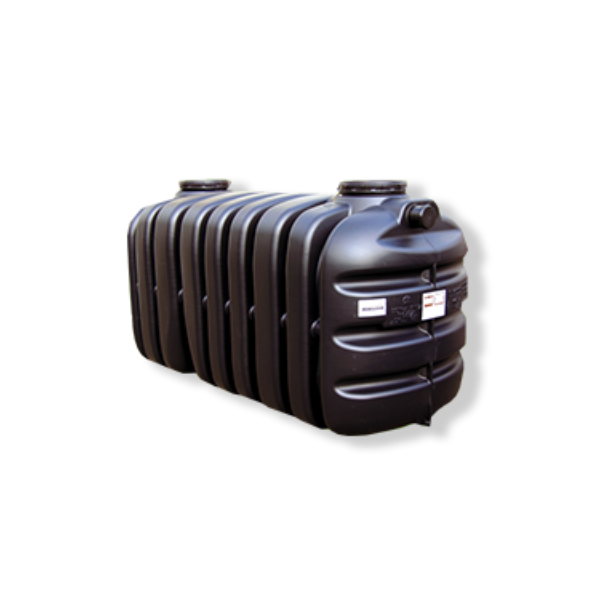
Tricel Vento Septic Tank
Shallow dig tank, strong & robust underground tank, No electrical or moving parts. Ideal for sites with good drainage & plenty of space.
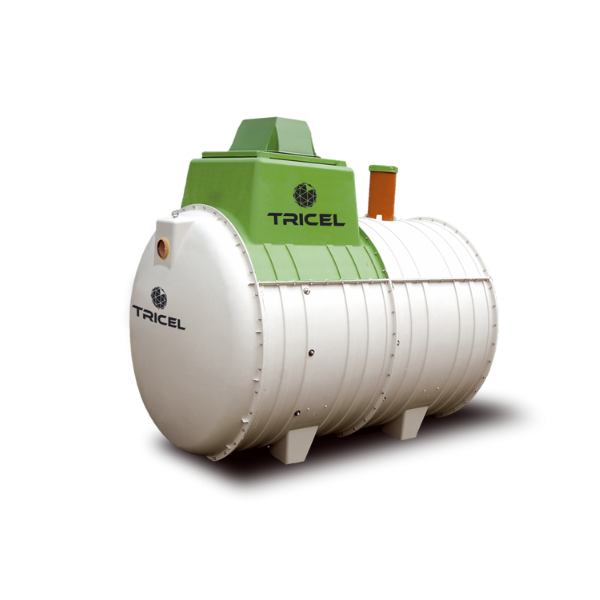
Tricel Novo Sewage Treatment Plant
Durable & long lasting SMC tank, shallow dig tank, easy installation (Plug and Play), long life components.
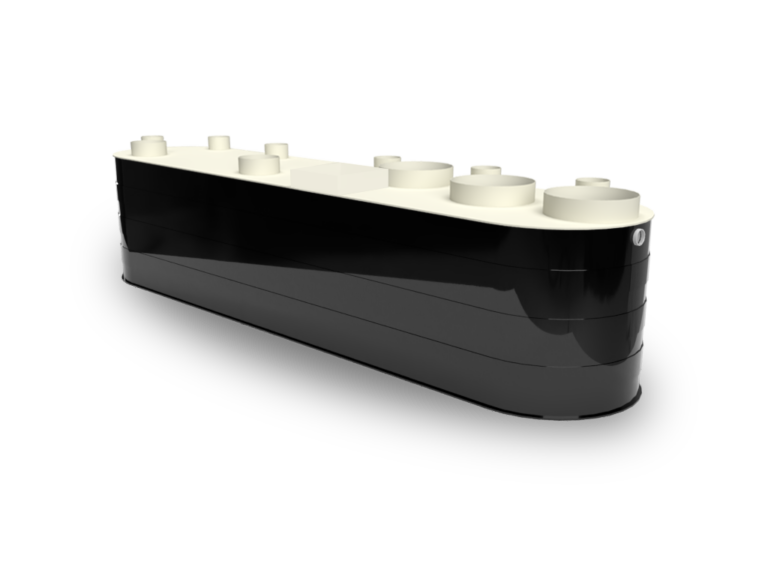
Tricel Maxus Sewage Treatment Plant
Commercial plant. Submerged Aerated Filter (SAF) technology. Ideal for project over 50 PE.
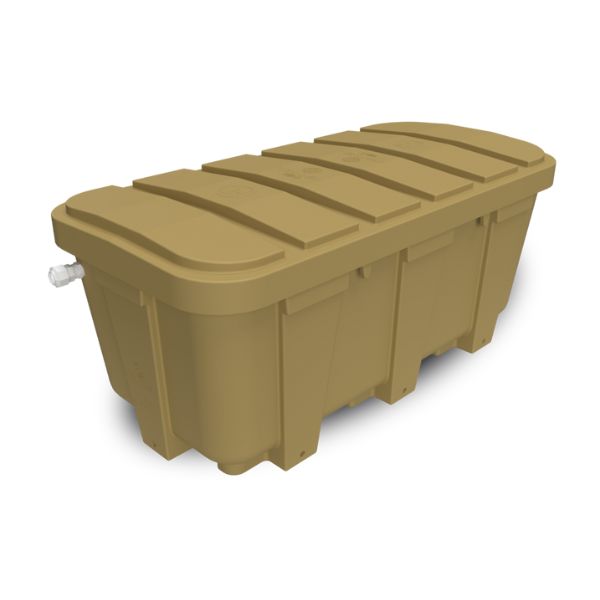
Tricel Tero Tertiary Treatment
An eco-friendly and modular system with proven E.Coli Treatment capabilities in line with the new EPA requirements.
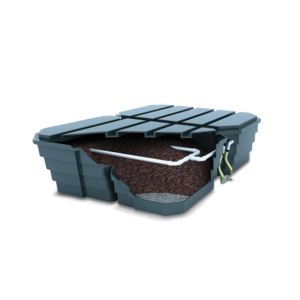
Tricel Puraflo Secondary treatment plant
Ideal for sensitive sites, compliant to Irish Standard, small footprint.
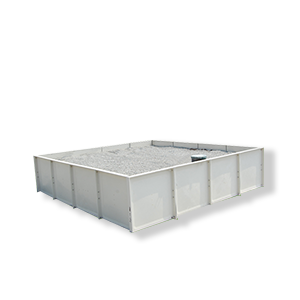
Tricel Sandcel
Sand Polishing Filter
Provides a dual function of polishing the effluent from a wastewater treatment system and disposing it into groundwater.
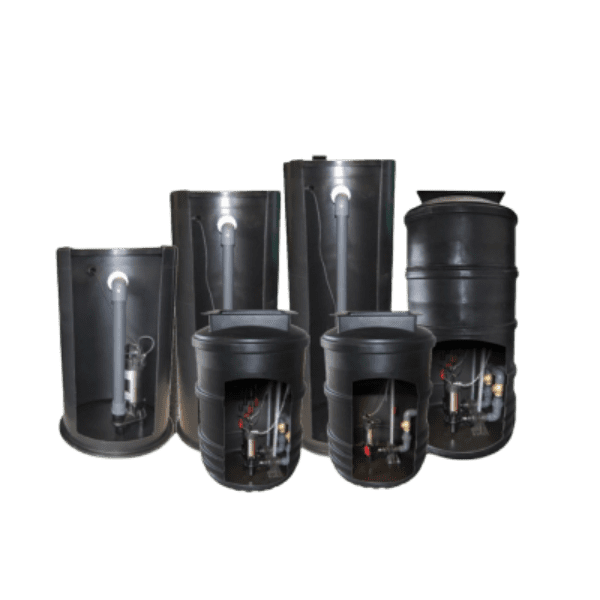
Tricel Pumping Stations
Pump fluids from one place to another where gravity drainage cannot be used, easy and trouble-free installation
Frequently asked questions for restaurant wastewater treatment
What is restaurant wastewater treatment?
It is the collection and treatment of wastewater from a restaurant, café, pub or food-service premises that is off-mains or requires a dedicated commercial route. It can include wastewater from kitchens, toilets, dishwashing, bar areas, staff facilities and cleaning.
How is a restaurant wastewater treatment plant sized?
Using the calculated PE, number of seats or covers, staff numbers, kitchen activity, daily flow, peak service periods, grease management, toilet use, discharge route and site conditions. Seat count alone is not enough.
Is restaurant wastewater different from domestic wastewater?
Yes. It can include higher organic strength, fats, oils, grease, food solids, cleaning products and concentrated service-period flows, so it should be assessed as a commercial or light commercial application.
Do restaurants need a grease trap?
Food-service sites usually need some form of grease management. The correct arrangement depends on the kitchen, wastewater volume, cooking activity and discharge route. Grease traps must be correctly sized, emptied and maintained.
Can a small café use Tricel Novo?
Possibly. Novo may be reviewed for smaller or light commercial sites where the calculated load is within the relevant range and the site assessment supports it. The final product should be confirmed after reviewing site details.
When is Tricel Maxus suitable?
Maxus is the relevant commercial route for projects above 50 PE. It may suit larger restaurants, pubs, event venues or mixed-use food-service sites.
Can a pub wastewater system handle events?
It can be designed to, but the event load must be included in the sizing review — maximum attendance, toilet use, catering, bar activity and clean-up flows should all be considered.
What information is needed for a quote?
Usually the site location, property type, number of covers, kitchen details, staff numbers, toilet provision, peak periods, events, discharge route, site layout, ground conditions and any planning or authority requirements.
Does the same guidance apply in Northern Ireland?
The system route may differ. In Northern Ireland, DAERA states that private sewage treatment systems, including septic tanks and package treatment plants, require consent from the Northern Ireland Environment Agency. Confirm the site location before selecting a system.
Get in touch