
Updated July 2026
Domestic Treatment Systems
Septic Tanks Ireland
EN 12566 & S.R. 66 certified
Home » School Wastewater Treatment
Updated July 2026
RoI & NI coverage
PE-based sizing
Seasonal loading
Commercial Wastewater systems · Ireland & Northern Ireland
School, creche and childcare wastewater treatment
Off-mains wastewater treatment for schools, creches, childcare centres and education sites, sized around PE, daily peaks, opening patterns, kitchens or canteens, holiday periods and the site’s discharge route — not pupil or child numbers alone.
Schools place unusual demands on an off-mains wastewater system. Unlike a house or a year-round commercial site, a school often concentrates flow into a short part of the day, has little or no flow overnight, reduced weekend use, and long low-flow periods during holidays.
Creches and childcare facilities can have a similar daytime loading pattern, but they are not always term-time only. Some operate year-round, some follow school calendars, and others provide sessional, part-time, full-day or school-age childcare. The system should reflect how the site is actually used, including children attending, staff numbers, meals or snacks, cleaning, sanitary facilities and any future increase in registered capacity.
A system should not be chosen by pupil or child count alone. It must be assessed around the site’s population equivalent (PE), term-time or opening-hour use, staff numbers, canteen or kitchen facilities, daily peak periods, low-flow periods, discharge route and site conditions.
Tricel provides wastewater treatment systems for schools, creches, childcare centres and education sites across Ireland and Northern Ireland. The correct product route depends on the calculated PE, site location, discharge requirements, ground conditions, and whether the site requires primary, secondary or tertiary treatment.
Where school, creche and childcare wastewater treatment applies
A school, creche or childcare wastewater treatment system treats sewage and wastewater from an education or childcare site where a mains sewer connection is not available or suitable — pupil and child toilets, staff facilities, classrooms, playrooms, canteens, kitchens, sports changing rooms, after-school facilities and occasional community use.
- Primary and national schools
- Secondary schools
- Rural schools
- Education campuses
- Special education facilities
- Training centres
- Boarding schools
- Schools with canteens or kitchens
- Schools with sports facilities
- Schools under extension or redevelopment
- Schools replacing an older septic tank
- Sites with sensitive discharge requirements
- Creches and childcare centres
- Early years services
- Playschools and naíonraí
- Nurseries and pre-school facilities
- School-age childcare facilities
- After-school childcare services
- Childcare facilities attached to schools or community buildings
- Childcare sites replacing an older septic tank
- Childcare facilities under extension or change of use
Creche and childcare wastewater treatment
A school, creche or childcare wastewater treatment system treats sewage and wastewater from an education or childcare site where a mains sewer connection is not available or suitable — pupil and child toilets, staff facilities, classrooms, playrooms, canteens, kitchens, sports changing rooms, after-school facilities and occasional community use.
Why education and childcare sites need careful wastewater design
A house produces wastewater throughout the day and evening in a fairly consistent residential pattern. A school or childcare site produces most of its wastewater during a concentrated part of the day, then may have no flow for many hours. This creates the following design challenges.
| Wastewater pattern | Why it matters |
|---|---|
| Term-time demand | The system must perform during full occupancy, including pupils, teachers, staff and any canteen use. |
| Daily peak periods | Toilets, washrooms and canteen areas create concentrated flows at break times and lunch. |
| Summer low-flow or no-flow | The system may receive little or no wastewater during holidays, then must restart when the school reopens. |
| Childcare opening pattern | Creches and childcare centres may be sessional, part-time, full-day, year-round or school-age only, so the system must reflect the actual use pattern. |
If the system is too small, peak flows may overload it. If it is poorly matched to long low-flow periods, performance may suffer when loading drops significantly and then returns.
Term-time, childcare and opening-hour demand
For most schools, term-time use is the main basis for design. The system must manage the expected load when the site is open and fully occupied. Demand should account for:
- Pupils
- Teachers
- Administrative staff
- Cleaning and maintenance staff
- Special needs assistants / support staff
- Canteen or kitchen staff
- Sports facility users, where relevant
- After-school club users
- Visitors, where relevant
- Temporary classrooms or future extensions
- Children attending a creche or childcare service
- Early years practitioners and childcare staff
- School-age childcare users
- Children attending full-day, part-time or sessional care
- Kitchen, snack preparation or meal service staff
- Laundry or cleaning use, where relevant
Where a school is planning an extension, size the system against future expected pupil and staff numbers, not only the current roll — particularly where extra classrooms, toilets, staff rooms, canteen facilities or sports changing rooms are part of the project.
Daily peak periods
School loads are often concentrated into short periods: before class, at breaks, at lunch, and at the end of the day, plus any canteen preparation and wash-up. A simple average daily flow may not tell the full story — assess how wastewater arrives at the plant, not only how much is produced across a full day.
For creches and childcare centres, peak periods may occur around morning drop-off, toilet routines, handwashing, meal or snack times, cleaning periods and afternoon collection. These peaks should be considered alongside the total daily flow.
Summer no-flow and holiday shutdown
Schools have extended periods of reduced use during summer, mid-term breaks, Christmas and Easter. Some sites have no daily input during these periods; others retain limited staff, maintenance or summer-programme use. A system may need to operate during term time, then experience long low-flow or no-flow periods before use resumes.
The Tricel Maxus Combi brochure states that the system is suitable for seasonal or constant loads, that its control panel adjusts to incoming load, and that it can enter power-saving mode during no-flow periods and restart when flow is detected. This makes seasonal and intermittent loading an important selection consideration for education sites above 50 PE.
Year-round childcare operation
Not every childcare facility follows a school calendar. Some creches and full-day childcare centres operate through much of the year, while others close during school holidays or operate reduced hours. This should be confirmed before sizing the system, because a year-round childcare service may have a steadier weekday load than a school, while a sessional or term-time service may have more intermittent loading.
Canteens, kitchens and dining halls
A school with a canteen or kitchen usually has a higher load than a school with toilets only. Food preparation, washing-up, grease, cleaning and dining hall use all affect wastewater strength and flow. The design review should check whether the school has a canteen, whether meals are cooked on site or delivered, the number of meals prepared per day, whether dishwashing takes place on site, whether grease management is required, and whether breakfast clubs, after-school meals or events add further load.
For creches and childcare centres, confirm whether food is prepared on site, delivered, reheated or limited to snacks. Bottle preparation areas, dishwashing, cleaning routines and any grease management requirements should be reviewed as part of the wastewater design.
Schools without canteens
A school without a canteen may still require a carefully sized system. Toilets, washrooms, staff facilities, cleaning and occasional events can still create daily peaks. Account for total pupils and staff, sanitary facilities, cleaning water, staff room facilities, any special education or healthcare-related facilities, sports changing rooms, after-school or community use, and future classrooms or modular buildings.
Boarding schools and residential sites
Boarding and residential education sites have a different profile from day schools. Because pupils or staff live on site, the pattern is closer to mixed residential and education use — a more continuous base load plus term-time peaks, rather than the day school’s summer no-flow profile. Separate residential load from daytime school use and from any catering, laundry or sports use.
Extensions, redevelopment and replacement
Many school and childcare wastewater projects arise when an existing site is extended or redeveloped. An older septic tank or treatment system may have suited a smaller roll but no longer meet the current or proposed load. A review is often needed where a school is adding classrooms or pupil capacity, installing new toilets, creating a canteen or kitchen, adding a sports hall or changing rooms, installing temporary classrooms, replacing an older septic tank, changing the discharge route, or seeking planning permission for expansion.
For creches and childcare facilities, a review may also be needed where the site is increasing registered capacity, changing from sessional to full-day care, adding baby or toddler rooms, adding toilets or handwashing areas, introducing food preparation, extending opening hours, or changing the use of an existing rural building into a childcare facility.
Signs an existing septic tank should be reviewed
- Odour around the tank or discharge area
- Slow drainage
- Frequent desludging requirements
- Wet or failing percolation area
- Standing water near the discharge area
- Complaints from staff or neighbours
- Poor performance after school holidays
- Planning conditions for an extension
- Concerns about nearby wells or watercourses
- A system designed for a much smaller school
For education and childcare sites, project timing can be as important as the design. Installation may need to be planned during holidays, mid-term breaks or phased construction to reduce disruption.
Which Tricel system suits a school?
The correct Tricel route depends on the calculated PE, hydraulic and organic load, discharge route and treatment requirement. Smaller education or childcare sites may fall within the Novo range, while larger or higher-load sites may require the Maxus commercial range.
Our wastewater treatment solutions are designed for applications above 50 Population Equivalent (PE).
- Schools choose the Tricel Maxus Commercial Plant for both permanent and seasonal use. The intelligent control panel automatically adjusts to incoming loads to maintain performance. When no flow is detected, the system switches to power-saving mode and restarts immediately once flow resumes.
- We provide customised wastewater treatment systems to suit any site conditions—whether above or below ground, with limited space, or requiring specific effluent standards. If a discharge licence or permit issue arises, we can upgrade your system to ensure full compliance with environmental regulations.
- Thanks to the latest advances in commercial wastewater treatment, Tricel offers reliable and cost-effective solutions for schools. The systems use minimal energy, keeping operating costs low, and are built with durable components for long service life. With no internal moving parts, maintenance is straightforward and hassle-free.
Above 50 PE
Tricel Maxus
The Maxus Combi brochure describes Maxus as an all-in-one, in-ground treatment plant using Submerged Aerated Filter technology for applications greater than 50 PE, with schools listed among its applications. Relevant for larger schools, childcare campuses, large creches, education sites with kitchens, facilities with year-round childcare use, and sites where the calculated PE is above 50.
View Maxus rangeUp to 50 PE
Tricel Novo
The sewage treatment plant size guide lists Novo from IE6 to IE50, with design populations from 1–6 up to 16–50. Relevant for smaller rural schools, small creches, childcare centres, playschools, training centres and education buildings where the calculated PE remains within the Novo range. Suitability should be confirmed from the site load, usage pattern and discharge requirements.
View Novo rangeSecondary and tertiary treatment
Some sites require additional treatment beyond the main plant, depending on site assessment, percolation results, discharge route and any planning, consent or licence requirements. This may include a sand or soil polishing filter, pumped discharge, secondary or tertiary treatment, and ammonia, phosphorus or nitrogen-related measures for sensitive receiving environments. The final system may include more than one component — the route should be based on site conditions, not product preference.
Ireland and Northern Ireland: confirm location first
In the Republic of Ireland, the EPA’s 2021 Code of Practice for Domestic Waste Water Treatment Systems applies to domestic wastewater treatment systems with a PE of 10 or fewer and provides guidance on site characterisation, design, operation and maintenance. Schools and childcare sites should not automatically be treated as domestic projects, particularly where the calculated PE, canteen use or site function exceeds a domestic route.
Before assuming an off-mains system is required in the Republic of Ireland, check whether a connection to the public wastewater network is possible. Uisce Éireann states that customers seeking a water or wastewater service connection must contact Uisce Éireann, and that planning permission does not guarantee a connection.
In Northern Ireland, DAERA states that private sewage treatment systems, including septic tanks and package treatment plants, require consent from the Northern Ireland Environment Agency. DAERA also distinguishes between domestic discharges, which relate to a single dwelling, and private sewage infrastructure, which covers sewage-related discharges for two or more dwellings and commercial activities.
Before selecting a system, confirm the jurisdiction, whether the site is domestic, light commercial, commercial or private sewage infrastructure, the calculated PE, the discharge route, whether a public foul sewer connection is possible, any planning or licence requirements, and whether further treatment or polishing is required.
Key design factors
| Design factor | What to check |
|---|---|
| Pupil numbers | Current roll, planned increase and maximum expected occupancy |
| Staff numbers | Teachers, assistants, administration, cleaning and maintenance staff |
| School type | Primary, secondary, special education, boarding or campus |
| Canteen use | Meals prepared on site, delivered meals, washing-up and grease |
| Term-time demand | Full occupancy during normal school weeks |
| Daily peaks | Break times, lunch, sports and end-of-day use |
| Summer no-flow | Holidays, closures and restart after long low-flow periods |
| Sports facilities | Changing rooms, showers and after-school use |
| Existing system | Septic tank, treatment plant, percolation area or older drainage |
| Discharge route | Ground, polishing filter, watercourse or other approved route |
| Site constraints | Space, levels, access, ground conditions and separation distances |
| Treatment standard | BOD, ammonia, nitrogen, phosphorus or suspended solids where relevant |
| Future expansion | New classrooms, modular units, canteen, sports hall or increased roll |
| Childcare service type | Sessional, part-time, full-day, school-age childcare or mixed-use |
| Child numbers | Maximum number of children on site, not only enrolment |
| Age profile | Babies, toddlers, pre-school children or school-age children |
| Childcare staff | Early years practitioners, assistants, admin, kitchen and cleaning staff |
| Opening pattern | Term-time only, year-round, weekday-only, after-school or holiday care |
| Food and cleaning | Snacks, meals, bottle preparation, dishwashing, laundry or cleaning routines |
| Future capacity | Planned increase in registered places, rooms, toilets or opening hours |
What we need for a school wastewater quote
- Site location (RoI or NI)
- School type
- Current and proposed pupil numbers
- Number of teachers and staff
- Whether there is a canteen or kitchen
- Whether meals are cooked on site
- Sports changing rooms or showers
- After-school or community use
- Existing wastewater system details
- Site assessment or percolation test data
- Proposed discharge route
- Planning, consent or licence conditions
- Available installation area and access
- Project timeline, e.g. holiday works
- Future expansion plans
- Type of childcare service, if relevant
- Maximum number of children on site
- Age profile of children using the facility
- Number of childcare staff
- Opening hours and weeks of operation
- Whether the service is sessional, part-time, full-day or school-age care
- Whether meals, snacks or bottle preparation are handled on site
- Laundry, cleaning or washdown requirements, where relevant
- Any planned increase in registered capacity
Installation planning
School and childcare projects need careful timing. Work may need to be completed during summer holidays, mid-term breaks or phased construction to reduce disruption. Plan for safe separation from pupil and child areas, construction access, restricted working hours, temporary sanitation where required, phasing with building extensions, protection of playgrounds and drop-off areas, future maintenance access, and commissioning before reopening.
Maintenance
Sites should plan for regular maintenance, especially with intermittent loading, holiday closures or a canteen: routine servicing, a desludging schedule, inspection before reopening, grease management, alarm and control panel checks, pump and blower checks where fitted, and clear record keeping. Fully automatic operation and low maintenance needs suit sites without specialist staff on site, but this does not mean no maintenance — all systems need suitable inspection, servicing and desludging in line with the design and approval requirements.
Education wastewater case studies
The examples below are school projects, but the same assessment principles apply to creches, childcare facilities and other education sites where wastewater load, PE, ground conditions and discharge route must be confirmed before product selection.
Lurga National School, Gort, Co. Galway
A classroom extension created the need for a septic tank upgrade. Selection considered percolation test results, PE based on expected teachers and pupils, and site constraints. Tricel supplied a pumped Novo IRL 30 with a Sandcel sand polishing filter; the restricted percolation area was located 170 metres from the school and plant.
View case studyClaran National School, Co. Galway
A school extension required an upgrade because the existing septic tank could not cope with the proposed loading. A PE of 52 was calculated from pupils and staff, with restricted infiltration area a key constraint. The solution used a Tricel Fortis septic tank with Puraflo modules followed by a soil polishing filter; works were completed during the holidays.
View case studyTable of Contents
Why choose Tricel?
Irish manufacturing. Nationwide support. Guaranteed compliance.
Tricel has manufactured wastewater treatment systems in Ireland since 1973, from its facility in Killarney, Co. Kerry. The Vento septic tank range and Novo treatment plant range are certified to EN 12566 for installations from single homes up to 50+ population equivalent.
A nationwide network of approved distributors and installers, backed by Tricel's own technical sales team, covers supply, installation, commissioning and servicing across every county.
Quality
Manufactured in Killarney, Co. Kerry. The Novo tank is built from compression-moulded SMC — a composite material proven over 50 years in harsh operating conditions.
- EN 12566-1 (septic tanks) and EN 12566-3 (treatment plants) certified
- Independently tested by PIA GmbH, Aachen, Germany
Efficiency
The Tricel Novo treats wastewater across three independent zones, reaching an average 95.9% BOD removal — a higher standard of treatment than a septic tank alone.
- No moving parts or pumps inside the tank
- Ceramic diffuser lasts twice as long as standard rubber equivalents
Support
A nationwide network of approved distributors and installers, with a dedicated technical sales team on hand for sizing, site queries and project support.
- County-based distributor network across Ireland
- Direct technical support from Tricel's own team
Maintenance
Servicing and technical advice available directly from Tricel's environmental team, for the lifetime of your system.
- 10-year warranty on the Vento septic tank
- Call 064 663 2421 for servicing or technical advice
Related resources
Everything else you might need
Grants & funding
Eligibility, the 85% / €12,000 grant, and how to apply after a failed inspection.
Grants guide →Cost & pricing guide
A fuller breakdown of product, installation and groundworks costs by system type.
Read the cost guide →Find an installer
Regional installer and distributor network across the seven highest-demand counties.
Find an installer →Service & desludging plans
One to ten-year service agreements, from €195, covering travel and servicing labour.
View service plans →Site assessment
Use the free Tricel Site Assessor tool to check which wastewater treatment system category your site may fall under, based on the EPA Code of Practice
Start assessment →Case studies
Recent domestic and commercial installations, by county and sector.
Browse case studies →Our range of products
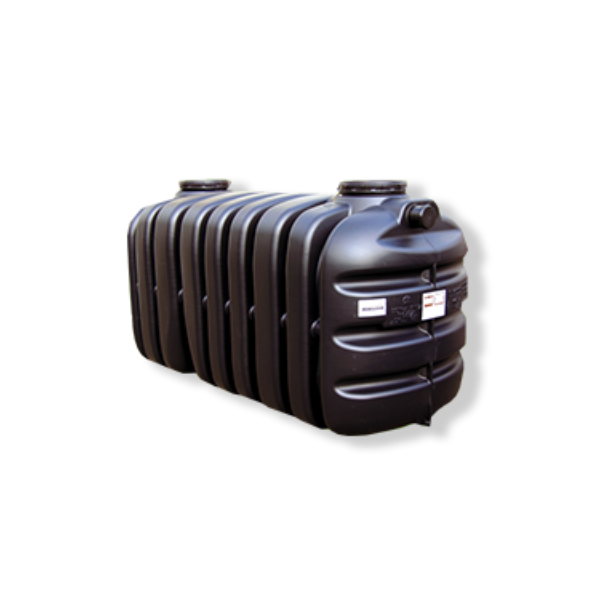
Tricel Vento Septic Tank
Shallow dig tank, strong & robust underground tank, No electrical or moving parts. Ideal for sites with good drainage & plenty of space.
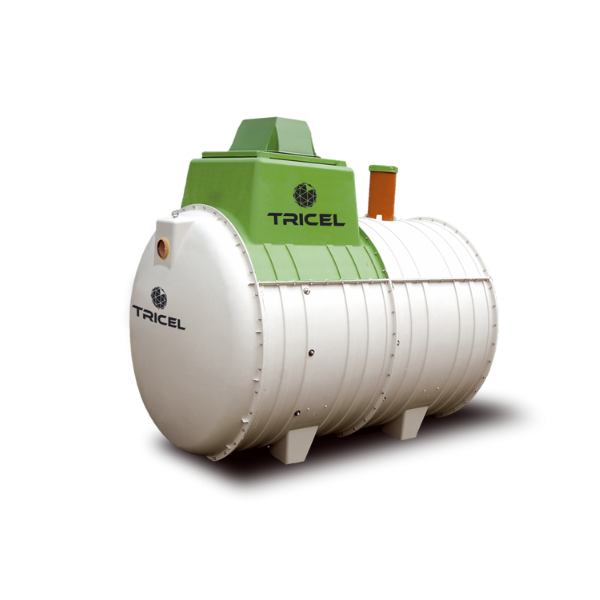
Tricel Novo Sewage Treatment Plant
Durable & long lasting SMC tank, shallow dig tank, easy installation (Plug and Play), long life components.
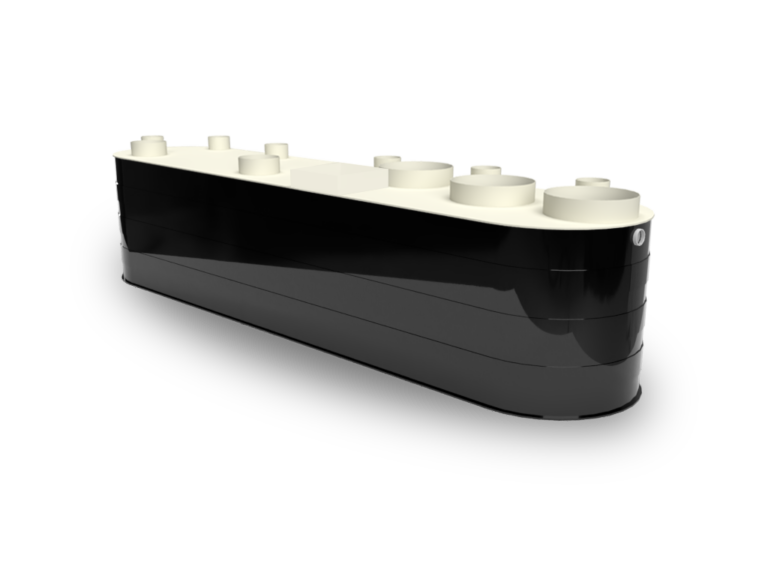
Tricel Maxus Sewage Treatment Plant
Commercial plant. Submerged Aerated Filter (SAF) technology. Ideal for project over 50 PE.
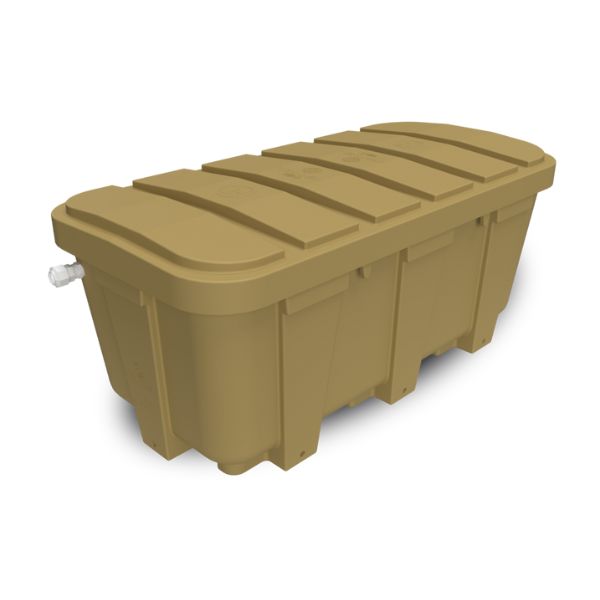
Tricel Tero Tertiary Treatment
An eco-friendly and modular system with proven E.Coli Treatment capabilities in line with the new EPA requirements.
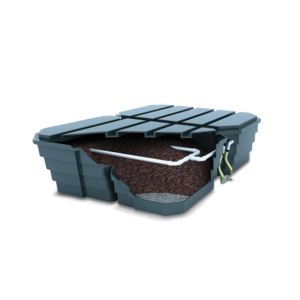
Tricel Puraflo Secondary treatment plant
Ideal for sensitive sites, compliant to Irish Standard, small footprint.
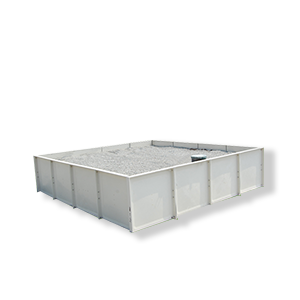
Tricel Sandcel
Sand Polishing Filter
Provides a dual function of polishing the effluent from a wastewater treatment system and disposing it into groundwater.
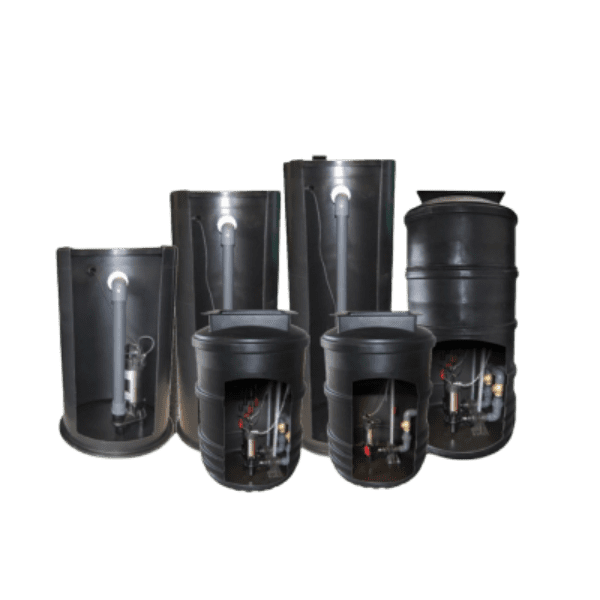
Tricel Pumping Stations
Pump fluids from one place to another where gravity drainage cannot be used, easy and trouble-free installation
50 years in business
A highly successful multinational corporation with over 50 years’ valuable industry experience
SEWAGE TREATMENT PLANTS
Plants available for all capacities, from 1PE up to 50PE. Free advice on request.
Fast Delivery
On-time delivery is a core requirement of our successful business operations
Meet our team
To find a technician in your area, visit our page
TALK SEWAGE TREATMENT
To speak to one of our agents online, click here
ASK FOR A QUOTE
Request a free quote today to have a quote that meets your project!
Frequently asked questions for school and childcare wastewater treatment
What is school wastewater treatment?
It is the treatment of sewage and wastewater from a school or education site not connected to the mains sewer. It may include wastewater from toilets, staff facilities, canteens, kitchens, sports facilities and after-school use.
Why is school wastewater different from domestic wastewater?
School wastewater is usually concentrated during term time and school hours, with little or no flow overnight, at weekends and during summer holidays. A domestic system usually has a more consistent residential use pattern.
How is a school wastewater treatment plant sized?
Using the calculated PE, pupil and staff numbers, canteen use, daily peak periods, holiday shutdown periods, discharge route and site conditions. Pupil count alone is not enough.
What Tricel product is suitable for school wastewater treatment?
The correct route depends on the calculated PE, load, discharge route and treatment requirement. Smaller education or childcare sites may fall within the Tricel Novo range; larger or higher-load sites may require the Maxus commercial range.
Can a school wastewater treatment system handle summer holidays?
The system should be selected with holiday shutdowns and low-flow periods in mind. Tricel Maxus is described as suitable for seasonal or constant loads, with a control panel that adjusts to incoming load and power-saving operation during no-flow periods.
Do school canteens affect wastewater design?
Yes. A school with a canteen or kitchen may have higher biological load and possible grease management requirements. Canteen use should be included in the PE calculation and system design.
Can an existing school septic tank be upgraded?
Yes, but the existing system must be assessed first. If pupil numbers have increased, classrooms have been added or canteen use has changed, the existing septic tank may no longer suit the school’s load.
Does a school in Northern Ireland need consent to discharge?
In Northern Ireland, private sewage treatment systems, including septic tanks and package treatment plants, require consent from the Northern Ireland Environment Agency.
Does a creche or childcare facility need a commercial wastewater treatment system?
It depends on the calculated PE, site use, opening pattern, kitchen or cleaning load, discharge route and jurisdiction. A small childcare facility may fall within a smaller system range, while a larger creche or childcare centre may require a commercial wastewater treatment plant.
How is a childcare wastewater treatment system sized?
It should be sized using the maximum number of children on site, staff numbers, opening hours, service type, meals or snacks, cleaning routines, sanitary facilities, discharge route and site conditions. Child numbers alone are not enough.
Is childcare wastewater different from school wastewater?
It can be. Schools often have term-time and holiday patterns, while creches and childcare centres may operate year-round, full-day, part-time or sessional services. The design should reflect the actual daily and seasonal use of the site.
Get in touch