
Updated June 2026
Sewage Treatment Systems
Manufactured in Killarney since 1973
EN 12566 & S.R. 66:2015 certified
Home » Sewage treatment plant size
PE sizing guide · Ireland
Sewage Treatment Plant Size
How to choose the right PE size for a wastewater treatment system in Ireland.
Choosing the correct sewage treatment plant size is one of the first decisions in an off-mains wastewater project. The system must be large enough to treat the expected wastewater load, but it also needs to match the property type, site conditions, discharge route and planning requirements.
In Ireland, domestic wastewater treatment systems serving single houses are assessed under the EPA Code of Practice for Domestic Waste Water Treatment Systems (Population Equivalent ≤ 10). Specifically, the 2021 Code of Practice applies to site assessments and installations carried out on or after 7 June 2021.
For a homeowner, this usually means starting with the number of bedrooms in the house. In contrast, the correct size for a commercial or shared development depends on the calculated wastewater load, usage pattern and population equivalent.
Population Equivalent (PE) calculator
Estimate the Population Equivalent for a wastewater treatment project. This figure is indicative only and should be confirmed by a site assessor before any system is sized.
This figure is indicative only and needs to be confirmed by a site assessor.
QUICK RESPONSE
What size sewage treatment plant do I need?
For a single house in Ireland, sewage treatment plant size is normally calculated by Population Equivalent, or PE. A typical domestic system is sized using the number of bedrooms in the house, not just the number of people currently living there.
This page should be used as a practical sizing guide only. Your final system specification should still be confirmed by a qualified site assessor, engineer or wastewater professional, based on the site characterisation, proposed use and local authority requirements.
What does PE mean in sewage treatment?
PE stands for Population Equivalent. It is a way of expressing wastewater load so that houses, commercial buildings and shared developments can be compared using one standard measure.
In Irish wastewater regulations, 1 PE is defined by the organic biodegradable load with a five-day biochemical oxygen demand, or BOD5, of 60 g of oxygen per day.
In plain English, PE is not simply the number of people in the house today. Instead, it is the design load the wastewater system must be able to treat. This matters because a property can be sold, extended, rented, used more heavily, or occupied by more people in the future.

For single houses, PE sizing usually starts with the number of bedrooms.
PE sizing for single houses in Ireland
For single houses up to 10 PE, the EPA 2021 Code of Practice is the key reference for domestic wastewater treatment system design, site characterisation, operation and maintenance. Compliance with the Code is required under the building and planning control systems, so the PE figure is not just a design convenience. It determines the system capacity a planning application must demonstrate.
Why bedrooms, not occupants
The Code sets the design wastewater load from the maximum population that can inhabit the premises, which is derived from the number of bedrooms rather than the number of people living there today. A house can be sold, extended or occupied more heavily in future, so the system must be sized for the property, not the current household. The bedroom-to-PE figures are shown in the quick answer table at the top of this page. Note that the Code groups one-bedroom and two-bedroom houses together, so both are assessed as 4 PE.
How the daily design load is calculated
Two figures sit behind every PE calculation in the Code:
- Hydraulic load: a typical daily loading of 150 litres per person per day is used for all domestic wastewater treatment systems, covering both septic tanks and secondary or tertiary systems.
- Organic load: 1 PE represents a five-day biochemical oxygen demand (BOD5) of 60 g of oxygen per day, as covered in the PE definition above.
Multiplying these by the design PE gives the load the system must handle. A four-bedroom house assessed at 6 PE therefore has a design hydraulic load of 900 litres per day (6 × 150 litres) and a design organic load of 360 g BOD5 per day (6 × 60 g). These are the figures a treatment plant or septic tank must be certified to treat, which is why the declared capacity of the installed system must be no less than the calculated design capacity.
What the Code of Practice covers
Beyond the PE calculation, the 2021 Code sets out the full methodology a site assessor follows:
- site characterisation, including the desk study, visual assessment, trial hole and percolation testing;
- selection of the appropriate treatment system and discharge route for the site conditions;
- installation requirements for the chosen system;
- operation and maintenance, including desludging guidance.
The 2021 Code applies to site assessments and installations carried out on or after 7 June 2021. The 2009 Code may still be used only where the assessment and installation commenced before that date, or where planning permission was applied for before it.
Example : a four-bedroom house is normally assessed as 6 PE. This means the wastewater treatment system should be selected to treat the expected wastewater load for a 6 PE property, not only the current number of occupants.
Why correct sewage treatment plant sizing matters
A sewage treatment plant must receive enough wastewater to operate correctly, while also having enough capacity to manage the expected flow and organic load.
If the system is too small
An undersized wastewater treatment system may be unable to treat the volume of wastewater produced by the property. As a result, this can increase the risk of odours, poor treatment performance, alarms, overloading, blocked filters, or discharge issues.
If the system is too large
A treatment plant that is much larger than required may not receive enough regular wastewater flow to support the biological treatment process. This can affect treatment quality because the system is not being loaded as designed.
Septic tank note
A septic tank is different from a mechanical wastewater treatment plant. Unlike a treatment plant, a septic tank provides primary treatment and relies on the correct disposal or polishing system for final treatment. Tricel Vento septic tanks are designed to EN 12566-1 and are available from 6 PE to 20 PE formats.
Sewage treatment plant size versus tank dimensions
The “size” of a sewage treatment plant can mean two different things:
| Sizing term | What it means | Why it matters |
|---|---|---|
| PE size | The wastewater load the system can treat | Used for compliance, system selection, and treatment performance |
| Physical dimensions | The length, width, height, and invert levels of the tank | Used for site layout, excavation, access, and installation planning |
A 6 PE, 10 PE and 18 PE system are different treatment capacities. Their physical tank dimensions also differ, so both PE sizing and installation dimensions should be checked before specifying the final system.
Plant size versus tank dimensions
Which Tricel system matches each PE range?
The table below gives a practical routing guide. Final product selection should be confirmed against site conditions, discharge requirements and the site assessor’s recommendation.
| PE range | Typical Tricel domestic treatment plant | Tricel septic tank option | Notes |
|---|---|---|---|
| 1–6 PE | Tricel Novo IE6 or IE6+ | Tricel Vento 6PE | Common range for smaller domestic sites |
| 7–10 PE | Tricel Novo IE8 or IE10 | Tricel Vento 12PE | Typical range for larger single houses |
| 11–12 PE | Tricel Novo IE12 | Tricel Vento 12PE | May apply to larger dwellings or specific load cases |
| 13–18 PE | Tricel Novo IE18 | Tricel Vento 20PE | May apply to larger homes, small shared sites, or light commercial use |
| 18–24 PE | Tricel Novo IE24 | Tricel Vento 20PE | Requires careful site and discharge assessment |
| 25–50 PE | Tricel Novo IE30, IE36, IE42 or IE50 | Project-specific | Larger domestic, shared, or light commercial applications |
| 50+ PE | Tricel Maxus | Project-specific | Commercial wastewater treatment design required |
Tricel Novo wastewater treatment plants are listed from IE6 to IE50, with design population ranges from 1–6 people up to 16–50 people. For wastewater treatment plants above 50 PE, Tricel directs projects to the Maxus range.

Tricel Novo, Vento and Maxus cover different wastewater treatment needs and PE ranges.
Domestic wastewater treatment plants
Tricel Novo
Tricel Novo is the main Tricel wastewater treatment plant range for domestic and light commercial applications up to 50 PE.
The Novo range includes the following PE capacities:
Not sure which model is suitable? Contact Tricel →
Tricel Novo wastewater treatment plants are tested to EN12566-3 requirements, which cover component quality and overall plant performance.
When Novo may be suitable
A Tricel Novo may be suitable where:
- the site needs a wastewater treatment plant rather than a septic tank;
- the property is not connected to the public sewer;
- the system must treat wastewater before discharge to a suitable discharge area;
- the PE is within the Novo range;
- a gravity or pumped outlet option is required.
Septic tank sizing
Tricel Vento
A septic tank is not the same as a sewage treatment plant. Instead, it provides primary treatment and must be used with an appropriate disposal or further treatment system.
The Tricel Vento septic tank range includes:
Vento 6PE
Capacity: 3,000 litres
Length: 2,700 mm
Width: 1,190 mm
Height: 1,440 mm
View Vento 6PE →Vento 12PE
Capacity: 4,000 litres
Length: 2,040 mm
Width: 1,850 mm
Height: 1,540 mm
View Vento 12PE →Vento 20PE
Capacity: 5,000 litres
Length: 2,430 mm
Width: 1,850 mm
Height: 1,540 mm
View Vento 20PE →Not sure which septic tank size is suitable? Contact Tricel →
Tricel Vento septic tanks are designed to EN12566-1 and are listed in 6 PE, 12 PE and 20 PE sizes.
When Vento may be suitable
A Vento septic tank may be suitable where:
- the site conditions allow primary treatment followed by a suitable disposal or polishing system;
- there is sufficient space for the required discharge arrangement;
- the system has been recommended by the site assessor;
- a non-electric primary treatment system is appropriate for the project.
50+ PE projects
Commercial sewage treatment plant sizing
Commercial wastewater projects should not be sized using the domestic bedroom table. This is because a hotel, restaurant, school, workplace, caravan park, sports facility or housing development can have very different flow patterns and wastewater strengths.
For commercial applications above 50 PE, Tricel Maxus systems are used. Tricel describes Maxus as a commercial wastewater treatment plant range using Submerged Aerated Filter, or SAF, technology for applications greater than 50 PE.
Commercial sizing may need to account for
- number of users;
- bedrooms, seats, staff, visitors or pupils;
- peak loading periods;
- kitchen, laundry or trade-related wastewater;
And also
- settlement and buffer requirements;
- discharge quality requirements;
- site constraints;
- future expansion.
Tricel Maxus systems are designed to suit project requirements. For example, listed systems range from 66 PE to 560 PE.
Sizing a commercial wastewater treatment plant?
Commercial systems are sized by wastewater load, site use, and discharge requirements. Send the project details to Tricel for review.
Ireland and Northern Ireland: check the correct product route
For Tricel.ie, the primary sizing guidance on this page focuses on Ireland and the EPA Code of Practice. Where Northern Ireland products or UK model references are shown, they are kept separate so that users are not routed to the wrong product range.
- Use Tricel Novo IE models for Ireland domestic wastewater treatment plant sizing.
- Use Tricel Vento for Ireland septic tank sizing.
- Use Tricel Maxus for commercial and 50+ PE projects.
- Treat Northern Ireland model references as a separate routing pathway.
Working on a Northern Ireland project? : Product names and approvals will differ by region. Speak to Tricel before selecting a system so the correct regional product and documentation are used. Alternatively, contact our Northern Ireland distributor, Depawater by emailing sales@depawater.co.uk.
What affects sewage treatment plant size?
PE is the starting point, but it is not the only design factor. The final system specification can also depend on:
Property type
A single house, guesthouse, school, housing development and commercial kitchen will not produce the same wastewater profile.
Number of bedrooms or users
For single houses, bedrooms are normally used for the domestic PE calculation. For commercial sites, expected users and usage patterns must be assessed.
Site characterisation
A site assessment checks whether the ground conditions, water table, slope and available area can support the proposed wastewater treatment and discharge method.
Discharge route
The system may discharge by gravity or may require a pumped outlet, depending on site levels and the discharge area.
Primary, secondary or tertiary treatment
Some sites may need primary treatment only, some need a wastewater treatment plant, and some may need tertiary treatment after the plant.
Planning and documentation
Planning applications for off-mains wastewater systems usually require supporting documents, drawings, certification and a site characterisation report.
Site assessment and planning documents
A qualified site assessor should confirm which system type is suitable before the final product is selected. Tricel’s Site Assessor tool provides report support for wastewater projects, including manufacturer’s reports, PE and pump calculator, plant certification, AutoCAD drawings and PDF reports.
The tool uses site information such as percolation test values and PE, and the reports can be used as supporting documentation for planning applications in Ireland.
Need a wastewater recommendation report for planning?
Use Tricel Site Assessor to create a wastewater system recommendation report with product documentation, certification and drawings.
How to choose the right wastewater system size: step by step
Confirm the project type
Is the project a single house, secondary dwelling, small commercial site, shared residential development or larger commercial site?
Calculate the PE
For a single house, start with the bedroom-to-PE table. For a commercial or shared site, calculate the expected wastewater load.
Confirm the site conditions
Use the site characterisation results to confirm whether the site can accept the proposed discharge route.
Match the PE to the product range
For Ireland, domestic treatment plant projects will usually route towards Tricel Novo. Septic tank projects may route to Tricel Vento. Commercial 50+ PE projects should be assessed for Tricel Maxus.
Check gravity or pumped outlet requirements
If gravity drainage cannot be achieved, a pumped outlet may be required. This should be confirmed before the system is specified.
Confirm documentation for planning
Ensure the planning pack includes the correct drawings, certification and site-specific recommendation.
Common sizing examples
Example 1: Four-bedroom house
A four-bedroom house is typically sized at 6 PE. A Tricel Novo IE6 or IE6+ may be considered where a wastewater treatment plant is required, subject to site assessment and final specification.
Example 2: Six-bedroom house
A six-bedroom house is typically sized at 8 PE. A Tricel Novo IE8 or IE10 may be considered, depending on the site and specification.
Example 3: Small guesthouse
A guesthouse should not be sized only by treating it as a standard dwelling. Guest rooms, staff, laundry, kitchen use and peak occupancy may affect the PE calculation.
Example 4: Hotel or housing development
A hotel or housing development is likely to require commercial wastewater assessment. For 50+ PE projects, Tricel Maxus should be reviewed.
Product comparison: where each system sits
| Product | Treatment type | Typical use | PE range |
|---|---|---|---|
| Tricel Vento | Septic tank / primary treatment | Sites where septic tank plus suitable disposal or further treatment is appropriate | 6–20 PE listed |
| Tricel Novo | Wastewater treatment plant | Domestic and light commercial treatment plant projects | Up to 50 PE |
| Tricel Maxus | Commercial wastewater treatment plant | Commercial and larger shared developments | 50+ PE |
| Tricel Tero | Tertiary treatment | Additional polishing after treatment where required | Site-specific |
| Tricel Sandcel | Sand polishing filter | Polishing and discharge to groundwater | Site-specific |
| Tricel Pumping Station | Pumping support | Sites where gravity drainage is not possible | Site-specific |
Why a bigger system is not always the answer
It is common to assume that choosing a larger wastewater treatment plant gives extra safety. However, that is not always correct.
A biological treatment plant is designed to work within a loading range. If the system is far larger than the actual load, it may not receive enough regular wastewater for the treatment process to operate as designed. If the system is too small, it can be overloaded.
The right approach is to size the system to the design PE, then confirm site conditions, discharge route, product model and planning documentation.
When to speak to Tricel before choosing a system
Speak to Tricel before choosing a sewage treatment plant size if:
- the site is larger than 10 PE;
- the property is commercial or semi-commercial;
- the site is in Northern Ireland;
- the system is for a guesthouse, school, hotel, restaurant or housing development;
- the discharge route is not clear;
- a pumped outlet may be required;
- the property is being extended;
- the site has limited space;
- the local authority or site assessor has asked for further documentation.
Questions about sizing a wastewater treatment system in Ireland
Choosing a wastewater treatment system depends on your site, location, property type, ground conditions and discharge requirements. These FAQs explain the main differences between septic tanks, treatment plants, polishing filters and pumping stations, and help you understand what information is needed before selecting a Tricel system.
What size sewage treatment plant do I need for a 3-bedroom house?
A three-bedroom house is typically assessed as 5 PE for domestic wastewater sizing. The final system should still be confirmed by a qualified site assessor or wastewater professional.
What size sewage treatment plant do I need for a 4-bedroom house?
A four-bedroom house is typically assessed as 6 PE. Depending on the site and required treatment type, a Tricel Novo IE6 or IE6+ may be considered.
What does 6 PE mean?
6 PE means the wastewater system is designed for a population equivalent of six people. PE is a wastewater load measure, not just a count of the current occupants.
Is PE the same as the number of people living in the house?
No. PE is a design figure used to size the wastewater system. For single houses, it is normally based on the number of bedrooms so that the system allows for expected occupancy over time.
Can I install a larger sewage treatment plant than required?
Not always. A plant that is too large may not receive enough regular wastewater load to perform as designed. The system should be matched to the calculated PE and confirmed against the site assessment.
What is the difference between a septic tank and a sewage treatment plant?
A septic tank provides primary treatment and relies on a suitable disposal or further treatment system. A sewage treatment plant provides secondary biological treatment before discharge to a suitable discharge area.
What size septic tank do I need?
For Tricel Vento, the listed septic tank options are 6 PE, 12 PE and 20 PE. The correct model depends on the design population and the site assessor’s recommendation.
What if my project is over 50 PE?
Projects over 50 PE should be assessed as commercial wastewater treatment projects. Tricel Maxus is the relevant Tricel range for 50+ PE applications.
Do I need a site assessment before choosing the system?
Yes. A site assessment is needed to confirm whether the proposed wastewater treatment and discharge route is suitable for the site.
Is this guide for Ireland or Northern Ireland?
This page is primarily for Ireland and references the EPA Code of Practice. Northern Ireland projects should be routed separately because product naming, approval requirements and documentation will differ.
Related resources
Everything else you might need
Grants & funding
Eligibility, the 85% / €12,000 grant, and how to apply after a failed inspection.
Grants guide →Cost & pricing guide
A fuller breakdown of product, installation and groundworks costs by system type.
Read the cost guide →Find an installer
Regional installer and distributor network across the seven highest-demand counties.
Find an installer →Service & desludging plans
One to ten-year service agreements, from €195, covering travel and servicing labour.
View service plans →Site assessment
Use the free Tricel Site Assessor tool to check which wastewater treatment system category your site may fall under, based on the EPA Code of Practice
Start assessment →Case studies
Recent domestic and commercial installations, by county and sector.
Browse case studies →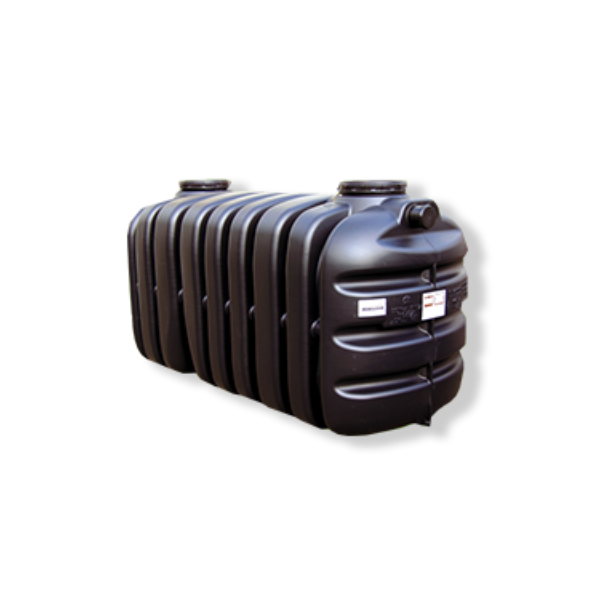
Tricel Vento Septic Tank
Shallow dig tank, strong & robust underground tank, No electrical or moving parts. Ideal for sites with good drainage & plenty of space.
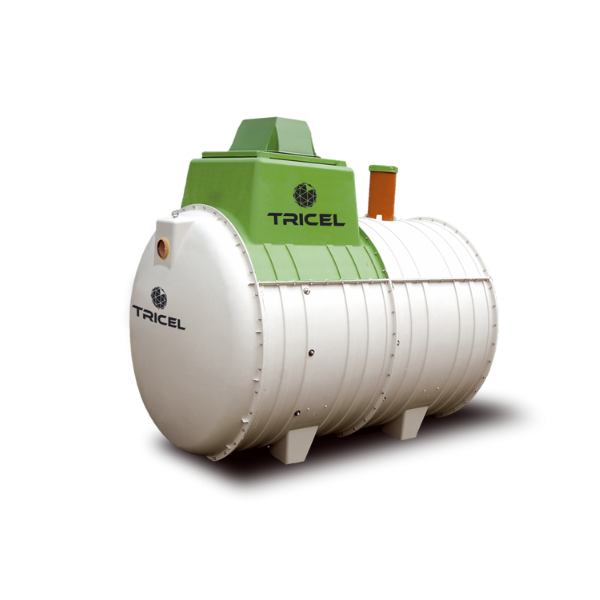
Tricel Novo Sewage Treatment Plant
Durable & long lasting SMC tank, shallow dig tank, easy installation (Plug and Play), long life components.
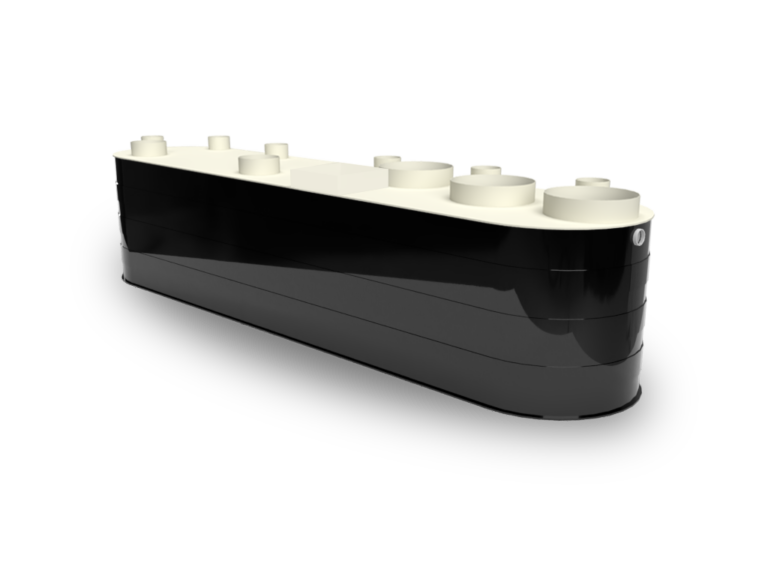
Tricel Maxus Sewage Treatment Plant
Commercial plant. Submerged Aerated Filter (SAF) technology. Ideal for project over 50 PE.
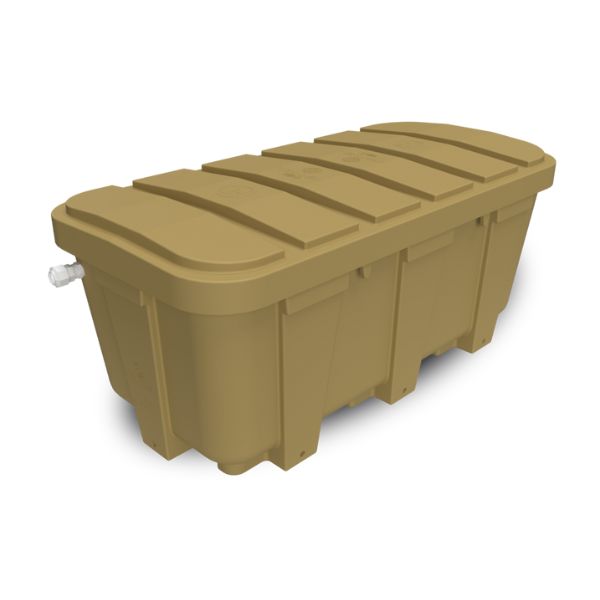
Tricel Tero Tertiary Treatment
An eco-friendly and modular system with proven E.Coli Treatment capabilities in line with the new EPA requirements.
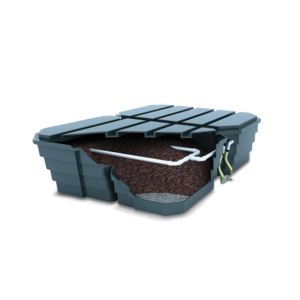
Tricel Puraflo Secondary treatment plant
Ideal for sensitive sites, compliant to Irish Standard, small footprint.
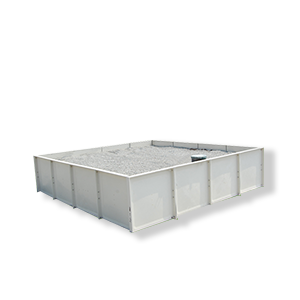
Tricel Sandcel
Sand Polishing Filter
Provides a dual function of polishing the effluent from a wastewater treatment system and disposing it into groundwater.
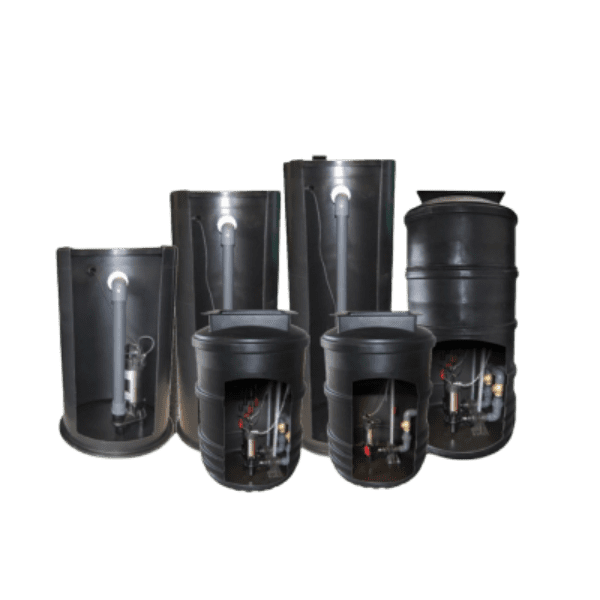
Tricel Pumping Stations
Pump fluids from one place to another where gravity drainage cannot be used, easy and trouble-free installation
50 years in business
A highly successful multinational corporation with over 50 years’ valuable industry experience
SEWAGE TREATMENT PLANTS
Plants available for all capacities, from 1PE up to 50PE. Free advice on request.
Fast Delivery
On-time delivery is a core requirement of our successful business operations
Meet our team
To find a technician in your area, visit our page
TALK SEWAGE TREATMENT
To speak to one of our agents online, click here
ASK FOR A QUOTE
Request a free quote today to have a quote that meets your project!
Get in touch