
Updated June 2026
Up to 10 population equivalent (PE ≤10)
technical guidance
site-specific process
Home » Code of practice 2021
Regulations & compliance · Jurisdiction: Republic of Ireland
EPA Code of Practice 2021 for Domestic Wastewater Treatment Systems
The principal technical guidance used in Ireland for assessing, selecting, designing, installing and maintaining an on-site wastewater system serving a single house or an equivalent development with a population equivalent of no more than 10.
EPA Code of Practice 2021: key points
- It applies to domestic wastewater systems serving up to 10 population equivalent, commonly written as PE ≤10.
- It applies to site assessments and associated installations undertaken on or after 7 June 2021.
- It replaced the EPA’s 2009 Code of Practice.
- It covers site characterisation, system selection, treatment performance, installation, commissioning, operation and maintenance.
- A site assessment must be completed by an appropriately trained and qualified person.
- The wastewater system must comply with the planning permission, approved design and relevant product standards.
- The Code does not remove the owner’s obligation to prevent pollution or comply with other legislation.
- Local authorities may require higher standards in sensitive areas.
- Projects above 10 PE, housing developments, commercial sites and surface-water discharges may require a different or additional regulatory route.
Where this fits with planning and inspection
The Code governs the technical assessment and design process. For the document package needed at planning stage, see wastewater treatment reports for planning applications. For what happens once a system is in use, see our guide to septic tank inspection in Ireland.
What is the EPA Code of Practice 2021?
The full title is Code of Practice: Domestic Waste Water Treatment Systems — Population Equivalent ≤10.
The Environmental Protection Agency published the Code under Section 76 of the Environmental Protection Agency Act 1992, as amended. Its purpose is to provide a consistent methodology for choosing and managing domestic wastewater treatment systems in areas without a public sewer.
The Code is intended for homeowners and developers; site assessors; engineers and designers; planning authorities; wastewater system manufacturers; installers; maintenance providers; and other professionals involved in on-site wastewater treatment.
The EPA states that the Code covers the policy and legal background, wastewater loadings, site characterisation, separation distances, groundwater protection, treatment-system selection, installation, operation and maintenance.
When did the 2021 Code take effect?
The 2021 Code applies to site assessments and associated installations carried out on or after 7 June 2021.
The previous 2009 Code may continue to apply where the site assessment and associated installation commenced before 7 June 2021, or where the application for planning permission was made before that date.
The applicable planning permission, approved site assessment and local authority requirements should always be checked before relying on the earlier Code.
Which wastewater projects does the Code cover?
The Code applies to domestic wastewater treatment systems serving a single house, or an equivalent-sized development, where the total design load is 10 PE or less.
The reference to an “equivalent development” does not make the Code a general design standard for every small commercial or multi-building project. The wastewater characteristics, maximum loading, property use and planning authority requirements must still be assessed. More extensive site characterisation is required for cluster and larger developments.
Regulatory scope at a glance
| Project type | Does the 2021 Code apply? | Additional considerations |
|---|---|---|
| Single rural house, PE ≤10 | Yes | Site characterisation and planning requirements apply. |
| Replacement system serving a house | Relevant | The local authority may consider appropriate variances for an existing site. |
| Extension that increases wastewater loading | Relevant | PE, planning permission and existing system capacity must be reassessed. |
| Equivalent domestic development, PE ≤10 | Potentially | Confirm the interpretation with the planning authority and site assessor. |
| Cluster or housing development | Not sufficient by itself | More extensive assessment and separate wastewater infrastructure requirements may apply. |
| Commercial or institutional site | Not automatically | The project must be assessed using the actual wastewater characteristics and loading. |
| Project above 10 PE | Outside the Code’s stated scope | Project-specific professional design and regulatory review are required. |
| Project in Northern Ireland | No | Northern Ireland has a separate planning and discharge-consent system. See our ROI vs NI regulations comparison . |
Is the EPA Code itself a law?
The Code is technical guidance published under environmental legislation. It does not replace planning law, Building Regulations, water-pollution legislation or the legal duties placed on wastewater-system owners.
However, its use is embedded in the Irish planning and building-control framework. The EPA explains that Technical Guidance Document H of the Building Regulations requires compliance with the applicable EPA Code and S.R. 66; a planning application proposing wastewater disposal other than to a public sewer must include information about the proposed system and evidence that the site is suitable; and local authorities require adherence to the Code through their development-plan and planning-assessment processes.
Following the Code also does not provide permission to cause pollution. A system must continue to comply with its planning conditions and the owner’s duties under water-services and water-pollution legislation.
How the Irish wastewater regulatory framework fits together
Several connected documents and legal requirements can apply to an off-mains wastewater installation.
EPA Code of Practice 2021
The Code determines the technical site-assessment and system-selection process for domestic systems with PE ≤10.
Planning permission
The planning authority considers whether the site is suitable, whether the proposed system is acceptable and whether the submitted evidence demonstrates that wastewater can be treated and discharged without an unacceptable risk. The grant of planning permission may include conditions governing system type; design PE; discharge route; location; separation distances; installation; certification; commissioning; and ongoing maintenance. The installed arrangement must match the permission and approved drawings. See our guide to wastewater treatment reports for planning applications for the full application process.
Building Regulations and Technical Guidance Document H
Technical Guidance Document H covers drainage and wastewater disposal. Its 2016 edition calls up S.R. 66:2015 and the applicable EN 12566 standards for wastewater treatment products.
S.R. 66
S.R. 66 provides Irish guidance on the selection, installation and use of small wastewater treatment products and their performance under the EN 12566 series.
Check the current edition
NSAI consulted publicly on a proposed amendment, S.R. 66:2015+A1:202X, between December 2025 and January 2026. Designers and specifiers should confirm the current published edition with NSAI when preparing specifications or procurement documents rather than assuming that a consulted draft is in force.
I.S. EN 12566
The EN 12566 series covers different parts of small wastewater treatment systems, including Part 1 (prefabricated septic tanks), Part 2 (soil infiltration systems), Part 3 (packaged or site-assembled domestic wastewater treatment plants), Part 4 (septic tanks assembled on site from prefabricated kits), Part 5 (pre-treated effluent filtration systems), Part 6 (prefabricated treatment units receiving septic-tank effluent), and Part 7 (prefabricated tertiary treatment units).
The applicable system must have the necessary testing, certification and declared performance for its product category. A CE mark or test certificate does not, by itself, prove that a product is suitable for a particular site. Site suitability, PE, discharge route and planning approval remain separate requirements — see our wastewater treatment systems: do’s and don’ts for the everyday practices that keep a certified system compliant.
Water Services legislation
Domestic wastewater-system owners are responsible for operating and maintaining their system so that wastewater does not leak, pond on the ground, enter surface water unlawfully or create a risk to human health or the environment. Roof water and surface run-off must not enter the wastewater treatment system. Desludging must be carried out at an interval appropriate to the system and occupancy, using an authorised contractor where required. See wastewater system maintenance and septic tank regulations in Ireland for the full ownership duties.
Water Pollution Act discharge licence
A direct discharge to surface water is not the same as the usual discharge-to-ground route addressed by most domestic site assessments. Where the site is unsuitable for discharge to ground, a surface-water discharge may only be considered where the necessary licence and local authority approval can be obtained. The EPA Code states that this route requires a licence under the Water Pollution Act.
The Code of Practice compliance process
A compliant installation involves more than purchasing a certified treatment plant. The process should proceed in the correct order.
-
Check whether a public sewer connection is available
The planning and design team should first establish whether connection to a public wastewater sewer is available or feasible. An on-site system should not be selected merely because it appears less expensive or more convenient. The applicable planning authority and, where relevant, Uisce Éireann requirements must be considered.
-
Calculate the design population equivalent
Population equivalent, or PE, is the design loading used to size the treatment and infiltration arrangement.
Number of bedrooms Design PE One or two 4 PE Three 5 PE Four 6 PE Five 7 PE Six 8 PE Seven 9 PE Eight 10 PE The minimum design capacity under the Code is 4 PE. One PE is added for each bedroom above two. The Code uses a typical daily hydraulic loading of 150 litres per person per day for septic tanks and secondary or tertiary treatment systems.
Bedroom-based domestic sizing should not be used blindly for hotels, restaurants, schools, workplaces, campsites or other non-domestic properties. Those sites have different occupancy patterns, peak factors and wastewater characteristics. See our detailed guide to sewage treatment plant size in Ireland for sizing beyond the domestic bedroom table.
-
Appoint an appropriately trained and qualified site assessor
The site characterisation and system recommendation should be prepared by a person with appropriate wastewater-site-assessment training, qualifications, experience and professional insurance.
The assessor should consider the complete site rather than performing only a percolation test. The EPA describes a process involving a desk study; visual assessment; trial-hole assessment; soil and subsoil classification; groundwater and bedrock assessment; surface and subsurface percolation testing; examination of receptors at risk; review of groundwater protection responses; and integration of all findings into the system recommendation. For the full application process, see our guide to wastewater treatment reports for planning applications in Ireland .
-
Determine whether the site is suitable
The site assessor must establish whether the location can safely accommodate the wastewater loading. The Code requires consideration of natural site gradient; depth to bedrock; depth to the water table; unsaturated soil and subsoil depth; percolation characteristics; groundwater vulnerability; nearby wells and abstraction points; rivers, streams, lakes and drains; flood risk; protected or environmentally sensitive areas; neighbouring wastewater systems; cumulative wastewater loading; and all required separation distances.
A site is not considered suitable merely because one percolation result falls within an acceptable numerical range. All of the site-characterisation evidence must be interpreted together.
-
Select the treatment and infiltration route
The assessor’s findings determine which wastewater route may be used. The main categories considered by the Code include:
Septic tank with a percolation area
A septic tank provides primary settlement and partial treatment. The percolation area is an essential treatment component; the tank alone does not fully treat the wastewater. This route generally requires suitable, sufficiently permeable subsoil and adequate space.
Septic tank followed by secondary treatment
A prefabricated secondary treatment filter or another approved stage may receive septic-tank effluent before it is discharged through a suitable polishing or infiltration arrangement.
Packaged secondary wastewater treatment plant
A plant such as the Tricel Novo receives raw domestic wastewater and provides secondary biological treatment. The treated effluent still requires an approved final discharge arrangement.
Secondary treatment followed by tertiary treatment
Tertiary treatment may be required where additional pathogen or nutrient reduction is necessary, or where the site assessment and groundwater protection response require a higher standard. Possible tertiary arrangements described by the Code include tertiary sand polishing filters , packaged tertiary units and constructed wetlands designed for tertiary treatment.
The selected treatment level and discharge route must be justified by the completed site assessment. It should not be chosen solely from a product brochure or homeowner preference.
Percolation values and the 2021 disposal options
One of the material changes introduced by the 2021 Code was the addition of routes capable of operating in some lower-permeability subsoils.
The Code identifies different acceptable percolation ranges for different treatment and distribution arrangements. In summary: a conventional septic tank and percolation area has the narrowest applicable range; secondary treatment with a suitable polishing arrangement can cover a wider range; low-pressure pipe distribution may be considered up to a subsurface percolation value of 90; drip dispersal may be considered up to a subsurface percolation value of 120; and a value greater than 120 is unsuitable for a system discharging to ground under the Code.
The availability of a wider numerical range does not mean that every low-permeability site will be approved. These are specialist arrangements requiring correct design, dosing, installation and maintenance. Groundwater protection, minimum unsaturated depth, planning conditions and other site constraints still apply.
Separation distances and groundwater protection
The Code contains minimum separation distances between the complete wastewater system and receptors such as private wells; public or group water-supply abstraction points; houses; site boundaries; roads; watercourses; lakes; drains; other wastewater systems; and stormwater disposal areas. The “complete system” includes both the tank or treatment plant and the infiltration, percolation or polishing area.
These values should not be copied from a generic diagram and applied without a site assessment. The required location may be affected by groundwater flow direction, the type of water supply, groundwater vulnerability, topography and the planning authority’s conditions. The EPA recommends locating the wastewater system hydraulically down-gradient of wells where possible and increasing distances where practicable.
For the full homeowner-facing distance table, see our dedicated guide: distance from septic tank to house.
Requirements for certified wastewater products
A compliant product should have documentation appropriate to its relevant EN 12566 category. Depending on the product, the technical file may include CE marking; Declaration of Performance; test reports; treatment-performance data; watertightness and structural test information; design PE and hydraulic capacity; sludge-storage capacity; installation instructions; electrical requirements; commissioning procedures; operation and maintenance manual; and details of alarms, pumps or mechanical equipment.
For packaged systems tested under EN 12566 Parts 3 or 6, the Code specifies minimum performance levels of: biochemical oxygen demand no more than 20 mg/l; suspended solids no more than 30 mg/l; and ammonium nitrogen no more than 20 mg/l, unless the local authority specifies otherwise.
These figures relate to product and system performance requirements. Homeowners are not expected to carry out routine laboratory testing simply because they own a domestic system, but they must keep the system operating within its design and planning conditions.
Planning permission and the site recommendation report
A wastewater product recommendation is not the same as planning approval.
A planning submission for an off-mains property may include the EPA Site Characterisation Form; site layout and levels; trial-hole findings; percolation results; groundwater-protection information; proposed system type; design PE; discharge route; infiltration or polishing-area design; product certification; installation drawings; and supporting calculations.
A manufacturer-generated recommendation report can supply product information, certification, calculations and drawings. It does not replace the site assessor’s report or the planning authority’s decision.
Build a Code-compliant recommendation report
Once your site characterisation is complete, use Tricel Site Assessor to generate the manufacturer’s recommendation report that supports your planning submission, including population-equivalent calculations, product certification, pump sizing and AutoCAD drawings prepared around the current EPA Code of Practice. The tool is free to use, but it does not replace your site assessment or the planning authority’s decision.
Installation and commissioning requirements
The system installed on the property should be the system approved through the planning and design process. Installation should follow the planning conditions; the approved site layout; the site assessor’s design; the Code of Practice; the relevant product standard; the manufacturer’s instructions; and appropriate construction and health-and-safety requirements.
Important controls include correct excavation and base preparation; protection against tank flotation; suitable backfill; correct pipe gradients and invert levels; access for inspection and desludging; protection of the infiltration area from construction traffic; appropriate ventilation; electrical installation by a competent person; correct pump and alarm configuration; provision of sampling access where required; and formal commissioning before occupation.
The EPA advises that site characterisation, design, installation and commissioning should be carried out or supervised by appropriately trained and qualified people. For the construction sequence, see our guide to sewage treatment plant construction and installation in Ireland.
Can the local authority require more than the Code?
Yes. The Code establishes the general national framework, but the local authority may require a higher treatment or protection standard where the receiving environment is sensitive.
Examples identified by the EPA include bathing-water catchments; high-status river or lake catchments; drinking-water source-protection areas; public-water-supply zones of contribution; shellfish waters; pearl mussel catchments; and other locations where human health or water quality requires additional protection. A system that meets a general product standard may therefore require supplementary treatment or may not be acceptable on a particular site.
Existing systems, replacements and upgrades
An existing system may not comply with every dimensional or performance requirement that would apply to a new site. Where an existing domestic wastewater system is being repaired or upgraded, the local authority may consider a variance where it is satisfied that the proposed work will protect human health and the environment.
This does not mean that the owner may install any preferred replacement. The authority may require a new site assessment; planning permission or confirmation of exemption; a revised treatment route; additional polishing; relocation of components; repair of the infiltration area; separation of roof or surface water; or other site-specific remedial measures. The homeowner should confirm the planning position before beginning the works.
New or alternative treatment technologies
A new technology is not automatically acceptable simply because it has been used elsewhere or has a manufacturer’s performance claim. The Code states that local authorities should examine new technologies case by case, considering Building Regulations; relevant technical standards; evidence of suitability in Ireland or internationally; and protection of human health and the environment. Planning acceptance, documented performance and site suitability remain necessary.
Operation and maintenance after installation
Compliance does not end when the system is commissioned. The owner must ensure that the system remains fit for purpose; does not leak or allow wastewater to pond; does not create a risk to human health or the environment; is not receiving roof water or surface run-off; is serviced in accordance with its requirements; is desludged at appropriate intervals; has functioning pumps, alarms and mechanical equipment; and remains accessible for inspection and maintenance.
Evidence of desludging must be retained for five years under the domestic wastewater regulations. See our guide to the desludging process for what an authorised contractor should provide. For the full ownership duties, see wastewater system maintenance and septic tank regulations in Ireland.
Registration, inspection and enforcement
A domestic wastewater system serving a house must also be registered. Registration is a separate legal requirement and is not completed automatically through planning permission, product registration or commissioning.
Systems may be inspected under the EPA’s National Inspection Plan. An inspection assesses whether the system is registered, maintained and operating without creating a risk to human health or the environment.
These subjects are covered in full on their own dedicated pages: septic tank registration Ireland, septic tank inspection, and septic tank grants in Ireland. The Department of Housing confirms that registration, inspection and grant provisions operate through separate statutory arrangements from the Code of Practice itself.
Important 2026 wastewater regulatory update
The European Union (Water Policy) (Small Wastewater Discharge Register) Regulations 2026 introduced a separate registration route for certain proposed discharges to surface water from wastewater works serving housing developments.
The Regulations apply where two or more domestic dwellings are connected to a collection system; the discharge is to surface water; the development has a population equivalent of no more than 150; and the wastewater works are owned, controlled or used by Uisce Éireann.
The Regulations require secondary treatment, restrict the discharge to domestic wastewater, exclude rainwater and surface run-off, and impose operation, maintenance, monitoring and environmental-performance requirements.
Not a replacement for the domestic Code
This is not a replacement for the EPA Code of Practice route for an ordinary single house. It is a separate regulatory development relevant to certain multi-dwelling wastewater infrastructure and Uisce Éireann discharges.
What the Code does not cover
The EPA Code of Practice 2021 should not be treated as the sole design or compliance document for projects exceeding 10 PE; housing clusters or larger residential developments; hotels, restaurants, schools or workplaces with non-standard loadings; food-processing or industrial effluent; trade effluent; public wastewater networks; large treatment works; wastewater infrastructure intended for adoption by Uisce Éireann; Northern Ireland projects; or direct surface-water discharges requiring a licence or other authorisation.
Those projects require professional assessment under the legislation, standards, planning policy and discharge route applicable to the particular development.
EPA Code of Practice compliance checklist
Before ordering or installing an off-mains wastewater system, confirm that:
- The proposed development cannot use an available public sewer.
- The correct regulatory jurisdiction has been identified.
- The design PE has been calculated.
- An appropriately qualified person has assessed the site.
- The desk study, visual assessment, trial hole and percolation tests are complete.
- The proposed system and discharge route follow the assessment.
- All separation distances can be achieved.
- Groundwater, water-table and bedrock requirements are satisfied.
- The product has the required certification and declared performance.
- The design has been included in the planning application.
- Planning permission and all conditions have been reviewed.
- The installer has the approved layout and manufacturer’s instructions.
- The infiltration area will be protected during construction.
- Electrical and mechanical components will be commissioned.
- Installation and handover records will be retained.
- The system will be registered where required.
- Servicing and desludging arrangements are in place.
Choosing a wastewater treatment system
There is no single system that complies on every site. The suitable route is determined by the design PE; ground and groundwater conditions; percolation values; available unsaturated subsoil; site area; separation distances; environmental sensitivity; required effluent quality; final discharge route; and planning authority requirements.
Tricel can provide technical product information, certification, drawings and wastewater recommendation reports after the site-assessment information is available. The final planning and design decision remains with the appropriately qualified professionals and relevant authority.
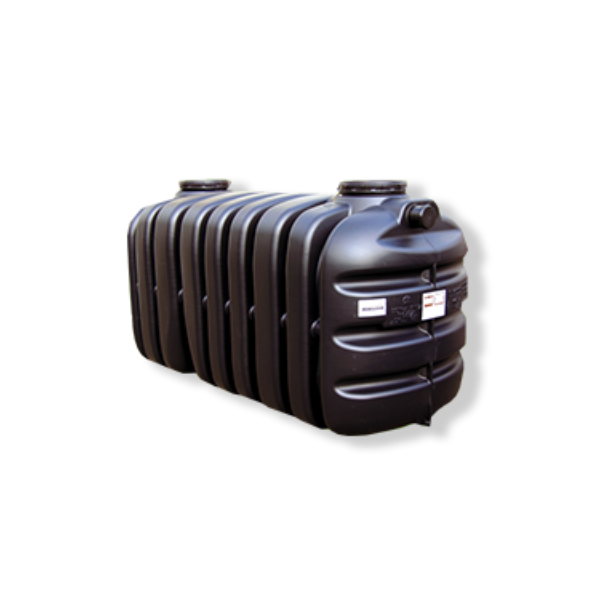
Septic tanks
Primary treatment for sites with favourable percolation results, from single-house to multi-unit capacity.
From 6 to 20 person equivalent
Septic tanks overview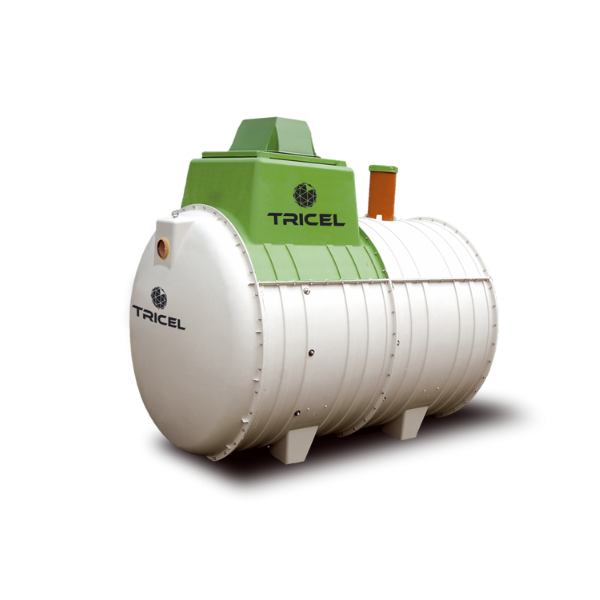
Wastewater treatment plants
Secondary treatment plants for sites where a standard septic tank and percolation area is not permitted.
Domestic & light commercial
Treatment plants overview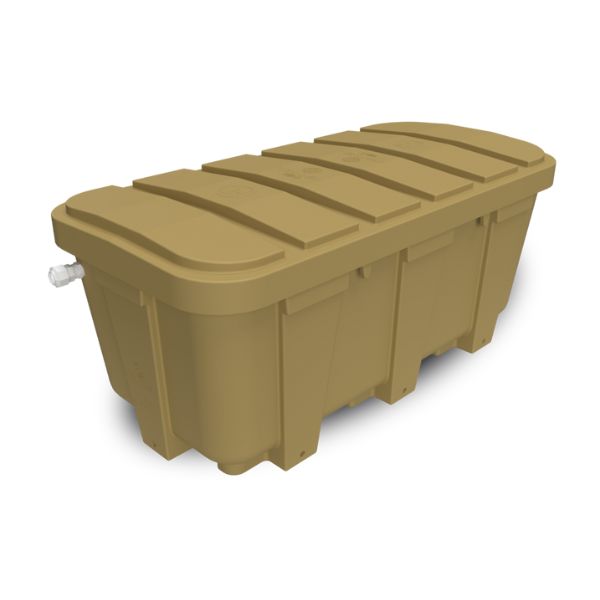
Tertiary & polishing systems
Added protection for sensitive sites, high water tables and nutrient-sensitive catchments, fitted alongside an existing tank or plant.
No-desludge polishing modules
Tertiary systems overview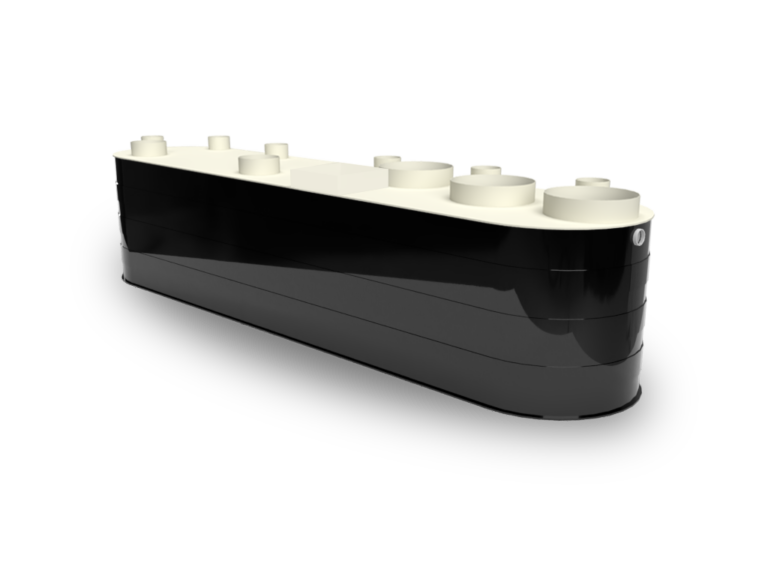
Commercial systems
Packaged and bespoke systems for hotels, schools, campsites and rural commercial premises above the domestic threshold.
Quoted to site specification
Commercial systems overview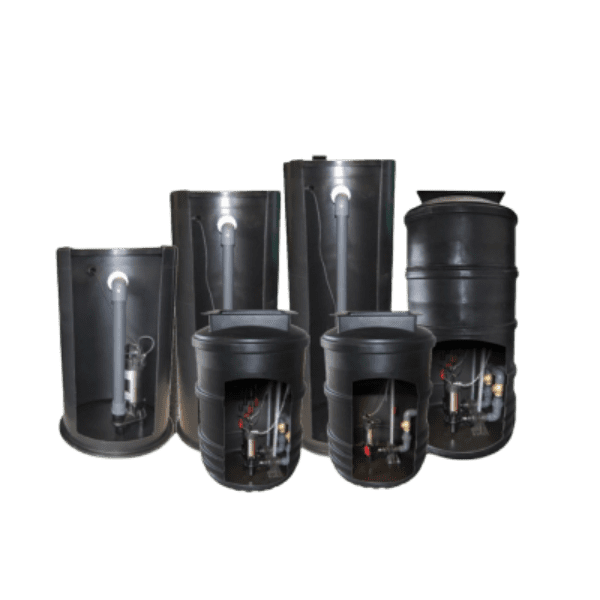
Pumping stations
Specified wherever gravity discharge to the treatment system or sewer connection point is not achievable on site.
Domestic & commercial
Pumping stations overview
Servicing & desludging
Structured service agreements and desludging, recommended annually under the EPA Code of Practice and a legal responsibility of the owner.
Product & service, not enquiry-only
Desludging processTable of Contents
Read more on this subject
The following Tricel articles cover related regulatory, maintenance, grant and homeowner questions that may arise alongside an EPA inspection.
EPA Code of Practice 2021
An overview of the domestic Code of Practice covering site assessment, system selection, design, operation and maintenance.
Read articleSeptic Tank Inspection
Learn how septic tank inspections are carried out, what inspectors check and what happens if an advisory notice is issued.
Read articleSeptic Tank Regulations in Ireland
The legal requirements covering registration, maintenance, inspections and homeowner responsibilities.
Read articleSeptic Tank Grants in Ireland
Information about the available grant routes, eligibility requirements and application process.
Read articleWastewater Reports for Planning Applications
How site assessments, percolation testing and wastewater reports support planning applications for off-mains properties.
Read articleWastewater System Maintenance
Routine servicing and maintenance measures that help wastewater treatment systems continue to operate correctly.
Read articleThe Desludging Process
How desludging works, when a system may need to be emptied and which records homeowners should retain.
Read articleWastewater Treatment Systems: Do’s & Don’ts
Everyday household practices that help protect the treatment process and reduce the risk of system problems.
Read articleSelling a Property with a Septic Tank
Registration certificates, inspection information and wastewater records that may be relevant during a property sale.
Read articleWastewater Treatment Warranties
Information about warranty cover for Tricel wastewater treatment systems and their components.
Read articleWastewater Treatment FAQ
Answers to common questions about domestic wastewater systems, operation, maintenance and ownership.
Read article50 YEARS IN BUSINESS
A highly successful multinational corporation with over 50 years’ valuable industry experience
SEWAGE TREATMENT PLANTS
Plants available for all capacities, from 1PE up to 50PE. Free advice on request.
Fast Delivery
On-time delivery is a core requirement of our successful business operations
Get in touch