
Home » Housing Development Wastewater Treatment | Tricel Maxus Ireland
Updated July 2026
RoI & NI coverage
PE-based sizing
Phased occupancy
Commercial Wastewater systems · Ireland & Northern Ireland
Housing development wastewater treatment
Shared wastewater treatment systems for housing developments, apartment schemes and residential projects where a mains sewer connection is not available, not feasible at the required stage, or requires further technical review.
For a housing development, the wastewater system should be sized around the full residential load, the project phasing, the expected population equivalent, the discharge route and the site conditions — not the number of houses alone.
For a housing development, the wastewater system should be sized around the full residential load, the project phasing, the expected population equivalent (PE), the discharge route and the site conditions — not the number of houses alone.
Housing developments and small residential schemes may require a shared wastewater treatment system where a connection to the public sewer is not available, or where the development needs a separate wastewater route. Instead of installing one system per house, the development is usually assessed as a single site. The total wastewater load is calculated across the full scheme, including all houses, apartments, communal facilities and any future phases.
This is why a housing development needs a different approach from a single domestic property. The design must allow for daily household flow patterns, peak morning and evening demand, low-flow periods and the way the site will fill over time as homes are completed and occupied.
Is this page right for your project?
This page is for shared and development-scale residential wastewater projects:
For a single house, start with the household wastewater treatment page. For larger or shared residential schemes, the system normally needs a project-specific review rather than an off-the-shelf selection.
- Housing estates
- Small residential developments
- Apartment schemes
- Phased residential sites
- Rural residential clusters
- Private residential schemes
- Replacement systems for existing shared sites
- Developments above the single-house domestic route
Why housing developments need careful wastewater sizing
A housing development does not behave like a single home. Flow is spread across multiple dwellings and changes during the day, during the week, and as each project phase is occupied. The design should account for:
- Total population equivalent
- Number and type of dwellings
- Apartments, houses or mixed use
- Expected occupancy per unit
- Daily flow
- Peak flow periods
- Phased build-out and partial occupancy
- Gravity flow or pumping requirements
- Discharge route
- Soil, groundwater and percolation conditions
- Local authority, Uisce Éireann, EPA or NIEA requirements
- Any required effluent standard
Residential development flows vary through the week, with peaks often in the morning, late afternoon and evening, and that large systems must be designed for both peak flows and low-flow periods. Designing only for the average would leave the system exposed at the morning and evening peaks; designing only for the peak risks poor biological performance when flow drops away overnight or during early-phase occupation. A workable design holds both ends of that range.
Public sewer connection or off-mains treatment?
The first step is to check whether a public wastewater connection is possible.
In the Republic of Ireland, Uisce Éireann provides a housing development connection process. Developers may need to complete a Pre-Connection Enquiry or a Connection Application depending on the planning stage and feasibility status. Uisce Éireann lists site location maps, site layout maps and planning information among the documents required at different stages.
If a public sewer connection is not available or cannot serve the development at the required stage, an on-site or developer-led wastewater route may need to be considered. Uisce Éireann also provides developer services guidance covering the connection process, technical guidance and developer-led infrastructure.
For some housing schemes in the Republic of Ireland, the Developer-Led Wastewater Services Infrastructure initiative may be relevant. Approved by Government in November 2025 and moved to implementation in March 2026 under Circular Letter NSP 01/2026, it allows developers to finance and construct wastewater infrastructure to Uisce Éireann standards, with Uisce Éireann taking ownership and responsibility for operation and regulatory compliance once the infrastructure is completed and transferred.
A related registration-based authorisation route, using General Binding Rules, applies to small-scale discharges of up to 150 population equivalent (about 40 residential units). This threshold governs eligibility for the streamlined registration process only; larger developments remain eligible for the initiative but follow the standard EPA environmental authorisation process.
Regulatory reference — For some housing schemes in the Republic of Ireland, the Developer-Led Wastewater Services Infrastructure initiative may be relevant. Approved by Government in November 2025 and moved to implementation in March 2026 under Circular Letter NSP 01/2026, it allows developers to finance and construct wastewater infrastructure to Uisce Éireann standards, with Uisce Éireann taking ownership and responsibility for operation and regulatory compliance once the infrastructure is completed and transferred. A related registration-based authorisation route, using General Binding Rules, applies to small-scale discharges of up to 150 population equivalent (about 40 residential units). This threshold governs eligibility for the streamlined registration process only; larger developments remain eligible for the initiative but follow the standard EPA environmental authorisation process.
Republic of Ireland and Northern Ireland requirements differ
Wastewater requirements differ between the two jurisdictions, so the site location must be confirmed before a system is selected.
In the Republic of Ireland, the EPA’s 2021 Code of Practice for Domestic Waste Water Treatment Systems applies to domestic wastewater treatment systems with a population equivalent of 10 or fewer, providing guidance on site characterisation, design, operation and maintenance for domestic systems. A housing development should not automatically be treated as a single domestic project. Where the total PE, shared infrastructure, discharge route or planning conditions move the site outside the single-house domestic route, the project needs a development-specific wastewater assessment.
In Northern Ireland, DAERA states that private sewage treatment systems, including septic tanks and package treatment plants, require consent from the Northern Ireland Environment Agency. DAERA also states that domestic consents are for single dwellings only, and that sites of two or more dwellings should first seek advice from NI Water about connection to the public sewer network.
Tricel Maxus for housing development wastewater treatment
For residential schemes above the domestic range, Tricel Maxus is the main commercial wastewater treatment route. Maxus systems use Submerged Aerated Filter (SAF) technology and are designed for applications greater than 50 PE. Tricel lists housing estates among the application types for Maxus, alongside hotels, schools, factories, nursing homes, garden centres, restaurants, campsites and retail units.
The Maxus range includes both all-in-one and multi-tank arrangements. For a housing development, this allows the system to be reviewed around load, levels, available space, discharge requirements and site constraints, rather than forcing the scheme to fit a single fixed configuration.
How Tricel Maxus works
Tricel Maxus treats wastewater through four main stages: settlement, buffer tank, biological treatment zone and clarifier.
Settlement
Wastewater enters the settlement stage. Heavier solids settle as sludge, while fats, oils and lighter solids rise and are retained.
Buffering
Partially treated wastewater enters the buffer stage, which evens out flow changes before wastewater is pumped forward for biological treatment.
Biological treatment
Wastewater passes through the submerged aerated filter. Air supports the biological process, allowing naturally occurring bacteria to break down organic matter.
Clarification
Remaining sludge settles out in the clarifier. Treated effluent then leaves through the approved discharge route, subject to final design and consent.
Why a buffer stage matters for residential developments
Housing schemes have uneven wastewater flow. There is high demand in the morning, when residents are getting ready for work or school, and another rise in the evening, when residents return home. There are also lower-flow periods overnight, and before all dwellings are occupied. A buffer stage manages this variation by controlling how wastewater moves into the biological treatment stage. This is particularly useful for phased schemes, where the system may need to perform during partial occupancy as well as at full occupancy — a demand curve that shifts not just across the day but across the build programme.
Housing development design considerations
Before a system can be recommended, Tricel needs the key site and design information. Eight factors carry most of the decision.
Site location
Confirm RoI or NI. This affects the authority route, consent process, documentation and product selection.
Public sewer availability
Confirm whether connection to the public network is possible. If not, confirm whether an off-mains or developer-led route is being considered.
Total PE
Size around the calculated population equivalent for the development, not simply the number of units.
Phasing
If built in phases, review the system against partial occupancy, first occupation, later phases and final full load.
Discharge route
Confirm discharge to ground, a watercourse or another approved route. This affects treatment requirements and whether polishing is needed.
Levels and pumping
Site levels determine whether wastewater flows by gravity or whether a pumping station is required.
Space and access
The layout must allow for installation, safe access, maintenance, desludging and future servicing.
Ground conditions
Soil type, groundwater level, percolation results and sensitive receptors can affect the system and discharge arrangement.
Product route by project size
| Project type | Likely starting point | Notes |
|---|---|---|
| Single house | Household wastewater treatment | Usually assessed under the domestic route where PE is within the applicable threshold. |
| Small shared load up to 50 PE | Tricel Novo may be reviewed | Tricel lists Novo IE18–IE50 for larger domestic, light commercial or semi-collective applications. See the sewage treatment plant size guide . |
| Development above 50 PE | Tricel Maxus | Main route for shared residential and commercial projects above 50 PE. |
| Larger phased development | Tricel Maxus multi-tank | Reviewed around total PE, phasing, site layout and discharge requirements. |
Tricel’s household wastewater treatment page lists Novo IE18–IE50 for larger domestic, light commercial or semi-collective applications, while Tricel Maxus is positioned for applications greater than 50 PE.
Tricel Maxus sizing range
Tricel lists Maxus models from 66 PE to 560 PE, each designed to suit project requirements. The listed range includes 66, 88, 112, 154, 175, 238, 294, 385 and 560 PE options. For a housing development, the listed model is only the starting point — final selection depends on the calculated load, site constraints, discharge standard, pumping requirements and regulatory route.
What Tricel needs to review a housing development project
To review a housing development wastewater project, provide as much of the following as possible:
- Site location
- Jurisdiction (RoI or NI)
- Planning stage
- Number of houses or apartments
- Expected occupancy
- Calculated PE, if known
- Phasing plan
- First occupation date, if known
- Whether public sewer connection has been checked
- Uisce Éireann / NI Water / authority correspondence
- Proposed discharge route
- Site layout drawing
- Levels information
- Percolation or site assessment results
- Groundwater or sensitive receptor information
- Access requirements for installation and servicing
- Whether pumping is expected
- Any required effluent standard
Where some of this is not yet available — for example, percolation results or a confirmed phasing plan on an early-stage site — tell us the current planning stage and we can advise on what to gather next and in what order.
Common housing development scenarios
New rural housing development
A rural scheme may need a shared on-site system where a public sewer connection is not available. The design should be based on total PE, discharge route and local site conditions.
Phased residential scheme
A phased scheme needs review at both partial and full occupancy. The system should serve early homes while allowing for later phases without oversizing for day one.
Apartment scheme
Apartments may produce a concentrated shared load. The design should account for the number of units, expected residents, pumping needs, access and discharge requirements.
Replacement for an existing estate
An older shared system may need replacement where it is undersized, failing, difficult to maintain or no longer suitable. The new system should be reviewed against current and expected future load.
Mixed residential cluster
Rural clusters and mixed schemes sit between the domestic and commercial routes. The correct classification depends on PE, shared infrastructure and the discharge route.
Developer-led infrastructure
Where a developer-led route applies, the system is built to the relevant standards for later adoption. Confirm the applicable process for the jurisdiction and scheme size.
Speak to Tricel about your housing development
Planning a housing development, apartment scheme or shared residential wastewater project? Send Tricel your site details, number of units, expected occupancy, phasing plan, discharge route and any authority correspondence. The team can review whether Tricel Novo, Tricel Maxus or a project-specific commercial system is the correct starting point.
Table of Contents
Why choose Tricel?
Irish manufacturing. Nationwide support. Guaranteed compliance.
Tricel has manufactured wastewater treatment systems in Ireland since 1973, from its facility in Killarney, Co. Kerry. The Vento septic tank range and Novo treatment plant range are certified to EN 12566 for installations from single homes up to 50+ population equivalent.
A nationwide network of approved distributors and installers, backed by Tricel's own technical sales team, covers supply, installation, commissioning and servicing across every county.
Quality
Manufactured in Killarney, Co. Kerry. The Novo tank is built from compression-moulded SMC — a composite material proven over 50 years in harsh operating conditions.
- EN 12566-1 (septic tanks) and EN 12566-3 (treatment plants) certified
- Independently tested by PIA GmbH, Aachen, Germany
Efficiency
The Tricel Novo treats wastewater across three independent zones, reaching an average 95.9% BOD removal — a higher standard of treatment than a septic tank alone.
- No moving parts or pumps inside the tank
- Ceramic diffuser lasts twice as long as standard rubber equivalents
Support
A nationwide network of approved distributors and installers, with a dedicated technical sales team on hand for sizing, site queries and project support.
- County-based distributor network across Ireland
- Direct technical support from Tricel's own team
Maintenance
Servicing and technical advice available directly from Tricel's environmental team, for the lifetime of your system.
- 10-year warranty on the Vento septic tank
- Call 064 663 2421 for servicing or technical advice
Related resources
Everything else you might need
Tricel Maxus
Commercial wastewater treatment for larger or shared off-mains sites, including residential schemes above 50 PE.
View Maxus range →Commercial wastewater treatment
Guidance for businesses, developments, shared sites and non-domestic wastewater loads.
Read commercial guidance →Household wastewater treatment
Domestic wastewater treatment options for single houses and residential properties.
View household systems →Wastewater treatment systems
An overview of Tricel wastewater treatment systems and the main product routes.
Browse systems →Sewage treatment plant sizing guide
Information on population equivalent, sizing and the details needed before system selection.
Read the sizing guide →Brochures and downloads
Product brochures, manuals and wastewater treatment documents for project review.
View downloads →Why choose Tricel?
Irish manufacturing. Nationwide support. Guaranteed compliance.
Tricel has manufactured wastewater treatment systems in Ireland since 1973, from its facility in Killarney, Co. Kerry. The Vento septic tank range and Novo treatment plant range are certified to EN 12566 for installations from single homes up to 50+ population equivalent.
A nationwide network of approved distributors and installers, backed by Tricel's own technical sales team, covers supply, installation, commissioning and servicing across every county.
Quality
Manufactured in Killarney, Co. Kerry. The Novo tank is built from compression-moulded SMC — a composite material proven over 50 years in harsh operating conditions.
- EN 12566-1 (septic tanks) and EN 12566-3 (treatment plants) certified
- Independently tested by PIA GmbH, Aachen, Germany
Efficiency
The Tricel Novo treats wastewater across three independent zones, reaching an average 95.9% BOD removal — a higher standard of treatment than a septic tank alone.
- No moving parts or pumps inside the tank
- Ceramic diffuser lasts twice as long as standard rubber equivalents
Support
A nationwide network of approved distributors and installers, with a dedicated technical sales team on hand for sizing, site queries and project support.
- County-based distributor network across Ireland
- Direct technical support from Tricel's own team
Maintenance
Servicing and technical advice available directly from Tricel's environmental team, for the lifetime of your system.
- 10-year warranty on the Vento septic tank
- Call 064 663 2421 for servicing or technical advice
Our range of products
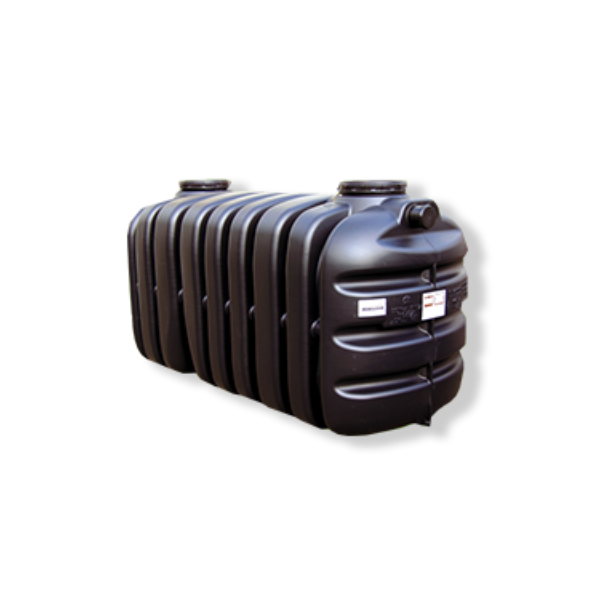
Tricel Vento Septic Tank
Shallow dig tank, strong & robust underground tank, No electrical or moving parts. Ideal for sites with good drainage & plenty of space.
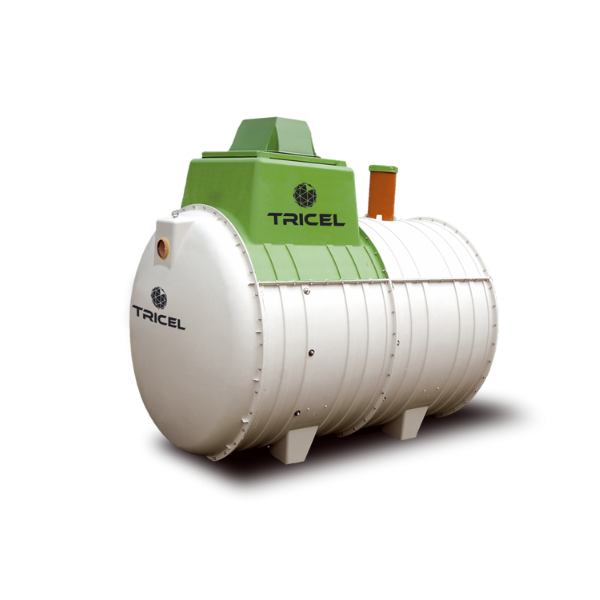
Tricel Novo Sewage Treatment Plant
Durable & long lasting SMC tank, shallow dig tank, easy installation (Plug and Play), long life components.
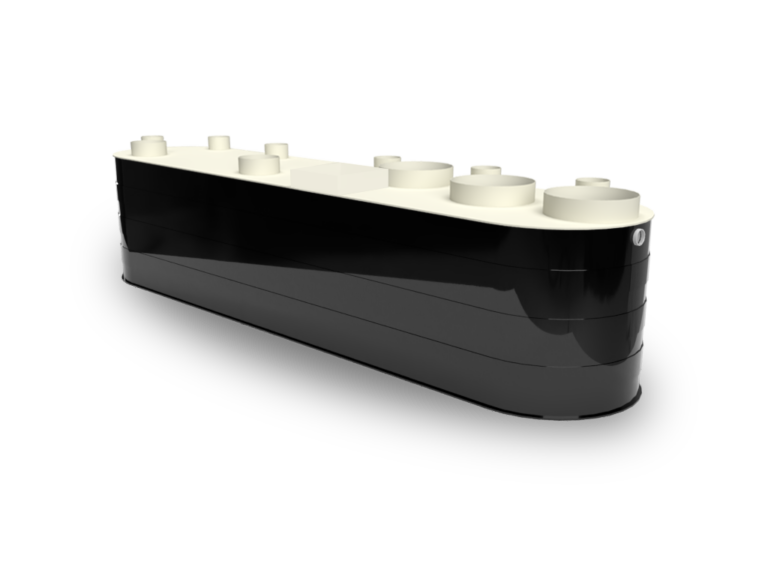
Tricel Maxus Sewage Treatment Plant
Commercial plant. Submerged Aerated Filter (SAF) technology. Ideal for project over 50 PE.
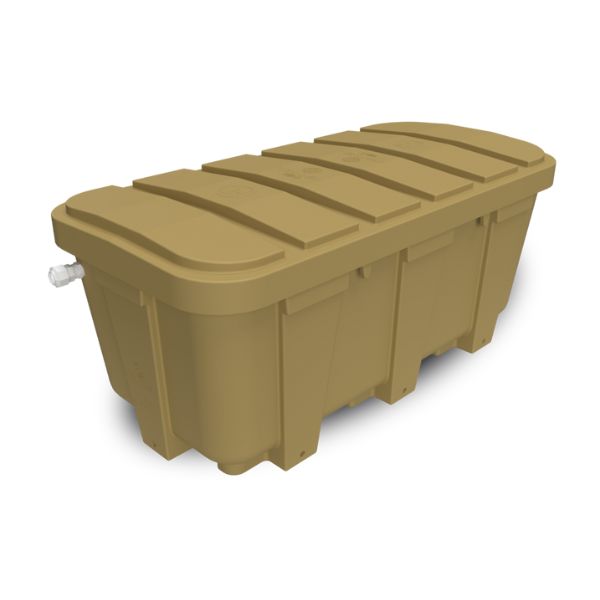
Tricel Tero Tertiary Treatment
An eco-friendly and modular system with proven E.Coli Treatment capabilities in line with the new EPA requirements.
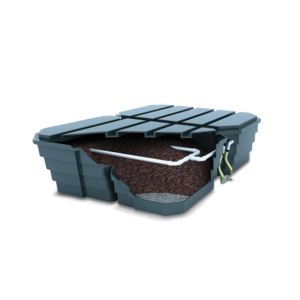
Tricel Puraflo Secondary treatment plant
Ideal for sensitive sites, compliant to Irish Standard, small footprint.
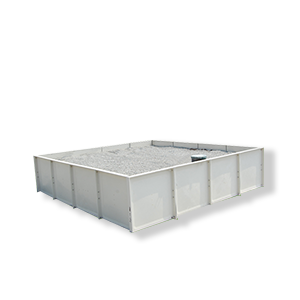
Tricel Sandcel
Sand Polishing Filter
Provides a dual function of polishing the effluent from a wastewater treatment system and disposing it into groundwater.
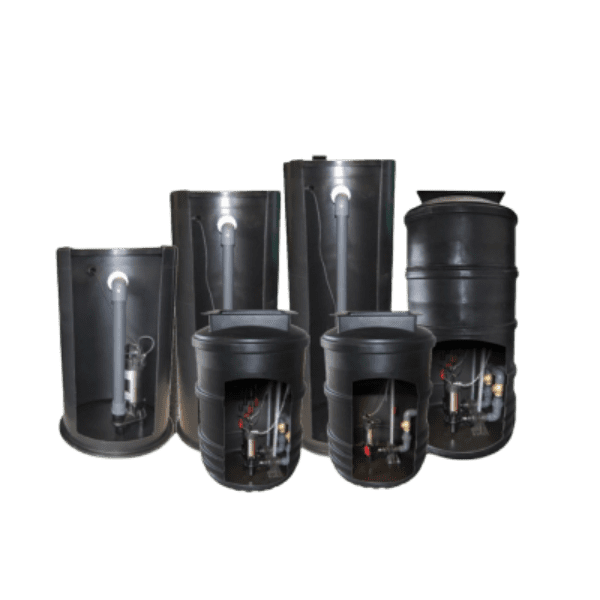
Tricel Pumping Stations
Pump fluids from one place to another where gravity drainage cannot be used, easy and trouble-free installation
Frequently asked questions for housing development wastewater treatment
What is housing development wastewater treatment?
It is the collection and treatment of wastewater from a housing estate, apartment scheme or residential development where a public sewer connection is not available or where a shared on-site system is required.
How is a wastewater system for a housing development sized?
It is usually sized by population equivalent, daily flow, peak loading, discharge route, phasing and site conditions. House numbers alone are not enough.
Can each house have its own septic tank?
That depends on the site, planning route, local authority requirements, available space, percolation results and whether a shared system is more appropriate. Many developments are assessed as one shared site rather than separate one-off houses.
Is a housing development classed as domestic or commercial wastewater?
A single house may fall under the domestic route, but a housing development can move beyond that because it has shared infrastructure, higher PE and development-level discharge requirements. The correct route depends on the jurisdiction, PE, planning status and discharge route.
What Tricel system is suitable for a housing development?
For projects above 50 PE, Tricel Maxus is the main route. For smaller shared or semi-collective loads up to 50 PE, Tricel Novo may be reviewed where the site assessment and project requirements support it.
Why does phasing matter?
A development may not reach full occupancy immediately. The system needs to be reviewed against early occupation, later construction phases and the final completed development.
Do housing developments need to check public sewer connection first?
Yes. In the Republic of Ireland, developers should check the relevant Uisce Éireann connection process. In Northern Ireland, DAERA states that sites of two or more dwellings should first seek advice from NI Water about public sewer connection.
Can treated effluent discharge to ground?
Possibly, but only where the site assessment, ground conditions and approval route support it. Some sites may require additional polishing or a different discharge arrangement.
Can Tricel help with sizing?
Yes. Tricel can review the site details, PE, phasing, discharge route and project constraints before advising on the relevant system route.
Get in touch