Updated July 2026
Domestic Treatment Systems
Septic Tanks Ireland
EN 12566 & S.R. 66 certified
Home » Household Wastewater Treatment
Domestic systems · Ireland
Household wastewater treatment systems for Irish homes
If your home is not connected to a public sewer, you need an on-site system: a septic tank, a wastewater treatment plant, or a plant with additional polishing. The right choice is decided by the site assessment, not by preference alone.
Overview
What is household wastewater treatment?
Household wastewater treatment is the process of collecting and treating wastewater from toilets, sinks, showers, baths, washing machines and other domestic sources before the treated effluent is discharged through an approved route.
A household system is usually needed when a home is not connected to the mains sewer. The system must be matched to the site. For a single house, the main selection factors are whether the property can connect to mains sewer, the number of people served, the site characterisation and percolation results, ground conditions, available space, separation distances, local authority requirements, and whether the project is a new build, replacement or upgrade.
Poorly treated wastewater from faulty septic tank systems can contaminate nearby household wells and affect rivers, lakes and coastal waters. Correct design, installation and maintenance matter.
Quick response
Before you choose a system
Straight answers to the questions we are asked most. For a specific site, the product ranges below cover primary, secondary and tertiary treatment in full.
Septic tank or treatment plant?
A septic tank provides primary treatment and relies on the ground for the rest. A treatment plant treats the effluent to a higher standard inside the unit before discharge. The site assessment decides which system applies.
What size do I need?
Sizing is set by design population, or PE. The Tricel Novo range includes domestic models such as IE6, IE8, IE10 and IE12. Final sizing is confirmed through the sewage treatment plant sizing guide, site assessment and technical review.
What governs domestic systems?
The EPA Code of Practice applies to domestic systems up to 10 PE, covering site characterisation, design, operation and maintenance. See the domestic wastewater treatment guidance for household systems.
What comes first?
The site assessment. It decides whether the site can accept a septic tank, whether a treatment plant is required, and whether additional polishing is needed before any product is chosen. Read the installation and construction guidance.
Choosing a route
Septic tank or wastewater treatment plant?
Most household sites start with one of two routes. A septic tank provides primary treatment, with the partly treated liquid moving to a suitable discharge or percolation arrangement. A treatment plant provides a higher level of treatment inside the unit before discharge.
| Site condition | Likely starting point | Why |
|---|---|---|
| Suitable soil, good drainage and enough space | Tricel Vento septic tank | A septic tank may suit where the site assessment confirms primary treatment and discharge through the ground can be achieved. |
| Restricted site, poor percolation or higher treatment requirement | Tricel Novo treatment plant | A treatment plant provides secondary treatment before discharge. |
| Sensitive site or additional polishing requirement | Novo with Sandcel polishing system | Additional polishing may be needed before final discharge where the site assessment or discharge route requires a higher treatment level. |
The two main routes
Tricel Vento and Tricel Novo
Tricel Vento septic tank
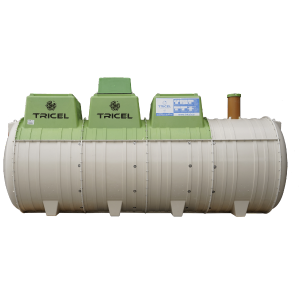
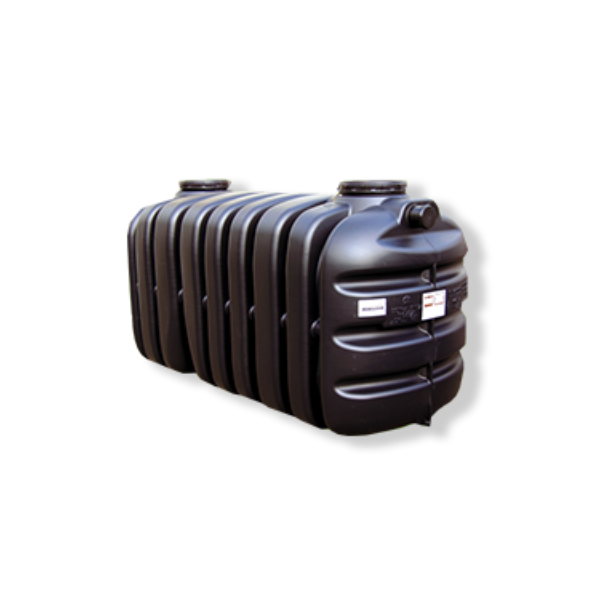
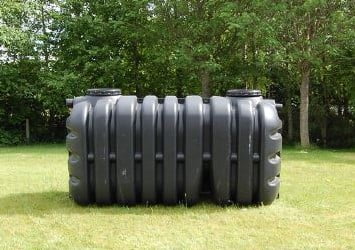
Positioned as the septic tank option for domestic sites with good drainage and enough space. A shallow-dig tank with no electrical or moving parts. Suited to one-off houses, rural homes and replacement projects where the site assessment confirms a septic tank route is appropriate.
Vento septic tank overview →
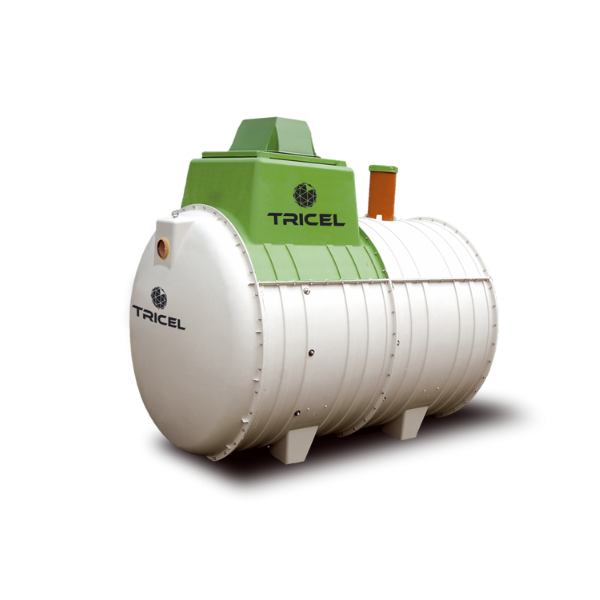
Tricel Novo treatment plant
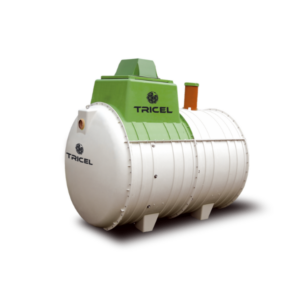
Tricel's main domestic wastewater treatment plant for household and light commercial use. A three-chamber plant made from compression-moulded SMC with a shallow-dig design. Suited to homes where a septic tank is not suitable, self-builds without mains access, and replacement or upgrade projects.
Novo treatment plant overview →How it works
How the Tricel Novo works
Primary settlement chamber
Wastewater enters the first chamber. Heavier solids settle at the bottom while lighter materials separate from the liquid.
Aeration chamber
The liquid passes to the aeration chamber. Air supports bacteria that break down waste in the effluent — the main biological treatment stage.
Final settlement chamber
Suspended solids settle and are returned to the first chamber by airlift. The treated effluent then leaves through the approved discharge route.
- Compression-moulded SMC tank construction
- Shallow-dig design
- No moving parts or pumps inside the plant
- Ceramic diffuser
- Factory-fitted alarm
- Domestic range from IE6 upwards
- Easy access for servicing
- Brochures and technical drawings available
Sizing
Tricel Novo range for homes
| Model | Typical design population | Typical use |
|---|---|---|
| Novo IE6 | 1–6 people | Small household or standard domestic application |
| Novo IE8 | 2–8 people | Larger household |
| Novo IE10 | 3–10 people | Larger domestic project |
| Novo IE12 | 4–12 people | Larger dwelling or small shared domestic load |
| Novo IE18–IE50 | 6–50 people | Larger domestic, light commercial or semi-collective applications. For larger systems, see commercial wastewater treatment. |
Final sizing should be confirmed by the site assessment, population equivalent calculation and Tricel technical guidance. For larger systems, visit commercial wastewater treatment.
Secondary, tertiary & polishing
When a site needs additional treatment
Some sites need extra treatment or polishing after the primary or secondary system — where ground conditions are difficult, the site is sensitive, the water table is high, or the discharge route requires extra protection.
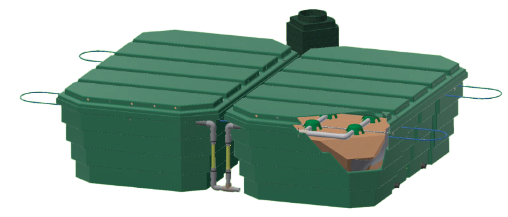
Tricel Puraflo
For sites needing a higher level of treatment. Positioned as suitable for sensitive sites and seasonal or intermittent use, with flexible sizing and low energy demand.
Puraflo →
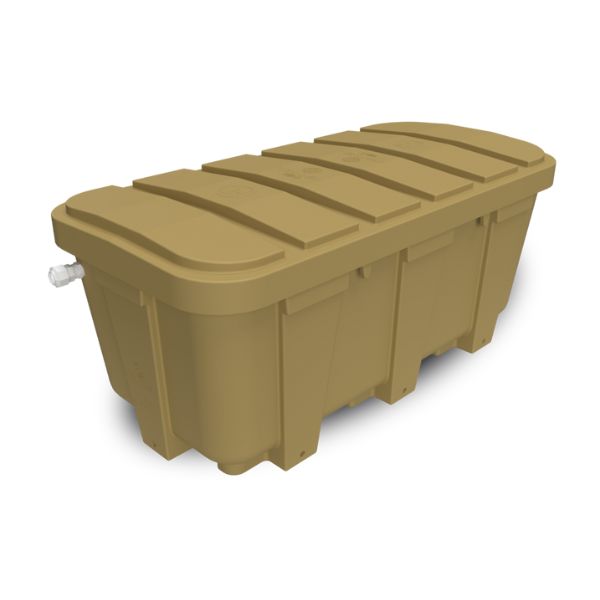
Tricel Tero
A tertiary option that purifies treated effluent from a packaged treatment plant. Described as suitable for high water tables and rocky ground.
Tero →
Tricel Sandcel
A sand polishing filter providing additional polishing after the primary system. Can suit smaller or restricted sites needing a compact polishing arrangement.
Sandcel →The first step
Why the site assessment comes first
A household system should not be chosen only because it is cheaper, familiar or easier to install. The site assessment decides whether the site can accept a septic tank, whether a treatment plant is required, and whether additional polishing is needed.
The EPA Code of Practice sets out the methodology for site assessment, system selection, installation and maintenance for domestic systems up to 10 PE. S.R. 66 gives guidance on selecting treatment plants for domestic applications up to 50 PE in areas without a public sewer, and refers to the minimum performance required for products tested to I.S. EN 12566 standards.
Before choosing a system, confirm:
- Site characterisation result
- Required PE or design population
- Percolation and ground conditions
- Groundwater and bedrock levels
- Available space and access
- Discharge route
- Separation distances
- Local authority requirements
- Maintenance and desludging access
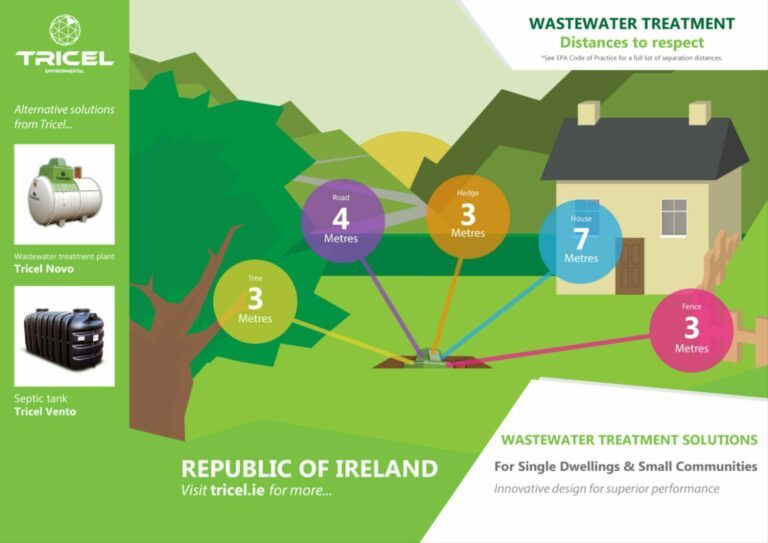
Distance and placement : exact separation distances from wells, watercourses, dwellings, trees, boundaries and roads must be checked against the current EPA Code of Practice and the completed Site Characterisation Form before publishing. Requirements depend on system type, discharge route, groundwater protection response and local authority requirements.
Installation
Installation journey for a household plant
A typical domestic installation follows these stages. Details should always follow the product manual, site design and installer guidance.
Site assessment & recommendation
Confirm the treatment route, discharge option and system size before product selection.
Product selection & quotation
Match the assessor's design population to a certified system and issue a written quote.
Excavation & base preparation
Groundworks completed to the assessor's specification and the installation manual.
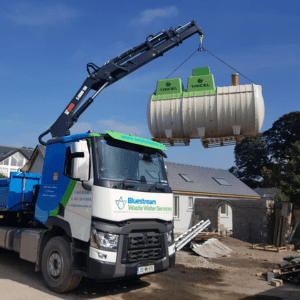
Tank delivery, positioning & level checks
The unit is set in place and levels are checked before connection.
Pipe connection & backfilling
Connection from the dwelling, with backfilling according to the installation requirements.
Electrical connection & commissioning
Electrical connection where required, then commissioning to confirm the system operates to specification.
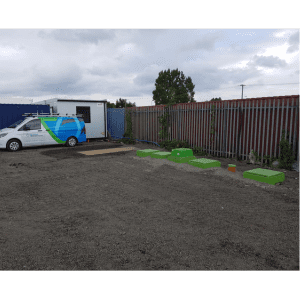
Covering & access
The system is covered while leaving access points available for servicing.
Ongoing servicing & care
Servicing, desludging and homeowner care at appropriate intervals.
At a glance
Household wastewater treatment products
A typical domestic installation follows these stages. Details should always follow the product manual, site design and installer guidance.
Before choosing a system, confirm:
- Site characterisation result
- Required PE or design population
- Percolation and ground conditions
- Groundwater and bedrock levels
- Available space and access
- Discharge route
- Separation distances
- Local authority requirements
- Maintenance and desludging access
Distance and placement : exact separation distances from wells, watercourses, dwellings, trees, boundaries and roads must be checked against the current EPA Code of Practice and the completed Site Characterisation Form before publishing. Requirements depend on system type, discharge route, groundwater protection response and local authority requirements.
Distance
Distances to respect from your household wastewater treatment plant
If you are planning to install household wastewater treatment equipment, including a septic tank, there are important rules regarding placement that must be followed. The distance between your treatment system and your home is essential to avoid issues with performance and to ensure high-quality effluent.
The EPA Code of Practice provides a distance calculator designed to prevent system malfunction and safeguard environmental standards.
Minimum Distance Regulations
Your sewage treatment plant must be installed at:
5 metres from any surface water soakaway
10 metres from a watercourse or stream
10 metres from an open drain
50 metres from a lake or foreshore
7 metres from your dwelling
Additional Requirements
Keep at least 3 metres from trees and site boundaries (such as fences).
Maintain 4 metres from the road.
If your property has a percolation area, ensure a minimum of 10 metres between one wastewater treatment facility and another.
Table of Contents
Get Started
Need help choosing the right system?
Our team can advise on the best solution for your site, your budget and your discharge route.
Household wastewater treatment plants
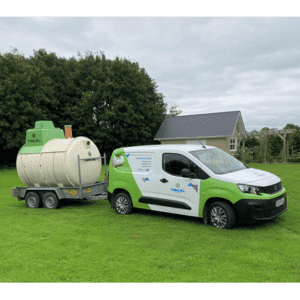
Lightweight system making on-site delivery easy.
No need for heavy machinery or deep digging that damages your garden.
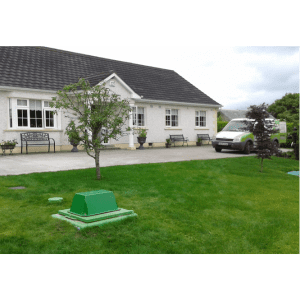
Low visual impact in your garden.
Larger projects: commercial installations up to 50 PE
Ideal for installation at housing estates, campsites, hotels, and many other settings.
Meet our team
To find a technician in your area, visit our page
TALK SEWAGE TREATMENT
To speak to one of our agents online, click here
ASK FOR A QUOTE
Request a free quote today to have a quote that meets your project!
Our range of products
Tricel Vento Septic Tank
Shallow dig tank, strong & robust underground tank, No electrical or moving parts. Ideal for sites with good drainage & plenty of space.
Tricel Novo Sewage Treatment Plant
Durable & long lasting SMC tank, shallow dig tank, easy installation (Plug and Play), long life components.
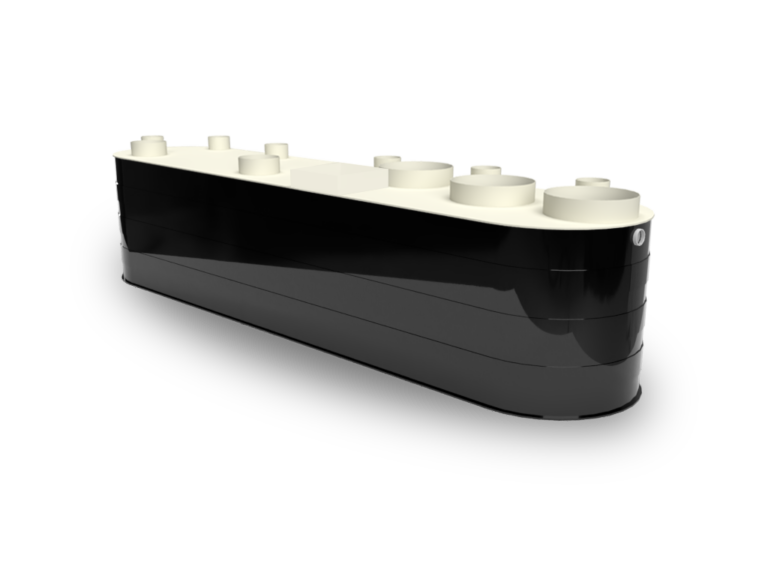
Tricel Maxus Sewage Treatment Plant
Commercial plant. Submerged Aerated Filter (SAF) technology. Ideal for project over 50 PE.
Tricel Tero Tertiary Treatment
An eco-friendly and modular system with proven E.Coli Treatment capabilities in line with the new EPA requirements.
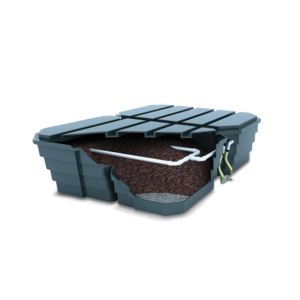
Tricel Puraflo Secondary treatment plant
Ideal for sensitive sites, compliant to Irish Standard, small footprint.
Tricel Sandcel
Sand Polishing Filter
Provides a dual function of polishing the effluent from a wastewater treatment system and disposing it into groundwater.
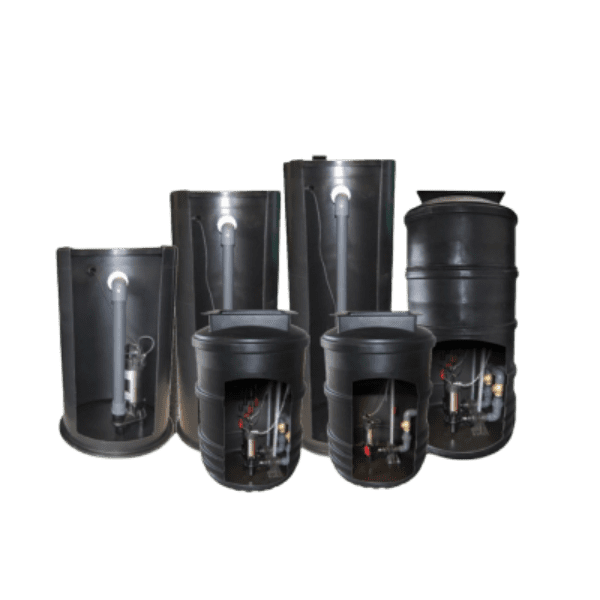
Tricel Pumping Stations
Pump fluids from one place to another where gravity drainage cannot be used, easy and trouble-free installation
Household wastewater treatment FAQs
What is the best wastewater treatment system for a house?
The best system depends on the site assessment. Some homes may suit a septic tank, while others may need a treatment plant or additional polishing. Soil conditions, available space, discharge route and local authority requirements all matter.
What is the difference between a septic tank and a treatment plant?
A septic tank provides primary treatment and relies on the ground and discharge arrangement for further treatment. A treatment plant provides a higher level of treatment inside the unit before discharge. See the sewage treatment system guide for more detail.
Is the Tricel Novo suitable for a home?
Yes. Tricel Novo is positioned as a domestic treatment plant for household sites and light commercial applications. It uses a three-stage process and is available in domestic sizes including IE6, IE8, IE10 and IE12.
Is the Tricel Vento suitable for a home?
Yes, where the site assessment confirms a septic tank route is suitable. Tricel Vento is positioned as the septic tank option for domestic sites with suitable drainage and space.
Can I use a septic tank without a percolation area?
A septic tank needs an approved discharge or treatment route. For many sites this involves a percolation area or additional treatment. The correct route must be confirmed through the site assessment and local authority requirements.
What size treatment plant do I need for a house?
Sizing depends on the design population, also described as PE. The Novo range includes domestic models such as IE6, IE8, IE10 and IE12, but final sizing should be confirmed through the site assessment and technical review. Read the sewage treatment plant sizing guide.
Do household wastewater systems need maintenance?
Yes. Septic tanks and treatment plants need maintenance, inspection and desludging at appropriate intervals. The EPA Code of Practice for Domestic Waste Water Treatment Systems states that systems must be properly constructed and maintained to protect human health and the environment.
Do I need a site visit before choosing a system?
Yes. A site visit or site assessment helps confirm the correct treatment route, discharge option and system size. It should be completed before product selection and installation. See the installation and construction guidance.
Get in touch