
Updated July 2026
EPA Site Characterisation Report
percolation values
Treatment-system information
Home » Planning applications
Wastewater treatment · Regulation
Jurisdiction: Republic of Ireland
Wastewater treatment reports for planning applications in Ireland
A practical, EPA-referenced guide to the site assessment, percolation testing, sizing and reporting evidence a planning authority expects where a development will not connect to a public sewer.
Requirements at a glance
- A planning application for a site without a public sewer connection normally needs an EPA Site Characterisation Report prepared by an appropriately trained and qualified assessor.
- The assessment combines a desk study, visual assessment, trial hole and percolation testing — a percolation result on its own is not a complete assessment.
- The proposed treatment system must be sized to the correct population equivalent (PE) and must respect EPA minimum separation distances.
- Manufacturer recommendation reports, such as those generated by Tricel Site Assessor, support the application but do not replace the EPA assessment or planning authority approval.
- Once installed, the system must be registered with the local authority and may later be selected for inspection under the EPA’s National Inspection Plan.
Planning a house or development in an area without access to a public sewer normally requires evidence that wastewater can be treated and discharged safely on the site.
For domestic developments, this evidence is generally provided through an EPA Site Characterisation Report prepared by an appropriately trained and qualified site assessor. The report examines the site conditions, identifies the suitable wastewater treatment options and sets out the proposed discharge route.
Tricel Site Assessor is a free online resource for site assessors, engineers, architects and other planning professionals. It uses the completed site-assessment results to create a site-specific wastewater treatment recommendation package containing relevant manufacturer information, plant certification and drawings.
Important
The Tricel report supports the planning application. It does not replace the EPA Site Characterisation Report, professional site assessment or planning authority approval.
Wastewater planning requirements at a glance
Where a proposed development will not connect to a public sewer:
- An appropriately trained and qualified person should assess the site.
- The assessment should follow the EPA wastewater guidance and applicable Code of Practice .
- The planning application should identify the proposed wastewater treatment system and final discharge route.
- Evidence must show that the site is suitable for the proposed system.
- Site layout, levels, separation distances, soil conditions, water table, bedrock and percolation results must be considered together.
- The proposed treatment plant must be correctly sized for the design population equivalent.
- Relevant drawings, certification and installation details should accompany the application.
- Installation must follow the planning conditions, approved design and manufacturer’s instructions.
The Environmental Protection Agency states that where wastewater from a proposed development will be disposed of other than to a public sewer, information about the proposed on-site treatment system and evidence of the site’s suitability must accompany the planning application.
What is a wastewater treatment report for a planning application?
The phrase “wastewater treatment report” can refer to several connected documents. It is worth distinguishing between them before starting an application.
EPA Site Characterisation Report
The EPA Site Characterisation Form , sometimes called a site suitability assessment, is the primary assessment of whether an on-site domestic wastewater treatment system can be installed at the proposed location. It records the desk study, visual assessment, trial-hole findings, soil and subsoil conditions, percolation results, groundwater risks, separation distances, proposed treatment system and discharge route.
The assessment must reach a site-specific conclusion. A percolation-test result by itself is not a complete site assessment.
Wastewater Treatment Recommendation Report
The recommendation report sets out the wastewater treatment system and infiltration or polishing arrangement proposed for the site. A manufacturer’s recommendation package may contain the proposed treatment process, the design population equivalent, treatment-plant capacity, the proposed percolation area or polishing filter, pump-selection information where relevant, product certification, technical information, installation requirements, and site layout or AutoCAD drawings.
Tricel Site Assessor generates this part of the supporting documentation using information taken from the completed site assessment. It includes PE and pump calculators, plant certification, drawings, downloadable PDF reports and a history of completed reports.
Planning Drawings and Supporting Information
The treatment recommendation must agree with the planning drawings and the EPA Site Characterisation Form . The planning package may therefore also include site location and layout plans; finished floor and ground levels; drainage falls and pipe invert levels; cross-sections through the treatment and infiltration areas; distances from wells, watercourses, houses, boundaries and roads; photographs of the site and test holes; groundwater-protection and environmental-risk maps; pump design calculations; and details of any proposed site improvement works.
The EPA wastewater guidance states that completed site-characterisation documentation should include photographs, environmental-risk maps, site plans, cross-sections, design details, and finished floor and ground levels.
Who is this guidance for?
This page is intended for site assessors preparing domestic wastewater reports; engineers designing drainage and wastewater arrangements; architects coordinating planning drawings; planning consultants assembling applications; self-builders and homeowners who need to understand the process; developers working on rural or unsewered sites; and installers reviewing the approved design before construction.
Homeowners should appoint a suitably qualified professional to complete the site assessment. The EPA describes an appropriately trained and qualified assessor as a person with relevant training, such as QQI, former FETAC or equivalent qualifications, which can be demonstrated to the local authority. The EPA notes that the underlying site-suitability training course is delivered through the Water Services Training Group, part of the Local Authority Services National Training Group.
Check whether a public wastewater connection is possible
Before designing an on-site wastewater treatment system, establish whether the site can connect to an existing public wastewater network.
Uisce Éireann advises applicants to submit a Pre-Connection Enquiry early in the project, preferably before the development design and planning submission are finalised. Where a connection is feasible, Uisce Éireann can issue a Confirmation of Feasibility for inclusion with the planning application.
A proposed septic tank or treatment plant should not be treated as an automatic alternative to the public network. The appropriate route depends on the proximity and capacity of the public wastewater network, Uisce Éireann’s response to the Pre-Connection Enquiry, the local development plan, the planning authority’s requirements, the type and scale of development, and whether an on-site discharge can be authorised and accommodated safely.
Where no public connection is feasible, the site assessment can be used to determine whether an on-site system is suitable. The EPA notes that nearly half a million households in Ireland rely on a domestic wastewater treatment system rather than a public sewer connection, so this is a routine and well-established part of rural planning in Ireland rather than an unusual exception.
The wastewater site-assessment process
-
1
Confirm the Development Details
The assessor will need accurate information about the proposed development, including applicant and site details, townland and site location, proposed number of bedrooms, maximum design population, proposed water supply, site layout and house position, existing and proposed wells, nearby houses and wastewater systems, and proposed development use.
The final dwelling design should be sufficiently developed before the assessment is completed. Increasing the number of bedrooms later may change the design population, treatment-plant size and required infiltration area.
-
2
Complete a Desk Study
The desk study establishes the environmental and hydrogeological context before test holes are opened. It may examine soil and subsoil mapping, bedrock geology, aquifer classification, groundwater vulnerability, groundwater-body status, public and group water supplies, source-protection areas, nearby wells and abstraction points, rivers, streams, lakes, drains and wetlands, flood-risk information, Special Areas of Conservation, Special Protection Areas and Natural Heritage Areas , archaeological or historic features, existing development density, and previous experience with wastewater systems in the locality.
The information is used to identify receptors that could be affected by the proposed discharge and any restrictions that need to be investigated on site. The EPA Site Characterisation Form contains dedicated fields for soil, subsoil, bedrock, aquifer category, groundwater vulnerability, water supplies, source-protection areas and significant environmental or heritage sites.
-
3
Carry Out a Visual Assessment
The visual assessment records the physical features and drainage indicators present on and around the site: landscape position, natural slope, existing land use, vegetation associated with wet or dry ground, surface-water ponding, watercourses and drainage ditches, springs and wells, bedrock outcrops, karst features, wetlands, roads and site boundaries, existing houses and wastewater systems, and likely groundwater-flow direction.
No single visual feature determines whether the site passes or fails. The findings must be considered alongside the desk study, trial-hole examination and percolation tests.
-
4
Examine the Trial Hole
A trial hole allows the assessor to examine the soil and subsoil profile and identify the depth to bedrock and the water table. The EPA Site Characterisation Form states that the trial hole should normally be at least 2.1 metres deep, increasing to 3 metres for regionally important aquifers. The assessor records soil texture, structure, density, colour, mottling, layering, preferential flow paths, water ingress and bedrock conditions.
The trial hole must be located where it provides representative information about the proposed treatment and infiltration area. Its findings should correspond reasonably with the percolation-test results; where the results conflict, the assessor should investigate further rather than relying on the more favourable value.
-
5
Complete the Percolation Tests
A percolation test measures how readily water moves through the soil or subsoil. It helps establish whether the ground can receive the proposed hydraulic load while retaining the effluent long enough for further treatment.
The 2021 EPA Code of Practice refers to a subsurface percolation test, previously commonly called a T-test, and a surface percolation test, previously commonly called a P-test. Depending on the proposed system and point of discharge, one or both tests may be required. Each test is based on the average result from three test holes. Raised systems, low-pressure pipe distribution and drip-dispersal proposals may require both surface and subsurface testing.
Site sensitivity note
The EPA Site Characterisation Form advises that a trial hole or percolation test should not be carried out at or adjacent to a designated Natural Heritage Area, Special Area of Conservation, Special Protection Area, or an archaeological site, without prior advice from the National Parks and Wildlife Service or the Heritage Service.
What do the percolation values mean?
A low percolation value indicates that water moves relatively quickly through the ground. A high value indicates slower movement. Neither the lowest nor highest result is automatically preferable: the soil must be capable of accepting the hydraulic load without allowing the effluent to move so quickly that adequate treatment cannot occur.
The EPA gives the following general ranges for domestic systems:
| Proposed wastewater arrangement | EPA percolation-value range |
|---|---|
| Septic tank and conventional percolation area | 3–50 |
| Secondary treatment with pumped or underlying-gravity soil polishing filter | 3–75, with additional subsurface requirements where installed at the surface |
| Secondary treatment with gravity-discharge trenches | 3–75, with additional subsurface requirements where installed at the surface |
| Low-pressure pipe distribution | 3–90 |
| Drip-dispersal system | 3–120 |
| Tertiary treatment system and infiltration area | 3–75, with additional subsurface requirements where installed at the surface |
Where the value is below 3, the EPA considers the retention time too short to provide satisfactory treatment without an appropriate alternative design or site works. Where the value is above 120, the site is unsuitable for a domestic wastewater system discharging to ground. A proposed surface-water discharge is a separate route and may require a Water Pollution Acts licence from the local authority.
These ranges do not select the treatment system by themselves. The assessor must also consider subsoil depth, groundwater conditions, slope, separation distances, environmental sensitivity and the proposed hydraulic and organic load.
How is population equivalent calculated for a house?
Population equivalent, or PE, is the design loading used to size the wastewater system. For a domestic planning application, it is based on the potential occupancy of the house rather than the number of people currently expected to live there.
Under the EPA Code of Practice:
| Number of bedrooms | Design population equivalent |
|---|---|
| 1–2 bedrooms | 4 PE |
| 3 bedrooms | 5 PE |
| 4 bedrooms | 6 PE |
| 5 bedrooms | 7 PE |
| 6 bedrooms | 8 PE |
| 7 bedrooms | 9 PE |
| 8 bedrooms | 10 PE |
The EPA uses a typical daily hydraulic loading of 150 litres per person when calculating domestic wastewater capacity. A two-bedroom house therefore has a minimum design capacity of 4 PE, with 1 PE added for each additional bedroom.
For commercial, hospitality, education, community or mixed-use developments, PE should not be estimated from the domestic bedroom table. The loading assessment should consider the actual use, occupancy, wastewater characteristics, peak demand, seasonal variation and any non-domestic effluent.
Minimum separation distances
The proposed tank, treatment plant and infiltration area must fit within the site while meeting the applicable EPA separation distances. Selected examples from the EPA Code of Practice include:
| Feature | Indicative minimum distance |
|---|---|
| Public or group water-supply abstraction point or well | 60 metres |
| Up-gradient domestic well | 15 metres |
| Domestic well alongside the system | 25 metres |
| Down-gradient domestic well | 30–60 metres, depending on site conditions |
| Lake or foreshore | 50 metres |
| Watercourse, stream, open drain or drainage ditch | 10 metres |
| Another treatment plant or infiltration area | 10 metres |
| Tank or treatment plant from a dwelling | 7 metres |
| Infiltration or treatment area from a dwelling | 10 metres |
| Road or significant slope break | 4 metres |
| Site boundary | 3 metres |
These are minimum figures, not a substitute for the full EPA table or a site-specific assessment. Distances to down-gradient wells vary according to the percolation value, depth of subsoil, bedrock and water-table conditions, and greater distances should be provided where practical. The EPA also states that domestic wastewater systems should not be constructed on slopes steeper than 1:8.
How much does a wastewater site assessment cost?
There is no nationally prescribed fee for a wastewater site assessment. Obtain itemised quotations directly from qualified site assessors and confirm whether trial-hole excavation, repeat visits, laboratory work and planning-report preparation are included.
Local authority guidance suggests it is reasonable to ask the assessor to break the cost down by stage — for example, the desk study and an initial site opinion, followed separately by the trial hole and percolation testing. This allows the applicant to decide whether to proceed to a full assessment before committing to the larger cost of a complete report, which is particularly useful where the desk study or the assessor’s local experience suggests the site is unlikely to pass. Note that the assessor’s fee typically does not include the cost of excavating the test holes themselves, which is usually arranged separately with a groundworks contractor.
Not sure which system is right for your site?
A site assessment, rather than product preference, determines whether a septic tank or wastewater treatment plant is the correct route for your project.
How long does the process take?
There is no fixed timeframe for completing a site assessment and wastewater report, and any figure quoted in isolation should be treated with caution. In practice, the time required is shaped by several factors: assessor availability; ground and weather conditions, since waterlogged or frozen ground can delay trial-hole and percolation work; whether the first round of testing produces a clear result or whether repeat or modified testing is required; how quickly excavation can be arranged with a contractor; and how far the treatment recommendation, drawings and planning drawings need to be reconciled before submission.
Where timing is critical to a project, it is worth raising the likely sequence and lead times directly with the chosen assessor and with the planning authority at the outset, rather than assuming a standard duration.
Selecting the appropriate wastewater system
The treatment system should be selected after the site has been characterised, not before. The assessor should consider whether the site is suitable for discharge to ground; the required level of primary, secondary or tertiary treatment; surface and subsurface percolation values; unsaturated soil or subsoil depth; depth to bedrock and the water table; groundwater-protection response; available space; site levels and gravity falls; whether pumping is necessary; the design population equivalent; seasonal or intermittent occupancy; maintenance and desludging requirements; energy requirements; sensitive groundwater or surface-water receptors; and any requirement for nutrient or microbiological reduction.
The EPA states that only after the site assessment is complete and the site is found suitable should the on-site system and discharge route be designed.
Depending on the results, the recommendation may include a septic tank with a conventional percolation area, a packaged secondary treatment plant with a soil polishing filter, a septic tank followed by a secondary media filter, a tertiary treatment stage with an infiltration area, a sand polishing filter, a raised or mounded treatment area, low-pressure pipe distribution, drip dispersal, or a pumped discharge arrangement.
The final selection is the responsibility of the qualified assessor or designer and remains subject to the planning authority’s decision.
Not sure which system is right for your site?
A site assessment, rather than product preference, determines whether a septic tank or wastewater treatment plant is the correct route for your project.
Using the Tricel Site Assessor report tool
Tricel Site Assessor has been developed for professionals who have already completed, or are working from, a valid site assessment. The report process has four main stages: enter the site and client details; select the appropriate report type; select any required optional components; and download or print the completed report.
The information entered should correspond exactly with the EPA Site Characterisation Report and planning drawings. The tool can use site and applicant details, population equivalent, surface and subsurface percolation values, the proposed treatment process, infiltration or polishing arrangement, pumping requirements, rising-main length, difference in head height, and optional treatment components.
Available report arrangements include septic tanks with percolation trenches, Tricel Novo treatment plants with gravity or pumped soil polishing filters, low-pressure pipe systems, drip dispersal, Tricel Puraflo secondary treatment, Tricel Sandcel sand polishing filters and Tricel Tero tertiary treatment. The tool also includes options for combining certain Tricel tertiary components with other suitable package treatment plants.
What is included in a Tricel report package?
Depending on the selected report type, the output can include a site-specific manufacturer’s recommendation report, population-equivalent calculations, pump-selection information, relevant plant certification, AutoCAD drawings, product and installation information, a downloadable PDF, and access to the user’s report history.
The output should be reviewed by the assessor before it is submitted. The report does not independently verify the original test results, planning drawings, site boundaries, levels or environmental information.
Create your wastewater treatment recommendation report
Use the tool after the relevant site-assessment information has been established, and review the completed report before including it in the planning package.
Planning-application document checklist
Before submitting the application, check that the wastewater documents include or address the following.
Site Assessment
- Completed EPA Site Characterisation Form.
- Assessor’s qualifications, experience and professional-indemnity details.
- Desk-study findings.
- Visual-assessment findings.
- Trial-hole log.
- Surface and subsurface percolation-test results where required.
- Integrated site-suitability conclusion.
- Proposed treatment and discharge route.
Maps and Drawings
- Site location map.
- Site layout showing the house, treatment plant and infiltration area.
- Location of trial and test holes.
- Relevant environmental-risk maps.
- Wells, streams, drains and other receptors.
- Required separation distances.
- Ground and finished floor levels.
- Pipe invert levels.
- Cross-sections through the treatment arrangement.
- Pump chamber and rising main where relevant.
Treatment-System Information
- Correct design PE.
- Manufacturer’s recommendation.
- Treatment-plant certification.
- Proposed treatment performance.
- Percolation or polishing-filter design.
- Pump calculations where applicable.
- Installation requirements.
- Commissioning arrangements.
- Maintenance and desludging information.
Consistency check
Confirm that the bedroom count agrees across the planning form, drawings and wastewater report; the PE agrees with the proposed house or development; the named treatment system is the same in every document; tank, plant and polishing-filter locations match the site layout; distances and levels agree with the assessor’s report; the discharge route is clearly identified; the reserved replacement or alternative area is shown where required; and the latest applicable product drawings and certification are included.
Sites that require additional consideration
A standard domestic report may not be sufficient for every project. Additional assessment or consultation may be necessary where the site is close to a drinking-water source; groundwater vulnerability is high or extreme; the development is close to a protected habitat; the site is within or near a floodplain; karst limestone or swallow holes are present; bedrock or the water table is close to the surface; the site has very fast or very slow percolation; several neighbouring wastewater systems create cumulative loading; site improvement works are proposed; a discharge to surface water is being considered; the development exceeds 10 PE; the wastewater is commercial or contains trade effluent; or several dwellings will share one treatment system.
The EPA domestic Code of Practice applies to single houses or equivalent developments with a population equivalent of no more than 10. Larger developments require a project-specific design and may fall under other technical standards, planning requirements or discharge-authorisation procedures.
Shared systems and housing developments
A shared treatment system serving several homes is not the same as a domestic system serving one house.
Regulations introduced in 2026 provide a registration route for certain proposed surface-water discharges from Uisce Éireann wastewater works serving housing developments. The regulations apply to qualifying discharges with a population equivalent of no more than 150 and require planning permission before a proposed discharge can be entered on the EPA register. They relate specifically to qualifying Uisce Éireann wastewater works and do not replace the EPA domestic site-assessment process for a standalone dwelling.
Developers considering a shared or multi-unit system should consult the planning authority, Uisce Éireann and an experienced wastewater designer at an early stage.
What happens after planning permission is granted?
The treatment system must be installed in accordance with the approved planning drawings; the conditions of planning permission; the EPA Site Characterisation Report; the approved treatment recommendation; the manufacturer’s installation instructions; and relevant building regulations and technical standards.
Construction, installation and commissioning should be supervised and certified by an appropriately trained and qualified person. The EPA advises that the work should be documented as evidence for any later planning-related inspection.
The homeowner should retain planning and site-assessment documents, product certification, installation and commissioning certificates, manufacturer’s instructions, service records, desludging receipts, and records of repairs or alterations.
Registering the system once it is installed
Registration is a separate legal requirement from planning permission and from the EPA site assessment, and it is easy to overlook once construction is complete.
Under the Domestic Waste Water Treatment Systems (Registration) Regulations 2012, as amended in 2013, households with a septic tank or similar domestic wastewater treatment system must register the system with their local authority. Registration is currently completed online via the Protect Our Water website, or in person at the local authority office, and carries a fee of €50. The Department of Housing states that a householder who fails to register commits an offence and, on conviction, faces a fine of up to €5,000.
Registered systems may later be selected for inspection under the EPA’s National Inspection Plan. Inspections are carried out by trained and EPA-appointed City and County Council staff, who are required to give the homeowner at least ten working days’ notice; no access to the interior of the house is required. Under the current National Inspection Plan covering 2022 to 2026, local authorities carry out a minimum of 1,000 inspections in 2022, rising to a minimum of 1,200 per year from 2023 onward. The EPA reports that, historically, roughly half of the septic tanks inspected have failed, with around a quarter of failures posing a risk to human health or the environment, most commonly linked to inadequate maintenance or desludging rather than a fault in the original design.
Where a system fails inspection, the local authority issues an advisory notice, and homeowners in certain circumstances may be able to apply for a grant of up to 85 per cent of qualifying costs, subject to a scheme maximum, to fund repair, upgrade or replacement. Grant eligibility and current terms should always be confirmed with the local authority, as scheme details and maxima are set by regulation and can change.
Registration does not replace, and should not be confused with, the EPA site assessment, planning permission or the treatment-system design. It is a distinct, ongoing obligation that continues for as long as the system serves the property, including after a change of ownership.
Table of Contents
Sources referenced: Environmental Protection Agency (epa.ie) — Waste water information, 2021 Code of Practice for Domestic Waste Water Treatment Systems, Site Characterisation Form, and National Inspection Plan 2022–2026; Department of Housing, Local Government and Heritage (gov.ie); Uisce Éireann Pre-Connection Enquiry guidance; and relevant local authority planning guidance. This page is provided for general information and does not replace professional site assessment or planning advice. Last reviewed: July 2026.
Frequently Asked Questions on Planning Applications in Ireland
Do I need a site suitability assessment for a planning application?
Where a proposed house or equivalent development will use an on-site domestic wastewater system, an EPA Site Characterisation Report will normally be required. The report must demonstrate whether the site is suitable and identify the appropriate treatment and discharge arrangement.
Is a percolation test the same as a site assessment?
No. Percolation testing is one part of the assessment. A complete assessment also considers the desk study, trial hole, soil and subsoil, water table, bedrock, groundwater risk, nearby receptors, slope, separation distances and site layout.
Who can carry out a wastewater site assessment?
The EPA requires assessment and design work to be completed by an appropriately trained and qualified person. Relevant qualifications, professional experience and insurance details must be capable of being demonstrated to the planning authority.
What does a wastewater site assessment cost?
There is no single published fee. Costs vary according to the assessor, location and scope of testing required. The fee should be agreed directly with the assessor, preferably with the work and charges broken down by stage before the assessment begins.
How long does the assessment and reporting process take?
There is no fixed timeframe. It depends on assessor availability, ground and weather conditions, whether repeat testing is required, and how quickly the treatment recommendation and supporting drawings can be aligned with the planning drawings.
Can I select a treatment plant before the assessment?
You can review possible wastewater treatment systems , but the final recommendation should follow the completed site assessment. The site conditions determine which treatment and discharge options are technically suitable.
What is population equivalent?
Population equivalent, commonly abbreviated to PE, is the design organic and hydraulic load used to size the wastewater system. For a domestic house under the EPA Code, a one- or two-bedroom house is designed at 4 PE, with 1 PE added for each additional bedroom.
What is the difference between a P-test and a T-test?
These are older terms still commonly used for surface and subsurface percolation tests. The appropriate test depends on the depth, design and type of the proposed infiltration or treatment area.
Does a good percolation result guarantee planning permission?
No. Percolation is only one factor. The planning authority considers the full application, including planning policy, access, house design, environmental constraints, water supply, site layout and wastewater suitability.
What happens if the ground drains too quickly or too slowly?
Very fast percolation may not retain effluent long enough for adequate treatment. The assessor must determine whether an appropriate treatment or site-improvement arrangement is possible. Slow drainage may cause hydraulic overloading or ponding. Certain secondary-treatment and dispersal options can accommodate higher percolation values than a conventional septic tank, but a value above 120 is unsuitable for discharge to ground under the EPA domestic Code.
Do I need to register my wastewater treatment system after installation?
Yes. Households with a septic tank or similar domestic wastewater treatment system must register it with the relevant local authority through Protect Our Water . The system may later be selected for inspection under the EPA National Inspection Plan.
Does the Tricel report replace the EPA Site Characterisation Report?
No. The Tricel report provides the manufacturer’s recommendation, certification, calculations and drawings needed to support the assessor’s proposed design. The EPA assessment remains the primary evidence of site suitability.
Can Tricel guarantee that planning permission will be granted?
No manufacturer, assessor or report tool can guarantee planning permission. The decision is made by the relevant planning authority based on the complete application and the applicable planning and environmental requirements.
Read more on this subject
The following Tricel articles cover related regulatory, maintenance, grant and homeowner questions that may arise alongside an EPA inspection.
EPA Code of Practice 2021
An overview of the domestic Code of Practice covering site assessment, system selection, design, operation and maintenance.
Read articleSeptic Tank Inspection
Learn how septic tank inspections are carried out, what inspectors check and what happens if an advisory notice is issued.
Read articleSeptic Tank Regulations in Ireland
The legal requirements covering registration, maintenance, inspections and homeowner responsibilities.
Read articleSeptic Tank Grants in Ireland
Information about the available grant routes, eligibility requirements and application process.
Read articleWastewater Reports for Planning Applications
How site assessments, percolation testing and wastewater reports support planning applications for off-mains properties.
Read articleWastewater System Maintenance
Routine servicing and maintenance measures that help wastewater treatment systems continue to operate correctly.
Read articleThe Desludging Process
How desludging works, when a system may need to be emptied and which records homeowners should retain.
Read articleWastewater Treatment Systems: Do’s & Don’ts
Everyday household practices that help protect the treatment process and reduce the risk of system problems.
Read articleSelling a Property with a Septic Tank
Registration certificates, inspection information and wastewater records that may be relevant during a property sale.
Read articleWastewater Treatment Warranties
Information about warranty cover for Tricel wastewater treatment systems and their components.
Read articleWastewater Treatment FAQ
Answers to common questions about domestic wastewater systems, operation, maintenance and ownership.
Read articleCreate Your Wastewater Treatment Recommendation Report
Tricel Site Assessor provides site assessors, engineers and architects with wastewater recommendation reports, plant documentation, certification, calculations and drawings for Irish planning applications.
Our range of products
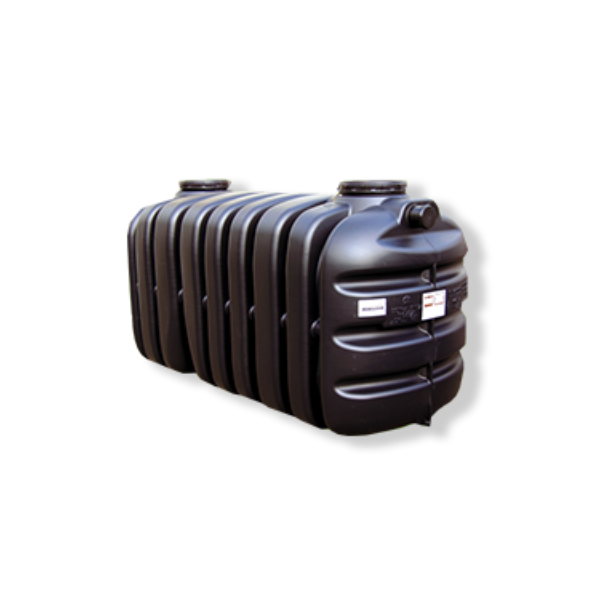
Tricel Vento Septic Tank
Shallow dig tank, strong & robust underground tank, No electrical or moving parts. Ideal for sites with good drainage & plenty of space.
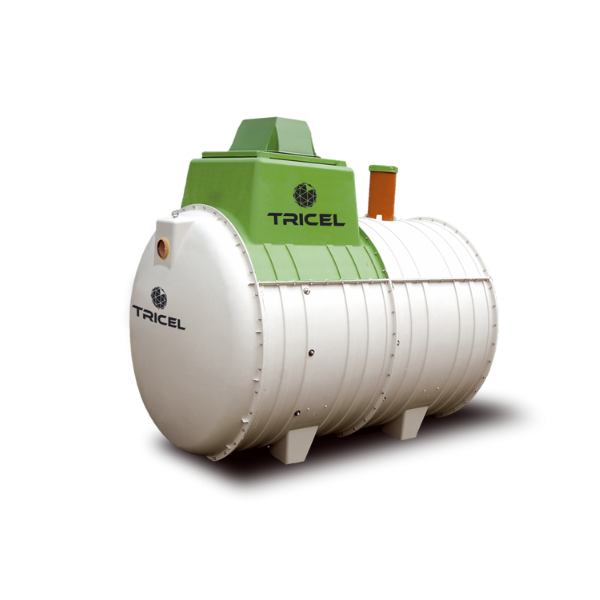
Tricel Novo Sewage Treatment Plant
Durable & long lasting SMC tank, shallow dig tank, easy installation (Plug and Play), long life components.
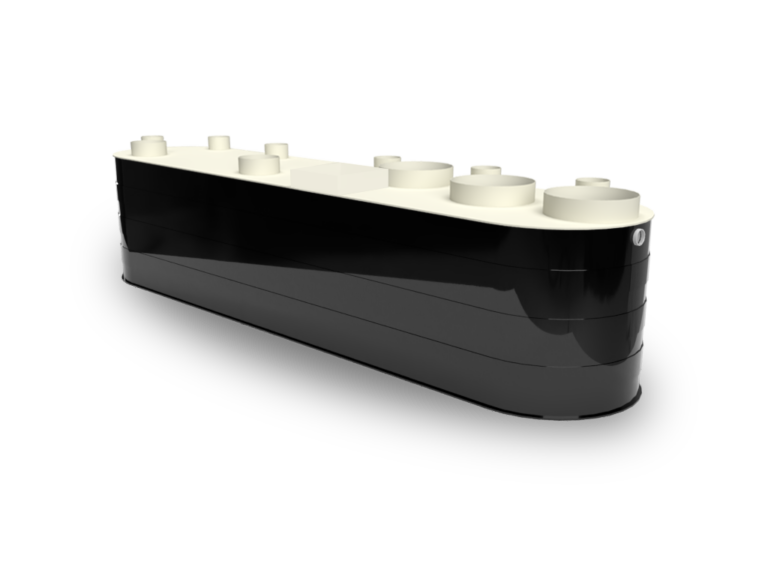
Tricel Maxus Sewage Treatment Plant
Commercial plant. Submerged Aerated Filter (SAF) technology. Ideal for project over 50 PE.
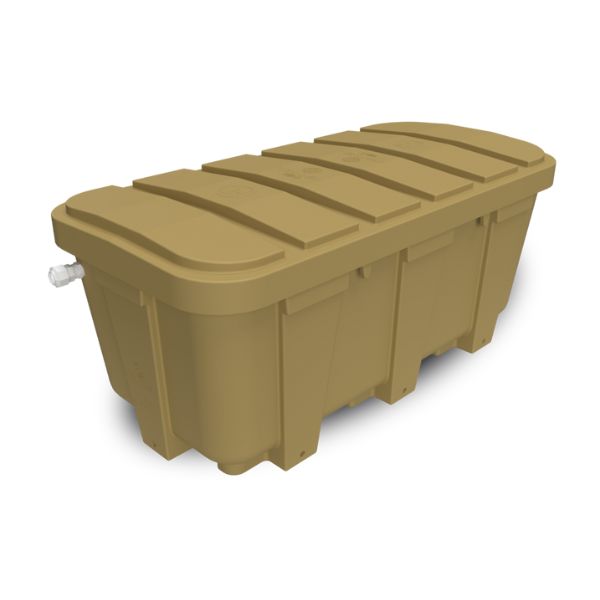
Tricel Tero Tertiary Treatment
An eco-friendly and modular system with proven E.Coli Treatment capabilities in line with the new EPA requirements.
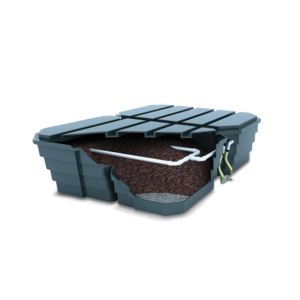
Tricel Puraflo Secondary treatment plant
Ideal for sensitive sites, compliant to Irish Standard, small footprint.
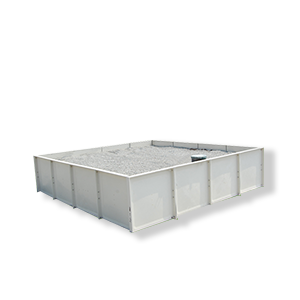
Tricel Sandcel
Sand Polishing Filter
Provides a dual function of polishing the effluent from a wastewater treatment system and disposing it into groundwater.
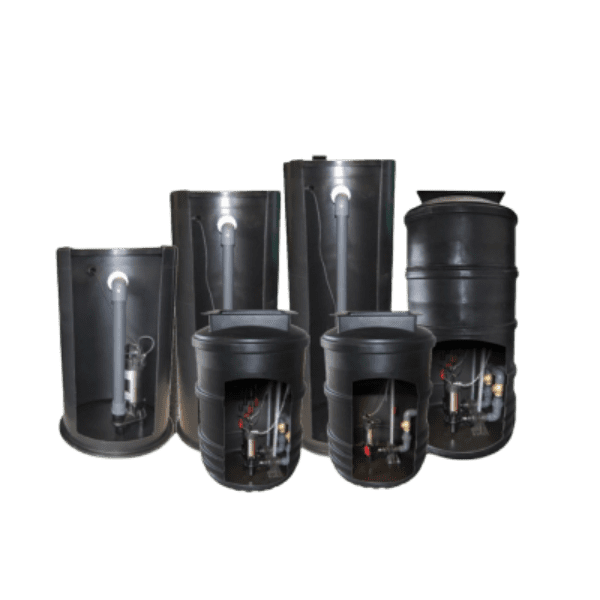
Tricel Pumping Stations
Pump fluids from one place to another where gravity drainage cannot be used, easy and trouble-free installation
Get in touch